|

Showing posts with label fake encounter. Show all posts
Showing posts with label fake encounter. Show all posts
November 01, 2016
India: Staging an ‘Encounter’ - Madhya Pradesh Police Style (Statement released by JTSA, 1 Nov 2016)
Staging an ‘Encounter’: Madhya Pradesh Police Style
The brazen killing is linked to the bogey of SIMI being raised in the state
for long
Questions are being rightfully raised about the suspicious circumstances in
which eight under trial prisoners are alleged to have escaped from the
Bhopal Central Jail, and then gunned down in a supposed encounter less than
12 hours later, less than ten kilometres away from the jail. Far too many
discrepancies about the course of events, about the modus operandi of the
jail break, and the ‘weapons’ they were carrying have emerged in the
statements of the various state officials. Photographic and video evidence
points to the staged nature of the encounter killing – down to the new
clothes and shoes the undertrials were wearing, the suitcases lying strewn
around the dead bodies, the gleaming knife a brave police officer recovers
from the lifeless body. From the police version it appears that the Eight
spent their short-lived time after jail break togging up in jeans and
sports shoes, procuring dry fruits, suitcases and country made revolvers
while giving no thought to really escaping the area. They did not even
bother to split up.
The Madhya Pradesh police and administration has predictably brushed aside
the criticism ignoring the multiple contradictions its own and government
spokespersons have indulged in. The Chief Minister has announced that the
NIA will probe the jailbreak *but who is probing the ‘encounter’?*
Experience shows, in most cases of encounter, FIRs are filed against the
deceased rather than the police party. The FIR in the killing of the Eight
must be made public; their killings must not be allowed to fall into a
legal blackhole.
No doubt, there will be those who will point to the purported SIMI
affiliations of the deceased to justify their killings. Already, a central
minister has lauded the encounter as a ‘morale booster’, as though nations
need to be nourished by blood. In their book, a genuine encounter is one in
which an alleged terrorist is killed, and one in which public perception
can be managed successfully. Rule of Law however has a different test. It
demands that the police demonstrate that the killing was a proportionate
and justified response in face of murderous violence.
The cavalier way in which policemen can be seen pumping bullets into the
supine bodies – that too on camera – can be understood in the context of
the ease and success with which the SIMI bogey has been raised in Madhya
Pradesh.
It is remarkable that there have been no incidents of terror attacks in
Madhya Pradesh for the last many years. In fact, the only incident of
actual violence was a shootout in Teen Pulia area of Khandwa district on 28
November 2009, in which three people, including an ATS constable, Sitaram
Batham died. The local police alleged that the motorcycle borne assailant
was a member of the outlawed association, SIMI. Except for this solitary
incident – and the veracity of the assailant's link to SIMI or even whether
this shootout was indicative of any terror activity rather than being an
instance of 'ordinary' criminality, was not established – there have been
no other incidents reported. For a state with such a history, the number of
cases in which the accused were charged with furthering the activities of
an unlawful association under UAPA is fairly high. As our report, *Guilt by
Association* (2013) showed, cases are registered against former SIMI
members, their friends and acquaintances – and sometimes people with no
links to either SIMI when it was a lawful association, or any of its former
members – in police stations in Indore, Seoni, Khandwa, Bhopal, Burhanpur,
Ujjain, Neemuch, Guna etc, practically the entire state.
The FIRs are more or less identical – with similar allegations (shouting
slogans in favour of the banned organization SIMI, vowing to take forward
the cause, distributing pamhlets, possessing banned SIMI literature,
membership slips, Urdu posters etc). Sometimes, the set of accused and the
dates and time of the crime are also identical.
In some cases, the evidence of guilt is identical: for example, the same
copy of a magazine has been produced in at least 4 different cases across
the state. The same receipt of contribution to SIMI funds has been produced
as evidence in two different cases.
In another case, clippings of *Dainik Jagran* newspaper, which carried
stories about SIMI – especially story about Safdar Nagori's narco analysis
– have been submitted as proof of 'furthering of activities of an unlawful
association'. The Pithampur case of Dhar (FIR no. 120/2008), one of the
most prominent SIMI cases of Madhya Pradesh is revealing of the way in
which SIMI cases are manufactured in the state. Arrests of 13 leading SIMI
activists were allegedly made on 27 March 2008. Immediately after the
arrests, on 29 March 2008, the Senior Superintendent of Police, Dhar, shot
off letters to various districts of Madhya Pradesh asking for registration
of similar cases. These letters immediately set of a chain reaction,
resulting in 18 cases within one month, and another four over next six
months. This surely must have been a record of sorts!
Many accused, appearing regularly in FIRs across the state were later also
arraigned in terror and blast cases outside the state. Cases against Aquil
Khilji, one of those killed, were regularly registered from 2001 onwards,
right from when SIMI was banned. Most of the cases pertained to possession
and distribution of ‘unlawful’ literature. In June 2011, the Khandwa police
claimed that they had raided Khilji’s house at midnight and busted a SIMI
meeting where Khilji and others were planning a terror strike. Among those
‘arrested’ were Khaleel and Amjad, also killed in the ‘encounter’. It might
be interesting to note that while the police preened through the media
about this midnight raid carried on the intervening night of 13-14th June,
families of Khaleel and Amjad had moved applications in the CJM’s court
complaining that the police had picked up and detained their sons between 10
th- 12th June, failing to produce them before the magistrate even after the
lapse of 24 hours. In response to these applications, the City Kotwali
police submitted to the CJM that though Khaleel had been called to the
police station on 10 June, he had not been detained thereafter. The police
also claimed that Amjad had not been traceable and could not be questioned.
These responses are dated 13th June. So, these foolhardy and senseless
‘SIMI’ activists had decided to convene a meeting the same night – in the
middle of being questioned and searched by the police – to plan a terror
strike.
Such are the SIMI stories of Madhya Pradesh police. In trying to prove the
‘encounter’ genuine, they have outdone even themselves. The killing must
be situated in this context of longstanding criminalization of SIMI, and
these numerous cases booked against Muslim men (and at least in one case,
also two young women) across the state.
Released by JTSA on 1st November 2016.


May 28, 2016
Gutsy and brave Rana Ayyub blows the whistle with her under cover investigation on Gujarat - her book 'Gujarat Files: Anatomy of a Cover-Up' released in Delhi to a packed audience
[Fantastic book release of Rana Ayyub's 'Gujarat Files: Anatomy of a Cover-Up'to a jam packed audience at the India Habitat Centre in Delhi on the 27th May 2016. Hundreds were seen standing and or sitting on the floor since there was no room. This is a very important book that people across India should read. Secularist circles in India should celebrate this gutsy journalist with pat on her back for self publishing this breath taking investigation. Bravo Rana, you deserve a medal of honour from the civil society. Hoping people are listening - Editor, Communalism Watch]
QuickReview: Rana Ayyub's book Gujarat Files is a tale of gritty journalism, with a heart
Somi Das @Somi_Das | 27 May 2016
http://www.catchnews.com/narendra-modi/quickreview-rana-ayyub-s-book-gujarat-files-is-a-tale-of-gritty-journalism-with-a-heart-1464338163.html
An Excerpt from Rana Ayyub's "Gujarat Files" - The Caravan
http://www.caravanmagazine.in/vantage/lone-soldier-excerpt-rana-ayyub-gujarat-files
How Rana Ayyub had to become Maithili Tyagi for her investigations in Gujarat - The Scroll
http://scroll.in/article/808702/how-rana-ayyub-had-to-become-maithili-tyagi-for-her-investigations-in-gujarat
Listen to excerpts on this facebook video:
or the longer recording up at youtube:
https://www.youtube.com/watch?v=c7rVgzqneyg
 |
| Picture via twitter |
Somi Das @Somi_Das | 27 May 2016
http://www.catchnews.com/narendra-modi/quickreview-rana-ayyub-s-book-gujarat-files-is-a-tale-of-gritty-journalism-with-a-heart-1464338163.html
An Excerpt from Rana Ayyub's "Gujarat Files" - The Caravan
http://www.caravanmagazine.in/vantage/lone-soldier-excerpt-rana-ayyub-gujarat-files
How Rana Ayyub had to become Maithili Tyagi for her investigations in Gujarat - The Scroll
http://scroll.in/article/808702/how-rana-ayyub-had-to-become-maithili-tyagi-for-her-investigations-in-gujarat
Listen to excerpts on this facebook video:
or the longer recording up at youtube:
https://www.youtube.com/watch?v=c7rVgzqneyg
May 25, 2016
India: Painting himself as a victim Vanzara Gujarat's dirty harry launches himself into public life at a felicitation rally in Baroda
Asaram Bapu, Sadhvi Pragya framed by anti-national forces: Vanzara
Vanzara arrived at the venue from a rally across the city that marked significant tributes to statues of Mahatma Gandhi and Shaheed Bhagat Singh.
- See more at: http://indianexpress.com/article/india/india-news-india/asaram-bapu-framed-and-pushed-into-jail-like-sadhvi-pragya-and-me-vanzara-2813803/
Vanzara arrived at the venue from a rally across the city that marked significant tributes to statues of Mahatma Gandhi and Shaheed Bhagat Singh.
- See more at: http://indianexpress.com/article/india/india-news-india/asaram-bapu-framed-and-pushed-into-jail-like-sadhvi-pragya-and-me-vanzara-2813803/
May 24, 2016
Announced Rana Ayyub's Gujarat Files - Anatomy of a cover up
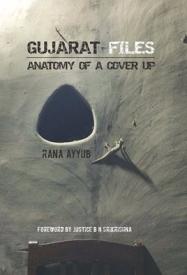
Summary: 'Gujarat Files -Anatomy of a Cover up' .
A book which has seen the worst kind of censorship by publications and is set to see the light of the day next week. It has been self published by the author and will be available for sale May 26 onwards.
Book launch on the May 27 2017, Foreword of the book has been written by the eminent jurist Justice B.N. Srikrishna
A book which has seen the worst kind of censorship by publications and is set to see the light of the day next week. It has been self published by the author and will be available for sale May 26 onwards.
Book launch on the May 27 2017, Foreword of the book has been written by the eminent jurist Justice B.N. Srikrishna
April 15, 2016
भागवत और वंजारा साथ-साथ (अपूर्वानंद)
Catch News Hindi


विचार
भागवत और वंजारा साथ-साथ: हम कौन थे, क्या हो गए हैं और क्या होंगे अभी?
- अहमदाबाद में फर्जी मुठभेड़ के आरोपी पूर्व पुलिस अधिकारी डीजी वंजारा के सार्वजनिक अभिनंदन और संघ प्रमुख मोहन भागनत के साथ मंच साझा करने की घटना हाल ही में चर्चा का विषय रही.
पाकिस्तान का विरोध करते करते-करते हम कब उसकी शक्ल में ढल गए, पता
ही नहीं चला. सबसे ताज़ा उदाहरण गुजरात के प्रख्यात पुलिस अधिकारी दह्याजी
गोबरजी वंजारा को जमानत मिलने के बाद गुजरात वापसी पर उनके ज़बरदस्त स्वागत
और खुद उनके तलवार-नृत्य का है.इस खबर से कुछ लोगों को पाकिस्तान में
सलमान तासीर के कातिल मुमताज कादिर की फांसी के बाद उसके जनाजे पर उमड़ी
हजारों की भीड़ याद आ गई होगी.
कादिर ने सलमान तासीर को इसलिए मार डाला था क्योंकि उनकी नज़र में तासीर ने इस्लाम और मुहम्मद साहब की शान में गुस्ताखी की थी. तासीर का कसूर यह था उन्होंने पाकिस्तान के ईश-निंदा क़ानून की आलोचना की थी और एक ईसाई औरत आसिया बीबी के पक्ष में बात की थी जिस पर ईश निंदा का आरोप था.
इसके
बाद कादिर ने तासीर को, जिनका वह अंगरक्षक था, गोलियों से भून डाला. कादिर
गिरफ्तार हुआ, उस पर मुकदमा चला जो खासा डरावना और नाटकीय था. कादिर को
फांसी की सजा सुनाने वाले न्यायाधीश ने फैसला सुनाते ही देश छोड़ दिया.
उस अदालत पर पहले हमला भी हुआ. कादिर की एक तरह से पूजा होने लगी और जेल में वह एक धर्मोपदेशक बन गया.
पढ़ेंः संघ के कार्यक्रम में एक मंच पर जुटे डीजी वंजारा और मोहन भागवत
कादिर की इस भयंकर लोकप्रियता के बावजूद पाकिस्तान ने उसे न सिर्फ फांसी की सजा सुनाई बल्कि फांसी दे भी दी. इस सजा का हम सैद्धांतिक आधार पर विरोध कर सकते हैं, लेकिन इससे कम से कम यह जाहिर होता है कि पाकिस्तान अपने क़ानून के पालन को लेकर गंभीर है और अपराध को नतीजे तक पहुंचाता है. इसके पहले भी पाकिस्तान में कादिर की तरह के और लोगों को भी सजा दी गयी है.
कादिर के साथ पाकिस्तानी कानूनी तंत्र के व्यवहार और दारा सिंह के साथ भारतीय उच्चतम न्यायालय के बर्ताव की तुलना करें. दारा सिंह ने ओड़िसा में ईसाई मिशनरी ग्राहम स्टेंस और उनके दो बच्चों को सोते में जला कर मार डाला था.
उसका यकीन था कि वे लोगों को ईसाई बना रहे थे. जब सीबीआई ने दारा सिंह को इस जघन्य अपराध के लिए मौत की सजा देने की मांग की तो उच्चतम न्यायालय की न्यायामूर्ति पी सथाशिवम और बीएस चौहान की द्विसदस्यीय पीठ ने दारा सिंह के अपराध को इतना जघन्य मानने से इनकार कर दिया कि उसके चलते उसे फाँसी सुनाई जाए.
इसकी वजह जो बताई गई, वह अधिक चिंताजनक थी. पीठ ने कहा कि यह ठीक है कि दारा सिंह ने स्टेंस और उनेक बच्चों को ठंडे दिमाग से की गयी पूरी तैयारी के बाद मारा लेकिन यह हत्या दरअसल धर्म-परिवर्तन को लेकर उसके क्षोभ का परिणाम थी.
आगे इस पीठ ने धर्मांतरण की आलोचना करते हुए उसे अनुचित ठहराया. ऐसा करते हुए एक तरह से उसने यह कहा कि हत्या भले गलत है लेकिन उसका कारण मौजूद था, इसलिए दारा सिंह के प्रति नरमी दिखाई जानी चाहिए.
भारतीय उच्चतम न्यायालय की इस तर्क-पद्धति को अगर मानें तो मुमताज कादरी को भी फांसी नहीं होनी चाहिए थी. आखिर उसे भी रसूल के अपमान का एक जायज गुस्सा था और तासीर की हत्या सिर्फ इस गुस्से का नतीजा थी, वरना जाती तौर पर उसे तासीर से क्या अदावत थी! वह तो एक व्यापक सामाजिक क्षोभ को हत्या के जरिए जाहिर भर कर रहा था!
भारतीय क़ानून व्यवस्था और न्याय तंत्र का झुकाव हिंदू मन को समझने की ओर है, यह सिर्फ दारा सिंह के प्रति उसकी नरमी से जाहिर नहीं होता. एक मामले में फांसी न देना तो दूसरे मामले में फांसी देना: व्यापक जनभावना को फांसी से कम सजा संतुष्ट नहीं कर पाएगी, ऐसा कह कर ही अफजल गुरु को फांसी की सजा सुनाई गई.
पाकिस्तान की अदालत ने व्यापक जनभावना की परवाह नहीं की और वहां की सरकार ने भी इस जनभावना का सामना करने का जोखिम और साहस दिखाया. क्या अपने देश के बारे में यही कहा जा सकता है?
पढ़ेंः बंजारा के स्वागत में समर्थकों ने कहा भारत माता की जय
ताज्जुब नहीं कि भारत में बाबरी मस्जिद ध्वंस के लिए कौन जिम्मेदार थे, यह उस अपराध के अब चौथाई सदी बीतने पर भी तय नहीं किया जा सका, उन्हें सजा देने की बात तो दूर! हम सब ने आंखों से देखा, यानी उस अपराध के लिए व्यापक हिंसा को संगठित करने का अभियान, जिसका नेतृत्व लाल कृष्ण आडवाणी ने किया, जिन्हें बाद में नीतीश कुमार ने ‘स्टेट्समैन’ कहा और जिसमें प्रत्यक्ष, अप्रत्यक्ष भागीदारी अटल बिहारी वाजपेयी से लेकर आज के प्रधानमंत्री तक की थी.
हम जानते हैं कि इस अपराध के मुजरिमों को कभी नामजद भी नहीं किया जा सकेगा. वैसे ही जैसे मुंबई की मुस्लिम विरोधी हिंसा पर श्रीकृष्ण आयोग की रिपोर्ट को खोलने का साहस कोई न कर सका: मुसलमानों का ‘तुष्टीकरण’ करने वाली कांग्रेस पार्टी की सरकार ने भी नहीं.
दह्याजी गोबरजी वंजारा ने तो ‘राष्ट्र हित’ में कुछ राष्ट्र-विरोधियों की हत्या संगठित भर की थी! क्या इसके लिए उन्हें सजा मिलनी चाहिए? इसके लिए वे सात साल तक जेल में रहे, क्या इसका मुआवजा उन्हें नहीं मिलना चाहिए?
वंजारा
पर तुलसी प्रजापति, सोराबजी शेख और इशरत जहां की हत्या का आरोप है. इसके
अलावा मुठभेड़ के नाम पर और भी हत्याओं के आरोप उनपर हैं. अभी इनके मुक़दमे
चल रहे हैं. वे सात साल इनकी वजह से जेल में रहे. पिछले साल जब उन्हें
जमानत मिली तो भी गुजरात जाने पर रोक बनी रही. वह रोक अभी कुछ वक्त पहले
हटा ली गई.
वंजारा ने जेल में रहते हुए कहा था कि उन्होंने तो सिर्फ राजनीतिक नेताओं की योजना और उनके आदेश पर अमल भर किया था. उनकी इस बात को हवा में उड़ा दिया गया.
अब उनके गुजरात पहुंचने पर अहमदाबाद के टाउन हॉल में उनके सार्वजनिक अभिनंदन की खबर से कुछ लोगों को कादिर के लिए उमड़ी पाकिस्तानी जनता की याद आ गई, तो क्या गलत है?
वंजारा के स्वागत से हमें आश्चर्य नहीं होना चाहिए. कुछ दिन पहले दिल्ली में छात्र नेता कन्हैया पर हमला करने वाले भारतीय जनता पार्टी के विधायक और दूसरे वकीलों का भारत की राजधानी में सार्वजनिक अभिनंदन हो चुका है.
पढ़ेंः तीन राष्ट्रपति खारिज कर चुके हैं गुजकोक विधेयक
उसके पहले मुज्ज़फरनगर में हिंसा फैलाने के आरोप में गिरफ्तार नेताओं की रिहाई पर भी सार्वजनिक अभिनंदन देखा जा चुका है. बाद में वे केंद्र में मंत्री भी बना दिए गए.
वंजारा पर जब फर्जी मुठभेड़ के नाम पर हत्याओं का मुकदमा चल रहा था तो गुजरात के तत्कालीन मुख्यमंत्री ने जनसभा में मारे गए प्रजापति, सोहराबुद्दीन और इशरत जहां के बारे में गरजकर कहा था कि इनके साथ क्या करना चाहिए. भीड़ ने एक स्वर में कहा: इन्हें मार डालो!
हत्या को सार्वजनिक तौर पर जायज ठहराने और उसके लिए जनभावना संगठित करने का पुरस्कार प्रधानमंत्री का पद हो सकता था, क्या उस समय हमें पता था? और क्या इन सब पर सोचते हुए राष्ट्र कवि की पंक्तियां याद नहीं आतीं: हम कौन थे, क्या हो गए हैं और क्या होंगे अभी?
कादिर ने सलमान तासीर को इसलिए मार डाला था क्योंकि उनकी नज़र में तासीर ने इस्लाम और मुहम्मद साहब की शान में गुस्ताखी की थी. तासीर का कसूर यह था उन्होंने पाकिस्तान के ईश-निंदा क़ानून की आलोचना की थी और एक ईसाई औरत आसिया बीबी के पक्ष में बात की थी जिस पर ईश निंदा का आरोप था.
पढ़ेंः संघ के कार्यक्रम में एक मंच पर जुटे डीजी वंजारा और मोहन भागवत
कादिर की इस भयंकर लोकप्रियता के बावजूद पाकिस्तान ने उसे न सिर्फ फांसी की सजा सुनाई बल्कि फांसी दे भी दी. इस सजा का हम सैद्धांतिक आधार पर विरोध कर सकते हैं, लेकिन इससे कम से कम यह जाहिर होता है कि पाकिस्तान अपने क़ानून के पालन को लेकर गंभीर है और अपराध को नतीजे तक पहुंचाता है. इसके पहले भी पाकिस्तान में कादिर की तरह के और लोगों को भी सजा दी गयी है.
कादिर के साथ पाकिस्तानी कानूनी तंत्र के व्यवहार और दारा सिंह के साथ भारतीय उच्चतम न्यायालय के बर्ताव की तुलना करें. दारा सिंह ने ओड़िसा में ईसाई मिशनरी ग्राहम स्टेंस और उनके दो बच्चों को सोते में जला कर मार डाला था.
उसका यकीन था कि वे लोगों को ईसाई बना रहे थे. जब सीबीआई ने दारा सिंह को इस जघन्य अपराध के लिए मौत की सजा देने की मांग की तो उच्चतम न्यायालय की न्यायामूर्ति पी सथाशिवम और बीएस चौहान की द्विसदस्यीय पीठ ने दारा सिंह के अपराध को इतना जघन्य मानने से इनकार कर दिया कि उसके चलते उसे फाँसी सुनाई जाए.
इसकी वजह जो बताई गई, वह अधिक चिंताजनक थी. पीठ ने कहा कि यह ठीक है कि दारा सिंह ने स्टेंस और उनेक बच्चों को ठंडे दिमाग से की गयी पूरी तैयारी के बाद मारा लेकिन यह हत्या दरअसल धर्म-परिवर्तन को लेकर उसके क्षोभ का परिणाम थी.
आगे इस पीठ ने धर्मांतरण की आलोचना करते हुए उसे अनुचित ठहराया. ऐसा करते हुए एक तरह से उसने यह कहा कि हत्या भले गलत है लेकिन उसका कारण मौजूद था, इसलिए दारा सिंह के प्रति नरमी दिखाई जानी चाहिए.
भारतीय उच्चतम न्यायालय की इस तर्क-पद्धति को अगर मानें तो मुमताज कादरी को भी फांसी नहीं होनी चाहिए थी. आखिर उसे भी रसूल के अपमान का एक जायज गुस्सा था और तासीर की हत्या सिर्फ इस गुस्से का नतीजा थी, वरना जाती तौर पर उसे तासीर से क्या अदावत थी! वह तो एक व्यापक सामाजिक क्षोभ को हत्या के जरिए जाहिर भर कर रहा था!
भारतीय क़ानून व्यवस्था और न्याय तंत्र का झुकाव हिंदू मन को समझने की ओर है, यह सिर्फ दारा सिंह के प्रति उसकी नरमी से जाहिर नहीं होता. एक मामले में फांसी न देना तो दूसरे मामले में फांसी देना: व्यापक जनभावना को फांसी से कम सजा संतुष्ट नहीं कर पाएगी, ऐसा कह कर ही अफजल गुरु को फांसी की सजा सुनाई गई.
पाकिस्तान की अदालत ने व्यापक जनभावना की परवाह नहीं की और वहां की सरकार ने भी इस जनभावना का सामना करने का जोखिम और साहस दिखाया. क्या अपने देश के बारे में यही कहा जा सकता है?
पढ़ेंः बंजारा के स्वागत में समर्थकों ने कहा भारत माता की जय
ताज्जुब नहीं कि भारत में बाबरी मस्जिद ध्वंस के लिए कौन जिम्मेदार थे, यह उस अपराध के अब चौथाई सदी बीतने पर भी तय नहीं किया जा सका, उन्हें सजा देने की बात तो दूर! हम सब ने आंखों से देखा, यानी उस अपराध के लिए व्यापक हिंसा को संगठित करने का अभियान, जिसका नेतृत्व लाल कृष्ण आडवाणी ने किया, जिन्हें बाद में नीतीश कुमार ने ‘स्टेट्समैन’ कहा और जिसमें प्रत्यक्ष, अप्रत्यक्ष भागीदारी अटल बिहारी वाजपेयी से लेकर आज के प्रधानमंत्री तक की थी.
हम जानते हैं कि इस अपराध के मुजरिमों को कभी नामजद भी नहीं किया जा सकेगा. वैसे ही जैसे मुंबई की मुस्लिम विरोधी हिंसा पर श्रीकृष्ण आयोग की रिपोर्ट को खोलने का साहस कोई न कर सका: मुसलमानों का ‘तुष्टीकरण’ करने वाली कांग्रेस पार्टी की सरकार ने भी नहीं.
दह्याजी गोबरजी वंजारा ने तो ‘राष्ट्र हित’ में कुछ राष्ट्र-विरोधियों की हत्या संगठित भर की थी! क्या इसके लिए उन्हें सजा मिलनी चाहिए? इसके लिए वे सात साल तक जेल में रहे, क्या इसका मुआवजा उन्हें नहीं मिलना चाहिए?
वंजारा ने जेल में रहते हुए कहा था कि उन्होंने तो सिर्फ राजनीतिक नेताओं की योजना और उनके आदेश पर अमल भर किया था. उनकी इस बात को हवा में उड़ा दिया गया.
अब उनके गुजरात पहुंचने पर अहमदाबाद के टाउन हॉल में उनके सार्वजनिक अभिनंदन की खबर से कुछ लोगों को कादिर के लिए उमड़ी पाकिस्तानी जनता की याद आ गई, तो क्या गलत है?
वंजारा के स्वागत से हमें आश्चर्य नहीं होना चाहिए. कुछ दिन पहले दिल्ली में छात्र नेता कन्हैया पर हमला करने वाले भारतीय जनता पार्टी के विधायक और दूसरे वकीलों का भारत की राजधानी में सार्वजनिक अभिनंदन हो चुका है.
पढ़ेंः तीन राष्ट्रपति खारिज कर चुके हैं गुजकोक विधेयक
उसके पहले मुज्ज़फरनगर में हिंसा फैलाने के आरोप में गिरफ्तार नेताओं की रिहाई पर भी सार्वजनिक अभिनंदन देखा जा चुका है. बाद में वे केंद्र में मंत्री भी बना दिए गए.
वंजारा पर जब फर्जी मुठभेड़ के नाम पर हत्याओं का मुकदमा चल रहा था तो गुजरात के तत्कालीन मुख्यमंत्री ने जनसभा में मारे गए प्रजापति, सोहराबुद्दीन और इशरत जहां के बारे में गरजकर कहा था कि इनके साथ क्या करना चाहिए. भीड़ ने एक स्वर में कहा: इन्हें मार डालो!
हत्या को सार्वजनिक तौर पर जायज ठहराने और उसके लिए जनभावना संगठित करने का पुरस्कार प्रधानमंत्री का पद हो सकता था, क्या उस समय हमें पता था? और क्या इन सब पर सोचते हुए राष्ट्र कवि की पंक्तियां याद नहीं आतीं: हम कौन थे, क्या हो गए हैं और क्या होंगे अभी?
October 21, 2015
India: Rubabuddin withdraws the court case against BJP President Amit Shah (Suhas Munshi's report)
For 11 years, Rubabuddin Sheikh fought to prove that his brother, Sohrabuddin Sheikh, was murdered on the orders of the then Home Minister of Gujarat. But just 10 days ago Rubabuddin approached the Bombay High Court to withdraw his petition against Amit Shah, who is now president of the ruling BJP.
An eyewitness who was present in the court said, "Rubabuddin looked pale and shaken in the courtroom. It looked like he had cried through the previous night".
[. . .]
http://www.catchnews.com/india-news/yes-i-was-threatened-before-i-withdrew-the-case-sohrabuddin-s-brother-1445261071.html
An eyewitness who was present in the court said, "Rubabuddin looked pale and shaken in the courtroom. It looked like he had cried through the previous night".
[. . .]
http://www.catchnews.com/india-news/yes-i-was-threatened-before-i-withdrew-the-case-sohrabuddin-s-brother-1445261071.html
March 02, 2015
January 24, 2015
detailed critique of the CBI court's order discharging Amit Shah in the Sohrabuddin encounter case
EPW - January 24, 2015
Brushing Aside the Conspiracy Angle
The order by the Central Bureau of Investigation providing a clean chit to former Gujarat Home Minister Amit Shah has wiped out the entire slate of the Supreme Court's intervention in various encounter death cases. The discharge of the "lynchpin" of the conspiracy despite voluminous material providing strong grounds for proceeding with the trial will ultimately raise questions about judicial independence.
Manisha Sethi (manisha.sethy@gmail.com) teaches at the Centre for Comparative Religions and Civilizations, Jamia Millia Islamia, Delhi.
It is a matter of record that the State of Gujarat – after stout denial – admitted that Sohrabuddin Sheikh and his wife had been killed in illegal police custody. It is also a matter of record that the State of Gujarat ultimately – again after much dodging and subterfuge – accepted that the Tulsi Prajapati encounter was stage-managed.
In both cases, charge sheets were filed, committed to sessions with great alacrity, and trial dates fixed. However, the Supreme Court noted that this urgency arose from the desire of the Gujarat police to keep the two cases separate. Their “trenchant refusal” to draw the dots between the two sets of killings was part of the reason why the Supreme Court transferred the investigations to the Central Bureau of Investigation (CBI) with the express direction to unearth the wider conspiracy, if any. The CBI, in the course of its investigations, is said to have found Amit Shah (currently the president of the Bharatiya Janata Party) to be the “lynchpin” of the main conspiracy. Shah was arraigned as accused number 16.
Just as 2014 drew to a close, in view supposedly of settled principles of law and evidence on record, the special judge for the CBI discharged accused number 16 in the fake encounter and murder of Sohrabuddin, Kauser Bi and Tulsi Prajapati. The accused number 16 is widely recognised to be the chief lieutenant of the most powerful person in the current power hierarchy in the country. The Court also found “merit” in the contention that the accused has been “shown to be involved in this case by the CBI for some political reasons”.1
It is true that Amit Shah was no ordinary person to be among the accused. He was the state home minister when the encounters took place – Sohrabuddin’s and Kauser Bi’s in December 2005 and Tulsi Prajapati’s exactly a year later in 2006.
Anyone familiar with criminal trials will vouch for the low rate of discharge at the stage of framing of charges under Section 227 ofCrPC. Under this section, the judge is expected to merely sift the evidence to come to a conclusion whether or not there are “sufficient grounds for proceeding against the accused”. Very clearly, at this stage, the judicial mind was not exercised by the question of an accused’s guilt or innocence, which can only be determined in the course of a trial, but simply whether a strong suspicion existed about the accused’s possible complicity in the crime alleged. In other words, the CBI court for the present was not asked to sit in judgment of Amit Shah’s guilt, but only to decide whether there existed strong enough indications to link the BJP president to these grisly murders. The court in its wisdom found none. It rejected the plethora of witness statements recorded under sections 161 and 164CrPC as mere “hearsay”, evidence of systematic and direct interference by Shah in the state CID probe into the encounter as “vague and subjective” and material evidence of phone call records between Shah and the senior police officers accused of murder as insufficient.
Phone Call Records
Let us turn first to the high level of telephonic exchange between Shah and police officers including D G Vanzara, S Rajkumar Pandian (then superintendent of police, ATS, Ahmedabad), N K Amin, and others in the period in which the killings took place. In its charge sheet, the CBI found this high telephone traffic between a minister and field level officers to be odd:
As per the official protocol, a Minister of State for Home, Government of Gujarat would be normally expected to talk/discuss with the Home Secretary and/or the Chief Secretary, and further, if he were to be so briefed, then also, he would be expected to talk/discuss with the Chief of the Anti-Terror Squad (ATS) or the Crime Branch.
Shah’s lawyer while moving his bail application in 2010 had submitted to the Gujarat High Court that the abnormal volume of phone calls between Shah and police officers owed to the
abduction of a young boy which was investigated by Mr Amin and, therefore, as a public representative and Home Minister, he was constantly kept in touch to get the information about the progress of the matter and as a public representative in such situation he is not to see the protocol and, on the contrary, the protocol is not required to be followed in such situation as media was also focusing on that case.2
In the discharge application, however, the abducted boy is completely forgotten and a new theory about the minister’s signature “style of functioning” – of being in direct and constant “touch with field level police officers… particularly when the law and order situation in the State of Gujarat after the Godhra riots was too delicate to handle” is brought forth. Forget the fact that Soharbuddin and Kauser Bi were killed in December 2005 – three years after Godhra. This is a theory that is appreciated by the Court, which adds by way of observation:
The judicial notice of the fact well can be taken that terrorist activities have increased and are rampant all over the world. In such a situation, if a Home Minister of a particular State enters in a direct dialogue with officers like the Superintendent of Police working at the ground level is not a matter of surprise, unusual or unnatural as the CBI proposes.
In fact, the admission of continuous and close interaction between Shah and police officers (whose call detail records prove their location at the site of the farmhouse where Sohrabuddin was eliminated) should be cause for serious suspicion about Shah’s knowledge and role in the conspiracy, and not evidence of his ignorance of such a conspiracy.
Furthermore, if the call detail records were totally insignificant and proved nothing, why was there such a concerted effort to suppress their existence? It was the state CID, which during the course of its investigations had taken phone call details between Shah and accused police officers on record. However, once the Supreme Court directed the transfer of investigation to the CBI, the CID failed to hand over the CD containing these phone conversations. A total of 331 conversations had been deleted from the record by O P Mathur, recently brought in by minister Shah as head of the state CID to replace Rajneesh Rai, who, by arresting the top police officers of the state for the murder of Sohrabuddin, had proved to be intractable.3
Attempt to Sabotage CID Enquiry
The earliest record of Shah’s direct interference comes from one of the early reports filed by inspector general of police, Geeta Johri, who was made in-charge of the state CID investigation. In PartB of the slim 24-page report, Johri recorded how Shah had attempted to sabotage the enquiry. She wrote that though she and the investigating officer (IO) inspector V L Solanki did not face any “hurdle” initially,
However, as soon as the statements of witnesses pertaining to confinement of Sohrabuddin and Kausarbi in the Farm House of Shri Girish Patel at Ahmedabad came to be recorded, it came to the knowledge of Shri Vanzara and Shri Rajkumar Pandian [two of the accused officers]. It is further learnt that these officers brought the above facts to the notice of Respondent No. 2, Shri Amit Shah, Minister of State for Home, Government of Gujarat.
It further states that Shah “brought to bear pressure” on the enquiry process, resulting in the enquiry papers being taken away from her “under the guise of scrutiny”. He “directed Shri G C Raigar, Additional Director General of Police, CID (Crime & Railways) to provide him with the list of witnesses, both police and private, who are yet to be contacted by CID (Crime) for recording their statement in the said enquiry. Such direction of Minister of State for Home goes beyond the scope of his office, was patently illegal and apparently designed to provide the same list to accused police officers ... so as to enable them to take measures in their defence.”
The report also mentions a meeting of senior police officers that Shah had convened at Circuit House, Gandhinagar on 30 January 2006, where he introduced the theory that Kauser Bi and Sohrabuddin were not married, while admitting in a “cavalier manner” that she may have been killed as well.4
The Key Statements against Shah
The reference to another meeting called by Amit Shah surfaces repeatedly through the witness statements. Three crucial statements, all recorded under 164CrPC, taken together point unmistakably to the role of Shah. The first and the most direct source of incrimination is the statement of Gyanchand C Raiger, who was at the time ADGP (Home guards) with the additional charge as the ADGP CID (Crimes). He stated that Shah called a meeting, which was attended by him, P C Pandey and Geeta Johri. Shah was livid at the direction the CID probe was taking under the then IO Solanki, asking how a mere inspector could dare to investigate senior police officers. Raiger states that he refused to follow the “illegal instructions” being demanded by Shah and asked for a transfer.
Raiger’s statement receives corroboration from V L Solanki’s misstatement. He submitted that Geeta Johri conveyed to him the details of this meeting where the minister had made his displeasure and “bad mood” at Solanki’s report apparent, and asked him to change the report. Rajendra Acharya, Geeta Johri’s typist-cum-secretary, in his statement confirmed that Solanki had once emerged from Johri’s chamber after a meeting and told him about the pressure on him to change the report following Johri’s meeting with the minister.
How can this entire set of statements be dismissed as mere “hearsay”? Raiger’s statement related to Section 164 of theCrPC is direct, while Solanki’s and Acharya’s statements lend weight to that. Shah’s counsel insist that even if taken at face value, these statements do not hint at any conspiracy on his part.
That a minister would go to these lengths to protect his men, whom he admittedly was in close contact during the period of both encounters (Sohrabuddin and Prajapati) means nothing? How could it be that a minister whose style included having his ear to the ground through personal contacts with everyone in the field, remained in the dark as his top officers abducted and killed three people?
Geeta Johri’s Fluctuating Stand
The court also dismisses the possibility of such a meeting since Geeta Johri had denied that such a meeting ever took place. Her flip-flops have been significant signposts in the story of this investigation. In fact, it is a matter of record that Johri’s initial investigation, before she was removed from her post, proved to be path breaking. However, when she was reinstated, she took a completeU-turn on the case. The apex praising the investigation of the IO Solanki chastised Johri for her work. The Supreme Court observed the following:
69. We have observed that from the record, it was found that Mr V L Solanki, an investigating officer, was proceeding in the right direction, but Ms Johri had not been carrying out the investigation in the right manner, in view of our discussions made here in above. It appears that Ms Johri had not made any reference to the second report of Solanki, and that though his first report was attached with one of her reports, the same was not forwarded to this Court....
81. In the present circumstances and in view of the involvement of the police officials the State in this crime, we cannot shut our eyes and direct the State police authorities to continue with the investigation and the charge-sheet and for a proper and fair investigation, we also feel that CBI should be requested to take up the investigation and submit a report in this Court within six months from the date of handing over a copy of this judgment and the records relating to this crime to them.5
The Supreme Court’s Role
In fact, the Supreme Court’s detailed orders and observations point to a scrupulous monitoring of the investigations by the apex court. By terming Shah’s implication in the triple murder fake encounter case as a political conspiracy carried out by CBI under directions from a rival political party, the special CBI court has cast aspersions on the Supreme Court’s work which was monitoring the investigations closely at all stages.
It should also be kept in mind that though the Supreme Court did not cancel the bail granted to Shah by the Gujarat High Court in 2010, it held:
Had it been an application for grant of bail to Amitbhai Shah, it is hard to say what view the Court might have taken but the considerations for cancellation of bail granted by the High Court are materially different and in this case we feel reluctant to deprive Amitbhai Shah of the privilege granted to him by the High Court. The same court was convinced that in order to preserve the integrity of the trial it is necessary to shift it outside the State.6
The Rajasthan Connection
The special court while discharging Amit Shah has also taken the view that the CBI could not sustain the motive they had ascribed to him as “Sohrabuddin was already involved in many cases and was an absconding accused, which is not in dispute, and there was a reason for the Gujarat and the Rajasthan Police to nab him.” This is a classic justification for encounter killings in the annals of our criminal justice system. Is not the court already pronouncing verdict on the genuineness of the encounter by saying so? The court further wonders how Rajasthan police became involved since Shah could not have had any control over them. This immediately reminds us of the Gulabchand Kataria case. A BJP leader from Rajasthan, Kataria was named an accused in the supplementary charge sheet filed by the CBI in 2013. (The same year, when Vasundhra Raje formed the government in the state, Kataria was made a minister.) If anything, the intimations of a wide political conspiracy have been comprehensively ignored.
Questions Remain
The special CBI court also disregarded the statements of key witnesses: namely, the Patel brothers, Dashrath and Raman, proprietors of the successful Popular Builders. Their statements to the CBI detail how money was extorted from them and how they were being forced by Vanzara and cohorts to give a statement against Sohrabuddin. The statement describes the meeting as well as the telephonic conversation with Shah. This has been recorded under 164CrPC, and yet this is not deemed evidence but hearsay and unreliable.
What is also disconcerting is the short shrift given to the sequence of events leading up to the murder of Tulsi Prajapati. Prajapati was killed just when the CID team was to leave for Udaipur jail where he was lodged in connection with another crime to interrogate him. Prajapati had a foreboding about the impending danger and had been writing feverishly all through the year to the Udaipur collector, various courts and even the National Human Rights Commission seeking protection.7 He was finally eliminated enroute from Ahmedabad to Udaipur returning from a court appearance. He was murdered in the border district of Banaskantha. Was it a mere coincidence that the home minister had transferred DIG Vanzara as DIG Border Range to be posted at Banaskantha just days before Prajapati’s encounter?
The 75-page discharge order devotes less than two pages to the CBI counsel’s contentions, reflecting the increasing sparseness of the challenge posed by the prosecuting agency. Shah’s application to the CBI court seeking exemption from appearance before the court during the hearings was barely contested. In November 2014, the CBI told the Supreme Court that it was no longer interested in pursuing its own challenge to the Bombay High Court order granting bail to police officer N K Amin. The CBI’s lily livered response to Shah’s voluminous discharge application and marathon three-day arguments was a perfunctory 15-20 minutes argument by a junior lawyer.
The die had been cast on 16 May itself, when Amit Shah led the BJP’s electoral campaign delivering a rich harvest of parliamentary seats for the party. The reinstatement, one by one, of the entire phalanx of police officers accused of plotting and carrying out the abductions and killings, by the Gujarat government, was a sign of the times. Abhay Chudasama, accused of using Sohrabuddin’s gang to carry out a range of illegal activities, and accused of ultimately trapping him besides extorting money from the Patel brothers, has been reinstated as superintendent of police of the vigilance squad at Gandhinagar.
The collapsing of the case against Shah will shake the foundations of the case, as the order has dismissed the motive behind the conspiracy as well as the bulk of evidence in one stroke. The order has wiped out the entire slate of the Supreme Court’s intervention, returning us to the stage before the CBI was asked to investigate the wider conspiracy angle. The discharge of the “lynchpin” of the conspiracy despite voluminous material providing strong grounds for proceeding with the trial will ultimately raise questions about judicial independence.
Notes
1 Amit Anilchandra Shah vs CBI, Mumbai, 30 December 2014. The Court of Sessions for Greater Bombay.
2 Amitbhai vs Central on 29 October 2010, Gujarat High Court.
3 “Another Top Cop under Scanner for ‘Erasing’ Amit Shah Reference in CD” by Neeraj Chauhan and Ujjwala Nayudu, The Indian Express, 27 July 2010.
4 See “Geetha Johri Report Speaks of ‘Collusion of State Government’” by Neena Vyas, The Hindu, 5 May 2007.
5 Rubabuddin Sheikh vs State of Gujarat reported in (2010) 2 SCC 200, p 217.
6 Central Bureau Of Investigation vs Amitbhai Anil Chandra Shah And Anr on 27 September, 2012, Supreme Court of India.
7 Narmada Bai vs State 0f Gujarat & Ors on 8 April, 2011, Supreme Court.
http://www.epw.in/commentary/brushing-aside-conspiracy-angle.html
Brushing Aside the Conspiracy Angle
The order by the Central Bureau of Investigation providing a clean chit to former Gujarat Home Minister Amit Shah has wiped out the entire slate of the Supreme Court's intervention in various encounter death cases. The discharge of the "lynchpin" of the conspiracy despite voluminous material providing strong grounds for proceeding with the trial will ultimately raise questions about judicial independence.
Manisha Sethi (manisha.sethy@gmail.com) teaches at the Centre for Comparative Religions and Civilizations, Jamia Millia Islamia, Delhi.
It is a matter of record that the State of Gujarat – after stout denial – admitted that Sohrabuddin Sheikh and his wife had been killed in illegal police custody. It is also a matter of record that the State of Gujarat ultimately – again after much dodging and subterfuge – accepted that the Tulsi Prajapati encounter was stage-managed.
In both cases, charge sheets were filed, committed to sessions with great alacrity, and trial dates fixed. However, the Supreme Court noted that this urgency arose from the desire of the Gujarat police to keep the two cases separate. Their “trenchant refusal” to draw the dots between the two sets of killings was part of the reason why the Supreme Court transferred the investigations to the Central Bureau of Investigation (CBI) with the express direction to unearth the wider conspiracy, if any. The CBI, in the course of its investigations, is said to have found Amit Shah (currently the president of the Bharatiya Janata Party) to be the “lynchpin” of the main conspiracy. Shah was arraigned as accused number 16.
Just as 2014 drew to a close, in view supposedly of settled principles of law and evidence on record, the special judge for the CBI discharged accused number 16 in the fake encounter and murder of Sohrabuddin, Kauser Bi and Tulsi Prajapati. The accused number 16 is widely recognised to be the chief lieutenant of the most powerful person in the current power hierarchy in the country. The Court also found “merit” in the contention that the accused has been “shown to be involved in this case by the CBI for some political reasons”.1
It is true that Amit Shah was no ordinary person to be among the accused. He was the state home minister when the encounters took place – Sohrabuddin’s and Kauser Bi’s in December 2005 and Tulsi Prajapati’s exactly a year later in 2006.
Anyone familiar with criminal trials will vouch for the low rate of discharge at the stage of framing of charges under Section 227 ofCrPC. Under this section, the judge is expected to merely sift the evidence to come to a conclusion whether or not there are “sufficient grounds for proceeding against the accused”. Very clearly, at this stage, the judicial mind was not exercised by the question of an accused’s guilt or innocence, which can only be determined in the course of a trial, but simply whether a strong suspicion existed about the accused’s possible complicity in the crime alleged. In other words, the CBI court for the present was not asked to sit in judgment of Amit Shah’s guilt, but only to decide whether there existed strong enough indications to link the BJP president to these grisly murders. The court in its wisdom found none. It rejected the plethora of witness statements recorded under sections 161 and 164CrPC as mere “hearsay”, evidence of systematic and direct interference by Shah in the state CID probe into the encounter as “vague and subjective” and material evidence of phone call records between Shah and the senior police officers accused of murder as insufficient.
Phone Call Records
Let us turn first to the high level of telephonic exchange between Shah and police officers including D G Vanzara, S Rajkumar Pandian (then superintendent of police, ATS, Ahmedabad), N K Amin, and others in the period in which the killings took place. In its charge sheet, the CBI found this high telephone traffic between a minister and field level officers to be odd:
As per the official protocol, a Minister of State for Home, Government of Gujarat would be normally expected to talk/discuss with the Home Secretary and/or the Chief Secretary, and further, if he were to be so briefed, then also, he would be expected to talk/discuss with the Chief of the Anti-Terror Squad (ATS) or the Crime Branch.
Shah’s lawyer while moving his bail application in 2010 had submitted to the Gujarat High Court that the abnormal volume of phone calls between Shah and police officers owed to the
abduction of a young boy which was investigated by Mr Amin and, therefore, as a public representative and Home Minister, he was constantly kept in touch to get the information about the progress of the matter and as a public representative in such situation he is not to see the protocol and, on the contrary, the protocol is not required to be followed in such situation as media was also focusing on that case.2
In the discharge application, however, the abducted boy is completely forgotten and a new theory about the minister’s signature “style of functioning” – of being in direct and constant “touch with field level police officers… particularly when the law and order situation in the State of Gujarat after the Godhra riots was too delicate to handle” is brought forth. Forget the fact that Soharbuddin and Kauser Bi were killed in December 2005 – three years after Godhra. This is a theory that is appreciated by the Court, which adds by way of observation:
The judicial notice of the fact well can be taken that terrorist activities have increased and are rampant all over the world. In such a situation, if a Home Minister of a particular State enters in a direct dialogue with officers like the Superintendent of Police working at the ground level is not a matter of surprise, unusual or unnatural as the CBI proposes.
In fact, the admission of continuous and close interaction between Shah and police officers (whose call detail records prove their location at the site of the farmhouse where Sohrabuddin was eliminated) should be cause for serious suspicion about Shah’s knowledge and role in the conspiracy, and not evidence of his ignorance of such a conspiracy.
Furthermore, if the call detail records were totally insignificant and proved nothing, why was there such a concerted effort to suppress their existence? It was the state CID, which during the course of its investigations had taken phone call details between Shah and accused police officers on record. However, once the Supreme Court directed the transfer of investigation to the CBI, the CID failed to hand over the CD containing these phone conversations. A total of 331 conversations had been deleted from the record by O P Mathur, recently brought in by minister Shah as head of the state CID to replace Rajneesh Rai, who, by arresting the top police officers of the state for the murder of Sohrabuddin, had proved to be intractable.3
Attempt to Sabotage CID Enquiry
The earliest record of Shah’s direct interference comes from one of the early reports filed by inspector general of police, Geeta Johri, who was made in-charge of the state CID investigation. In PartB of the slim 24-page report, Johri recorded how Shah had attempted to sabotage the enquiry. She wrote that though she and the investigating officer (IO) inspector V L Solanki did not face any “hurdle” initially,
However, as soon as the statements of witnesses pertaining to confinement of Sohrabuddin and Kausarbi in the Farm House of Shri Girish Patel at Ahmedabad came to be recorded, it came to the knowledge of Shri Vanzara and Shri Rajkumar Pandian [two of the accused officers]. It is further learnt that these officers brought the above facts to the notice of Respondent No. 2, Shri Amit Shah, Minister of State for Home, Government of Gujarat.
It further states that Shah “brought to bear pressure” on the enquiry process, resulting in the enquiry papers being taken away from her “under the guise of scrutiny”. He “directed Shri G C Raigar, Additional Director General of Police, CID (Crime & Railways) to provide him with the list of witnesses, both police and private, who are yet to be contacted by CID (Crime) for recording their statement in the said enquiry. Such direction of Minister of State for Home goes beyond the scope of his office, was patently illegal and apparently designed to provide the same list to accused police officers ... so as to enable them to take measures in their defence.”
The report also mentions a meeting of senior police officers that Shah had convened at Circuit House, Gandhinagar on 30 January 2006, where he introduced the theory that Kauser Bi and Sohrabuddin were not married, while admitting in a “cavalier manner” that she may have been killed as well.4
The Key Statements against Shah
The reference to another meeting called by Amit Shah surfaces repeatedly through the witness statements. Three crucial statements, all recorded under 164CrPC, taken together point unmistakably to the role of Shah. The first and the most direct source of incrimination is the statement of Gyanchand C Raiger, who was at the time ADGP (Home guards) with the additional charge as the ADGP CID (Crimes). He stated that Shah called a meeting, which was attended by him, P C Pandey and Geeta Johri. Shah was livid at the direction the CID probe was taking under the then IO Solanki, asking how a mere inspector could dare to investigate senior police officers. Raiger states that he refused to follow the “illegal instructions” being demanded by Shah and asked for a transfer.
Raiger’s statement receives corroboration from V L Solanki’s misstatement. He submitted that Geeta Johri conveyed to him the details of this meeting where the minister had made his displeasure and “bad mood” at Solanki’s report apparent, and asked him to change the report. Rajendra Acharya, Geeta Johri’s typist-cum-secretary, in his statement confirmed that Solanki had once emerged from Johri’s chamber after a meeting and told him about the pressure on him to change the report following Johri’s meeting with the minister.
How can this entire set of statements be dismissed as mere “hearsay”? Raiger’s statement related to Section 164 of theCrPC is direct, while Solanki’s and Acharya’s statements lend weight to that. Shah’s counsel insist that even if taken at face value, these statements do not hint at any conspiracy on his part.
That a minister would go to these lengths to protect his men, whom he admittedly was in close contact during the period of both encounters (Sohrabuddin and Prajapati) means nothing? How could it be that a minister whose style included having his ear to the ground through personal contacts with everyone in the field, remained in the dark as his top officers abducted and killed three people?
Geeta Johri’s Fluctuating Stand
The court also dismisses the possibility of such a meeting since Geeta Johri had denied that such a meeting ever took place. Her flip-flops have been significant signposts in the story of this investigation. In fact, it is a matter of record that Johri’s initial investigation, before she was removed from her post, proved to be path breaking. However, when she was reinstated, she took a completeU-turn on the case. The apex praising the investigation of the IO Solanki chastised Johri for her work. The Supreme Court observed the following:
69. We have observed that from the record, it was found that Mr V L Solanki, an investigating officer, was proceeding in the right direction, but Ms Johri had not been carrying out the investigation in the right manner, in view of our discussions made here in above. It appears that Ms Johri had not made any reference to the second report of Solanki, and that though his first report was attached with one of her reports, the same was not forwarded to this Court....
81. In the present circumstances and in view of the involvement of the police officials the State in this crime, we cannot shut our eyes and direct the State police authorities to continue with the investigation and the charge-sheet and for a proper and fair investigation, we also feel that CBI should be requested to take up the investigation and submit a report in this Court within six months from the date of handing over a copy of this judgment and the records relating to this crime to them.5
The Supreme Court’s Role
In fact, the Supreme Court’s detailed orders and observations point to a scrupulous monitoring of the investigations by the apex court. By terming Shah’s implication in the triple murder fake encounter case as a political conspiracy carried out by CBI under directions from a rival political party, the special CBI court has cast aspersions on the Supreme Court’s work which was monitoring the investigations closely at all stages.
It should also be kept in mind that though the Supreme Court did not cancel the bail granted to Shah by the Gujarat High Court in 2010, it held:
Had it been an application for grant of bail to Amitbhai Shah, it is hard to say what view the Court might have taken but the considerations for cancellation of bail granted by the High Court are materially different and in this case we feel reluctant to deprive Amitbhai Shah of the privilege granted to him by the High Court. The same court was convinced that in order to preserve the integrity of the trial it is necessary to shift it outside the State.6
The Rajasthan Connection
The special court while discharging Amit Shah has also taken the view that the CBI could not sustain the motive they had ascribed to him as “Sohrabuddin was already involved in many cases and was an absconding accused, which is not in dispute, and there was a reason for the Gujarat and the Rajasthan Police to nab him.” This is a classic justification for encounter killings in the annals of our criminal justice system. Is not the court already pronouncing verdict on the genuineness of the encounter by saying so? The court further wonders how Rajasthan police became involved since Shah could not have had any control over them. This immediately reminds us of the Gulabchand Kataria case. A BJP leader from Rajasthan, Kataria was named an accused in the supplementary charge sheet filed by the CBI in 2013. (The same year, when Vasundhra Raje formed the government in the state, Kataria was made a minister.) If anything, the intimations of a wide political conspiracy have been comprehensively ignored.
Questions Remain
The special CBI court also disregarded the statements of key witnesses: namely, the Patel brothers, Dashrath and Raman, proprietors of the successful Popular Builders. Their statements to the CBI detail how money was extorted from them and how they were being forced by Vanzara and cohorts to give a statement against Sohrabuddin. The statement describes the meeting as well as the telephonic conversation with Shah. This has been recorded under 164CrPC, and yet this is not deemed evidence but hearsay and unreliable.
What is also disconcerting is the short shrift given to the sequence of events leading up to the murder of Tulsi Prajapati. Prajapati was killed just when the CID team was to leave for Udaipur jail where he was lodged in connection with another crime to interrogate him. Prajapati had a foreboding about the impending danger and had been writing feverishly all through the year to the Udaipur collector, various courts and even the National Human Rights Commission seeking protection.7 He was finally eliminated enroute from Ahmedabad to Udaipur returning from a court appearance. He was murdered in the border district of Banaskantha. Was it a mere coincidence that the home minister had transferred DIG Vanzara as DIG Border Range to be posted at Banaskantha just days before Prajapati’s encounter?
The 75-page discharge order devotes less than two pages to the CBI counsel’s contentions, reflecting the increasing sparseness of the challenge posed by the prosecuting agency. Shah’s application to the CBI court seeking exemption from appearance before the court during the hearings was barely contested. In November 2014, the CBI told the Supreme Court that it was no longer interested in pursuing its own challenge to the Bombay High Court order granting bail to police officer N K Amin. The CBI’s lily livered response to Shah’s voluminous discharge application and marathon three-day arguments was a perfunctory 15-20 minutes argument by a junior lawyer.
The die had been cast on 16 May itself, when Amit Shah led the BJP’s electoral campaign delivering a rich harvest of parliamentary seats for the party. The reinstatement, one by one, of the entire phalanx of police officers accused of plotting and carrying out the abductions and killings, by the Gujarat government, was a sign of the times. Abhay Chudasama, accused of using Sohrabuddin’s gang to carry out a range of illegal activities, and accused of ultimately trapping him besides extorting money from the Patel brothers, has been reinstated as superintendent of police of the vigilance squad at Gandhinagar.
The collapsing of the case against Shah will shake the foundations of the case, as the order has dismissed the motive behind the conspiracy as well as the bulk of evidence in one stroke. The order has wiped out the entire slate of the Supreme Court’s intervention, returning us to the stage before the CBI was asked to investigate the wider conspiracy angle. The discharge of the “lynchpin” of the conspiracy despite voluminous material providing strong grounds for proceeding with the trial will ultimately raise questions about judicial independence.
Notes
1 Amit Anilchandra Shah vs CBI, Mumbai, 30 December 2014. The Court of Sessions for Greater Bombay.
2 Amitbhai vs Central on 29 October 2010, Gujarat High Court.
3 “Another Top Cop under Scanner for ‘Erasing’ Amit Shah Reference in CD” by Neeraj Chauhan and Ujjwala Nayudu, The Indian Express, 27 July 2010.
4 See “Geetha Johri Report Speaks of ‘Collusion of State Government’” by Neena Vyas, The Hindu, 5 May 2007.
5 Rubabuddin Sheikh vs State of Gujarat reported in (2010) 2 SCC 200, p 217.
6 Central Bureau Of Investigation vs Amitbhai Anil Chandra Shah And Anr on 27 September, 2012, Supreme Court of India.
7 Narmada Bai vs State 0f Gujarat & Ors on 8 April, 2011, Supreme Court.
http://www.epw.in/commentary/brushing-aside-conspiracy-angle.html
September 11, 2014
ex-Gujarat DIG Vanzara connected to 2005 Sohrabuddin Sheikh extra-judicial killing gets Bail
Mumbai court grants bail to ex-Gujarat DIG Vanzara
ANI | Sep 11, 2014, 05.28 PM IST
NEW DELHI: A Mumbai court granted bail to former Gujarat deputy inspector general of police DG Vanzara in connection with the 2005 Sohrabuddin Sheikh fake encounter case on Thursday.
Vanzara has been in jail since 2007 on charges of having conducted a series of extra-judicial killings while heading the Gujarat antiterrorist squad (ATS).
An Indian Police Service officer of the 1987 batch, Vanzara's tenure as head of the city crime bureau saw a spurt in encounter killings. He was known to be close to then Gujarat home minister Amit Shah, who reportedly made 331 calls to Vanzara and other police officers, many of them around the time of these killings.
The Sohrabuddin Sheikh encounter case is an ongoing criminal case in Gujarat, after the state police killed alleged underworld criminal Sohrabuddin Anwar Hussain Sheikh on November 26, 2005, while he was in police custody.
DG Vanzara appearing before a court in Ahmedabad on October 29, 2012. (TOI file photo by Bhadresh Gajjar)
According to the police, apart from being involved in the criminal extortion racket in Gujarat, Sheikh was also involved in arms smuggling in Madhya Pradesh, and also had murder cases registered against him in Gujarat and Rajasthan.
Sheikh was also said to be associated with the banned Lashkar-e-Taiba and Pakistan's Inter-Services Intelligence, and planned to create communal chaos in the state by assassinating "an important political leader". Sheikh's wife Kauser Bi also disappeared on the same day as his killing.
A year later, on December 26, 2006, Sheikh's underworld associate Tulsiram Prajapati, a witness to Sheikh's killing, was also killed in another police encounter shooting.
The spot where Sohrabuddin Sheikh was killed near Ahmedabad. (TOI file photo by Yogesh Chawda)
A special CBI court hearing the Sohrabuddin Sheikh and Tulsiram Prajapati encounter cases on Tuesday had rejected the bail application of a former police inspector of Gujarat ATS who had allegedly fired at Sheikh.
"Your bail application is rejected on merit and on the ground of parity. You have fired three rounds and one has hit the deceased (Sheikh) and you have a direct role in the case," CBI court judge B H Loya said, rejecting the bail plea of NH Dhabi.
Dhabi had allegedly kidnapped Sheikh from Andhra Pradesh and was part of the police team that killed the gangster in a fake encounter. He had sought bail on the ground that some of the accused in the case had already got it.
Earlier, the court granted BJP president Amit Shah's prayer for exemption from personal appearance. Shah, in his application, had expressed his inability to attend the proceedings as was away and travelling.
That case is now likely to come up for hearing again on September 22.
http://timesofindia.indiatimes.com/india/Mumbai-court-grants-bail-to-ex-Gujarat-DIG-Vanzara/articleshow/42273363.cms
ANI | Sep 11, 2014, 05.28 PM IST
NEW DELHI: A Mumbai court granted bail to former Gujarat deputy inspector general of police DG Vanzara in connection with the 2005 Sohrabuddin Sheikh fake encounter case on Thursday.
Vanzara has been in jail since 2007 on charges of having conducted a series of extra-judicial killings while heading the Gujarat antiterrorist squad (ATS).
An Indian Police Service officer of the 1987 batch, Vanzara's tenure as head of the city crime bureau saw a spurt in encounter killings. He was known to be close to then Gujarat home minister Amit Shah, who reportedly made 331 calls to Vanzara and other police officers, many of them around the time of these killings.
The Sohrabuddin Sheikh encounter case is an ongoing criminal case in Gujarat, after the state police killed alleged underworld criminal Sohrabuddin Anwar Hussain Sheikh on November 26, 2005, while he was in police custody.
DG Vanzara appearing before a court in Ahmedabad on October 29, 2012. (TOI file photo by Bhadresh Gajjar)
According to the police, apart from being involved in the criminal extortion racket in Gujarat, Sheikh was also involved in arms smuggling in Madhya Pradesh, and also had murder cases registered against him in Gujarat and Rajasthan.
Sheikh was also said to be associated with the banned Lashkar-e-Taiba and Pakistan's Inter-Services Intelligence, and planned to create communal chaos in the state by assassinating "an important political leader". Sheikh's wife Kauser Bi also disappeared on the same day as his killing.
A year later, on December 26, 2006, Sheikh's underworld associate Tulsiram Prajapati, a witness to Sheikh's killing, was also killed in another police encounter shooting.
The spot where Sohrabuddin Sheikh was killed near Ahmedabad. (TOI file photo by Yogesh Chawda)
A special CBI court hearing the Sohrabuddin Sheikh and Tulsiram Prajapati encounter cases on Tuesday had rejected the bail application of a former police inspector of Gujarat ATS who had allegedly fired at Sheikh.
"Your bail application is rejected on merit and on the ground of parity. You have fired three rounds and one has hit the deceased (Sheikh) and you have a direct role in the case," CBI court judge B H Loya said, rejecting the bail plea of NH Dhabi.
Dhabi had allegedly kidnapped Sheikh from Andhra Pradesh and was part of the police team that killed the gangster in a fake encounter. He had sought bail on the ground that some of the accused in the case had already got it.
Earlier, the court granted BJP president Amit Shah's prayer for exemption from personal appearance. Shah, in his application, had expressed his inability to attend the proceedings as was away and travelling.
That case is now likely to come up for hearing again on September 22.
http://timesofindia.indiatimes.com/india/Mumbai-court-grants-bail-to-ex-Gujarat-DIG-Vanzara/articleshow/42273363.cms
July 25, 2014
India: Will the former Intelligence Bureau Officer Rajinder Kumar be brought to book, for now he seems to be partying with the people who need to prosecute him
Why the CBI Director Ranjit Sinha must be dismissed - Vrinda grover
In response to the HT Artcile Ishrat Jahan fake encounter case – CBI chief partied with former IB boss he charged and my FB post this morning, demanding dismissal of CBI Director Ranjit Sinha for compromising the integrity and impartiality of CBI by socialising with accused IB Officer Rajinder Kumar, who has been chargesheeted by the CBI for murder and criminal conspiracy in the Ishrat Jahan killings, my friend Bhupendra Chaubey, Political Editor CNN-IBN, asked me on fb, “But how is it a crime if he met him socially. Plus Rajendra was ultimately chargesheeted.”
http://www.kractivist.org/why-the-cbi-director-ranjit-sinha-must-be-dismissed/
o o o
Hindustan Times, July 25, 2014
Rajesh Ahuja, Hindustan Times
New Delhi, July 25, 2014
CBI chief partied with former IB boss he charged
Four months after the CBI brought charges of conspiracy against former senior Intelligence Bureau official Rajinder Kumar in the alleged Ishrat Jahan fake encounter case, its director Ranjit Sinha and his deputy were at a party thrown by the ex-sleuth, HT has learnt. Sinha and his deputy Anil Sinha’s presence at a function to celebrate Kumar’s son’s wedding showed collusion between the prosecuting agency and the accused, Vrinda Grover, the lawyer for Jahan’s mother Shamima Kauser, alleged.
“Ranjit Sinha by socialising with Kumar, whom the probe agency has charged in the Ishrat case with his apparent approval, has compromised the office of the CBI director,” Grover told HT. “He should be immediately removed.”
Ranjit Sinha declined comment, saying it was a private matter. “I don’t want to talk to you,” was Kumar’s response.
The trial is yet to begin in the sensational case as the home ministry is still to give the go-ahead to the CBI to prosecute Kumar, who retired from service last year.
The party was held on June 7 at an officers’ mess near the airport in the Capital, sources told HT. Many senior retired and serving government officials were present, sources who attended the function told HT.
The CBI chief’s deputy and agency’s special director Anil Sinha confirmed he was at the party but denied his presence amounted to a conflict of interest. The probe against Kumar has been completed, Sinha said.
The agency, Sinha said, had sent all the documents to the home ministry for the permission to prosecute Kumar.
“The CBI is not only an investigating agency but also a prosecuting agency and the trial in the case is yet to start,” Grover countered.
There was little hope for justice for Jahan as the CBI had compromised its institutional integrity, she said.
Mumbai girl Ishrat Jahan, 19, and three others were killed allegedly in a staged gunfight on June 15, 2004 in Ahmedabad, Gujarat. The police claimed the four were Lashkar terrorists out to kill Narendra Modi, the then CM.
The encounter was fake and some 12 Gujarat Police officials planned and carried out the murders with four IB officials, including Rajinder Kumar, the CBI told the court in a February 7 charge sheet.
But the court hasn’t taken note of the charges against Kumar and three IB officials in the absence of the mandatory government sanction.
The CBI and home ministry, which administers IB, disagree over the documents required for the Centre’s go-ahead. The CBI has refused to share the case dairy with the ministry, which insists it cannot take a decision with going through it.
http://www.hindustantimes.com/StoryPage/Print/1244303.aspx?s=p
© Copyright © 2013 HT Media Limited. All Rights Reserved.
In response to the HT Artcile Ishrat Jahan fake encounter case – CBI chief partied with former IB boss he charged and my FB post this morning, demanding dismissal of CBI Director Ranjit Sinha for compromising the integrity and impartiality of CBI by socialising with accused IB Officer Rajinder Kumar, who has been chargesheeted by the CBI for murder and criminal conspiracy in the Ishrat Jahan killings, my friend Bhupendra Chaubey, Political Editor CNN-IBN, asked me on fb, “But how is it a crime if he met him socially. Plus Rajendra was ultimately chargesheeted.”
http://www.kractivist.org/why-the-cbi-director-ranjit-sinha-must-be-dismissed/
o o o
Hindustan Times, July 25, 2014
Rajesh Ahuja, Hindustan Times
New Delhi, July 25, 2014
CBI chief partied with former IB boss he charged
Four months after the CBI brought charges of conspiracy against former senior Intelligence Bureau official Rajinder Kumar in the alleged Ishrat Jahan fake encounter case, its director Ranjit Sinha and his deputy were at a party thrown by the ex-sleuth, HT has learnt. Sinha and his deputy Anil Sinha’s presence at a function to celebrate Kumar’s son’s wedding showed collusion between the prosecuting agency and the accused, Vrinda Grover, the lawyer for Jahan’s mother Shamima Kauser, alleged.
“Ranjit Sinha by socialising with Kumar, whom the probe agency has charged in the Ishrat case with his apparent approval, has compromised the office of the CBI director,” Grover told HT. “He should be immediately removed.”
Ranjit Sinha declined comment, saying it was a private matter. “I don’t want to talk to you,” was Kumar’s response.
The trial is yet to begin in the sensational case as the home ministry is still to give the go-ahead to the CBI to prosecute Kumar, who retired from service last year.
The party was held on June 7 at an officers’ mess near the airport in the Capital, sources told HT. Many senior retired and serving government officials were present, sources who attended the function told HT.
The CBI chief’s deputy and agency’s special director Anil Sinha confirmed he was at the party but denied his presence amounted to a conflict of interest. The probe against Kumar has been completed, Sinha said.
The agency, Sinha said, had sent all the documents to the home ministry for the permission to prosecute Kumar.
“The CBI is not only an investigating agency but also a prosecuting agency and the trial in the case is yet to start,” Grover countered.
There was little hope for justice for Jahan as the CBI had compromised its institutional integrity, she said.
Mumbai girl Ishrat Jahan, 19, and three others were killed allegedly in a staged gunfight on June 15, 2004 in Ahmedabad, Gujarat. The police claimed the four were Lashkar terrorists out to kill Narendra Modi, the then CM.
The encounter was fake and some 12 Gujarat Police officials planned and carried out the murders with four IB officials, including Rajinder Kumar, the CBI told the court in a February 7 charge sheet.
But the court hasn’t taken note of the charges against Kumar and three IB officials in the absence of the mandatory government sanction.
The CBI and home ministry, which administers IB, disagree over the documents required for the Centre’s go-ahead. The CBI has refused to share the case dairy with the ministry, which insists it cannot take a decision with going through it.
http://www.hindustantimes.com/StoryPage/Print/1244303.aspx?s=p
© Copyright © 2013 HT Media Limited. All Rights Reserved.
February 06, 2014
India: Ishrat Jahan case: Former IB officers charged with murder
Ishrat Jahan case: Former IB officers charged with murder
PTI | Feb 6, 2014, 04.48 PM IST
AHMEDABAD: CBI on Thursday lodged a second chargesheet in the Ishrat Jehan fake encounter case against former Intelligence Bureau special director Rajinder Kumar and three officers slapping murder and conspiracy charges on them, but did not name former Gujarat home minister Amit Shah who was questioned by the agency in the case.
Notwithstanding denial of sanction to prosecute the officers by law ministry, the CBI named Kumar, a 1979-batch IPS officer who retired last year, and P Mittal, M K Sinha and Rajiv Wankhede.
They have been charged under section 120-B (criminal conspiracy), murder, wrongful confinement, kidnapping, wrongful concealment.
Kumar has been additionally charged under Arms Act with CBI alleging that he had provided arms to the accused on June 14, 2004, a day before the encounter took place.
The CBI alleged in its supplementary charge sheet that Kumar, who was the then joint director of IB, handed over arms and ammunition to G Singhal of Gujarat police who on passed the weapons to Tarun Barot through Nizamuddin Sayeed. These arms and ammunition were used in executing the crime.
The name Shah, a close aide of chief minister Narendra Modi did not figure in the chargesheet despite allegations made against him by Singhal.
CBI sources said that the matter was still under investigation and also mentioned that the agency was filing the chargesheet without any sanction of prosecution by the law ministry.
The agency has also requested the court to slap an additional charge under Sec.193 of IPC against retired deputy superintendent of police J G Parmar (already chargesheeted).
This section deals with punishment for intentionally giving false evidence in any of judicial proceedings, or fabricating false evidence for the purpose of being used in any stage of judicial process.
The CBI alleged that Parmar had concealed the fact that he had kept the car with him in which the four - Ishrat Jehan, Javaid Sheikh alias Parnesh Pillai, Amjad Ali Rana and Zeeshan Johar - were killed.
http://timesofindia.indiatimes.com/india/Ishrat-Jahan-case-Former-IB-officers-charged-with-murder/articleshow/29954503.cms
PTI | Feb 6, 2014, 04.48 PM IST
AHMEDABAD: CBI on Thursday lodged a second chargesheet in the Ishrat Jehan fake encounter case against former Intelligence Bureau special director Rajinder Kumar and three officers slapping murder and conspiracy charges on them, but did not name former Gujarat home minister Amit Shah who was questioned by the agency in the case.
Notwithstanding denial of sanction to prosecute the officers by law ministry, the CBI named Kumar, a 1979-batch IPS officer who retired last year, and P Mittal, M K Sinha and Rajiv Wankhede.
They have been charged under section 120-B (criminal conspiracy), murder, wrongful confinement, kidnapping, wrongful concealment.
Kumar has been additionally charged under Arms Act with CBI alleging that he had provided arms to the accused on June 14, 2004, a day before the encounter took place.
The CBI alleged in its supplementary charge sheet that Kumar, who was the then joint director of IB, handed over arms and ammunition to G Singhal of Gujarat police who on passed the weapons to Tarun Barot through Nizamuddin Sayeed. These arms and ammunition were used in executing the crime.
The name Shah, a close aide of chief minister Narendra Modi did not figure in the chargesheet despite allegations made against him by Singhal.
CBI sources said that the matter was still under investigation and also mentioned that the agency was filing the chargesheet without any sanction of prosecution by the law ministry.
The agency has also requested the court to slap an additional charge under Sec.193 of IPC against retired deputy superintendent of police J G Parmar (already chargesheeted).
This section deals with punishment for intentionally giving false evidence in any of judicial proceedings, or fabricating false evidence for the purpose of being used in any stage of judicial process.
The CBI alleged that Parmar had concealed the fact that he had kept the car with him in which the four - Ishrat Jehan, Javaid Sheikh alias Parnesh Pillai, Amjad Ali Rana and Zeeshan Johar - were killed.
http://timesofindia.indiatimes.com/india/Ishrat-Jahan-case-Former-IB-officers-charged-with-murder/articleshow/29954503.cms
September 27, 2013
India: CBI summons BJP leaders over alleged conspiracy to protect Amit Shah
The CBI has served notices to BJP leaders Prakash Javadekar and Bupendra Yadav to appear for questioning in connection with a sting operation which purportedly shows the leaders discussing ways to protect Amit Shah, former Gujarat Home Minister, in a case where is he accused of murder. A Public Interest Litigation or PIL filed in the Supreme Court claims that a journalist named Pushp Kumar Sharma has secret video tapings of the two BJP parliamentarians discussing how to get a blank document signed by the mother of Tulsiram Prajapati, who was shot dead in a fake encounter in December 2006. The "vakalatnama" or signed affidavit, BJP big guns are allegedly heard stating, could be used to appoint a lawyer of their choice to represent Tulsiram’s family, thereby allowing them to control the direction of the investigation.
Mr Shah, a close aide of Chief Minister Narendra Modi, has been accused of sanctioning the fake encounters that led to the deaths Tulsiram and the petty criminal he worked for, Sohrabuddin Sheikh. Mr Shah was arrested in July 2010 and released on bail three months later. NDTV cannot corroborate the authenticity of the sting referred to in the PIL.
http://www.ndtv.com/article/india/cbi-summons-bjp-leaders-over-alleged-conspiracy-to-protect-amit-shah-424453?pfrom=home-india
Mr Shah, a close aide of Chief Minister Narendra Modi, has been accused of sanctioning the fake encounters that led to the deaths Tulsiram and the petty criminal he worked for, Sohrabuddin Sheikh. Mr Shah was arrested in July 2010 and released on bail three months later. NDTV cannot corroborate the authenticity of the sting referred to in the PIL.
http://www.ndtv.com/article/india/cbi-summons-bjp-leaders-over-alleged-conspiracy-to-protect-amit-shah-424453?pfrom=home-india
September 08, 2013
India: Modi’s ‘Vanzara’ Moment - Encounter killings as State Policy?
by Subhash Gatade
Resignation letters of suspended officers - who are in jail under serious charges- are never a cause of concern for the powers that be. But with Dahyaji Gobarji Vanzara, suspended DIG of Gujarat police and head of its Anti Terrorist Squad, who once happened to be very close to the powers that be and has the potential of further embarrassing them, situation is entirely different. It is not for nothing that the government led by Narendra Modi has decided to reject the said resignation by not forwarding it to the Central government.
Imagine a murder accused sitting in jail who wants to leave the government service and the state government - which has received enough opprobrium because of these murders - wants to keep the accused in service. The only logical explanation seems to be that the accused officer must be privy to secrets which the government does not want to divulge in public. It is a known fact that till his arrest, Vanzara had been privy to the entire goings on in Gujarat since 2002, which included 2002 riot investigations which were handled by the crime branch, the Pandya murder case and the Akshardham attack, apart from the fake encounters.
As a recap it need be mentioned here that it has been more than six years that Vanzara, is languishing in jail for his alleged role in the encounter killings which saw 15 deaths. All these killings followed a very similar pattern. May it be the case of Ishrat Jahan, the student from Bombay or Sameer Khan Pathan or for that matter Mr Soharabuddin, all these encounters took place at night wherein none from the police force received any injuries, despite the 'terrorists' being armed with 'latest automatic weapons' (as was announced later) and the rationale provided for these killings was that they had come to kill Mr Modi and his other colleagues from the Hindutva brigade.
Through his ten page resignation letter Vanzara has made some important points. Expressing no regrets over these killings he maintains that because of these killings only Gujarat remained free from similar terror attacks. According to him the trumpeted success of the ‘Gujarat’s model of development’ was only possible because of the ‘sacrifices made by me and my officers in thwarting the onslaught of initial disorder in the state’. Commenting on the unprecedented situation wherein more than thirty officers working with him were now in jail - which includes few officers of the IPS rank also - he maintains that between 2002 and 2007, he and other officers of his ilk "simply acted and performed their duties in compliance of the conscious policy of this government" and yet his political bosses betrayed him. The letter targets Narendra Modi- Amit Shah - who handled the home portfolio then- duo for their continuous neglect of these police officers who were just implementing the policies formulated at higher level and demands that the policy formulators should also be questioned and punished. Although the letter seems more harsh on Amit Shah and even calls Modi his ‘God’ whom he adored but the deceptive eulogy acts as mere cover for a full blown attack on him whom he accuses of “marching towards Delhi” without a thought to the jailed police officers who were merely following the Chief Minister’s orders.
According to him
Undoubtedly, the sudden appearance of this letter has definitely put the duo of Modi and Amit Shah on the defensive. As of now the CBI might have said that the said letter has more ‘political value’ but it has not brooded over the fact that Vanzara can strengthen prosecution’s case by providing many important details. It is important that it reexamine the letter for any evidentiary value it might have. A copy of the letter has been marked to the Central Bureau of Investigation (CBI) itself and Vanzara could be called to explain the charges made in the letter that the top echelons of the government were in the loop on encounter deaths. As an aside it may be mentioned here that not some time ago when the Ishrat Jahan investigation was on, it was reported that the CBI has evidence on tape where one of the accused police officers in this particular case has claimed that Vanzara had told them that both Safed Dadhi (White beard, alluding to Modi) and Kali Dadhi ( Black beard, alluding to Shah) were in the know of things.
According to analysts, with Modi’s strongest loyalist coming out in open against him, police circles are agog with speculation on who from the 32 cops in jail in fake encounter cases would decide to go public against Modi. Earlier, Superintendent of Police G. L. Singhal has put in his papers but did not speak openly against the government. The buzz is that after Singhal and Vanzara, IPS officer Rajkumar Pandian, an accused in Sohrabuddin and Tulsiram Prajapati case would quit service.
As expected the BJP has formally refused to attach any importance to Vanzara’s letter calling it politically motivated, but it very well knows the possible devastating impact it can have on the Prime Ministerial ambitions of Modi. According to senior journalist Bharat Bhushan ‘The damning letter ...is a time bomb with a long fuse.’ ‘It will also change the shape of the election campaign of the Bharatiya Janata Party (BJP)’ (Asian Age, 7 Sep 2013).
In fact the more Modi or for that matter BJP tries to distance itself from these actions by these police officers, its position would become more vulnerable.
II
It was the year 2007 when Narendra Modi was campaigning for his reelection as chief minister. The fake encounter killing of Sohrabuddin Sheikh and disappearance of his wife Kauserbi had already become a big issue then .The special police team formed under the instructions of the Supreme Court had already filed charges against 13 police officials, including D G Vanzara, and had been sent to jail.
Notwithstanding the fact that the state police had already trangressed established rules of law in the killing and it had lot to answer for, Modi had praised the fake encounter by emphasising that Sheikh “got what he deserved.” He had asked the crowd, “What should have been done to a man from whom a large number of AK-47 rifles were recovered, who was on the search list of police from four states, who attacked the police, who had relations with Pakistan and was eyeing to enter Gujarat” deliberately obfuscating the fact that Sohrabuddin and his wife were travelling in a bus and were forced to get down by the police and were unarmed at that time. And the frenzied crowd had replied “mari nakho-mari nakho” (kill him, kill him). Emboldened by the slogans of the people, Modi who had kept home portfolio under him had asked, “Does my government need to take permission of Soniaben [Congress Party leader Sonia Gandhi] for this? Maut na Saudagar [merchants of deaths] will be dealt in the same fashion on the land of Gujarat.”As it usually happens with him when his ‘endorsing a murder’ came under widespread criticism he had tried to make amends by adding that he had been provoked. It has been more than six years that Modi ‘endorsed murder’ in public and received reprimand but the issue has refused to die down.
Perhaps it would be opportune here to look at the 'revealations about the counter terrorism plan of the Gujarat police’ (The Rediff Special, Sheela Bhatt in Ahmedabad, How Gujarat plans to counter terrorists, July 15, 2004) shared by Vanzara himself when he was in good books of the state administration. It was the same period when the saga of fake encounter killings was unfolding itself. The said ‘counterterrorism plan’ had then sent shivers down the spine of the religious minorities in the state especially the Muslims which were yet to rrecover from the trauma and tribulations of the post Godhra carnage. It is a different matter that despite danger it posed to social fabric it could not become a matter of debate at the national level then. .
The implicit understanding (as per the Gujarat government) behind this plan was that the ‘state has become a haven for terrorists’ ( read Islamic terrorists)’. In an interview to the same emag the additional CP of Ahmedabad Mr Vanzara ( as of now behind bars) hammered this point home in no uncertain terms plainly stating that “..After the Godhra carnage and the subsequent riots terrorists of a variety of types and shapes are aiming at Gujarat. Gujarat has become the destination for terrorists.”(The Rediff Interview July 27,2004) .
As a precursor to this plan a detailed survey of the number of mosques, madrasas at the state level was done and the various Islamic organisations active inside the state and their alleged linkages with other national-international organisations was also noted. As per the plan every policeperson from the constable level upwards had been instructed to keep a close watch on the situation at the ground level. S/He had been asked to keep tabs on meetings at masjids and the goings on in the Madrasas. Activities of the Tablighi Jamaat were also going to be keenly watched under this plan.
It is clear to even a layperson that the neatly designed ‘counter terrorism plan’ of the Gujarat government at the behest of the state government stigmatised the whole minority community in uncertain terms. The most ironic part seems to be it does not even bother to mention the extremist elements within the Hindu community at whose behest the post-Godhra pogrom of the minorities mainly Muslims was undertaken. And the need to keep a close watch on the controversial activities of the plethora of organisations of the Hindutva Brigade and its leaders is scuttled. It was during that period only that the 'intelligence bureau people overseeing the national scene had warned the central government to rein in elements like Praveen Togadia and Ashok Singhal if it was keen to nip the fresh sources for terrorist activities in the bud.' (Jansatta, Hindi Daily, 5 th Sep, 2003, Delhi, ‘Intelligence bureau warns the government about Togadia and Singhal )
According to the top bosses of the Gujarat police the plan traced its origins to the murder of former state home minister and senior Bharatiya Janata Party leader Haren Pandya. It is being said that the murder of Mr Haren Pandya opened up the eyes of the state government that the state has become a breeding ground for terrorists belonging to organisations like the Pakistan-based Lashkar-e-Tayiba and Jaish-e-Mohammad. Ofcourse it is another matter that till his death Mr Vithalbhai Pandya, father of Mr Haren Pandya had consistently maintained that his son’s murder was politically motivated and had pointed his fingers at the higher ups in the state BJP for their complicity in the same. As a mark of protest against the state government’s reticence to investigate his charges, he had even contested as an independent candidate against Mr L.K.Advani.
Looking at the track record of the state government in pursuing matters of governance and the way its whole apparatus unfolded itself in a partisan manner during the 2002 pogrom , the ‘counter terrorism plan’ did not sound surprising. Innumerable reports on that period have come out which give details of the way police and state administration behaved when the carnage started. Many victims of the riot later reported categorically that the police, instead of protecting them, had handed them over to the rioters.
It would be naïveté to think that the said action plan which was partisan in nature and communal in content would have seen the light of the day without the directions from the top bosses of the Parivar. Even a cursory glance at the action plan - which largely went unnoticed in the rest of the country - makes it clear that it had provided a free hand to the law and order people in the state to continuously harass minorities as part of their 'mission' of countering terrorism. The next step then becomes catching hold of innocent people belonging to the minority community at regular intervals and bumping them off supposedly to provide a post facto justification of the 'success of the action plan'.
Isharat Jahan, Sami Ali Pathan or Soharabuddin Sheikh and many of their ilk - independent citizens of a secular nation, then merely become 'trophies' which are displayed from time to time to convince the pliant masses the danger such 'other' people present to the tranquility of the state
There is no doubt the likes of Vanjara and all his associates in the encounter killing who have committed crime against humanity be given exemplary punishment but simultaneously we should enhance our efforts so that the real culprits in this game are not allowed to go scot free. People who have been peddling agenda of hate for the last eighty plus years, people who have no qualms in presenting the Gujarat genocide 2002 as 'successful experiment', people who promote such 'Dirty Harrys' to do the 'needful'.
Perhaps Bharat Bhushan recognises this and adds :
Mr Modi’s woes, however, are unlikely to be over soon. Mr Vanzara only has to add one more sentence to the revelations in his resignation letter — that Mr Modi was aware of what the police were doing. Mr Modi’s goose would then be cooked. If the court is convinced that even though he has not been named as an accused, but he appears to be associated with one or more fake encounters then he can be summoned in any one of the cases under Section 319 of the Criminal Procedure Code. He is liable to be tried for the same charges as the accused police officers...
If, under these circumstances, the BJP insists on naming Mr Modi formally as its prime ministerial candidate, then it is quite likely that even the 25 spokespersons it has defending him on television day after day might fall short.
...http://www.asianage.com/columnists/vanzara-bomb-has-long-fuse-modi-824)
Resignation letters of suspended officers - who are in jail under serious charges- are never a cause of concern for the powers that be. But with Dahyaji Gobarji Vanzara, suspended DIG of Gujarat police and head of its Anti Terrorist Squad, who once happened to be very close to the powers that be and has the potential of further embarrassing them, situation is entirely different. It is not for nothing that the government led by Narendra Modi has decided to reject the said resignation by not forwarding it to the Central government.
Imagine a murder accused sitting in jail who wants to leave the government service and the state government - which has received enough opprobrium because of these murders - wants to keep the accused in service. The only logical explanation seems to be that the accused officer must be privy to secrets which the government does not want to divulge in public. It is a known fact that till his arrest, Vanzara had been privy to the entire goings on in Gujarat since 2002, which included 2002 riot investigations which were handled by the crime branch, the Pandya murder case and the Akshardham attack, apart from the fake encounters.
As a recap it need be mentioned here that it has been more than six years that Vanzara, is languishing in jail for his alleged role in the encounter killings which saw 15 deaths. All these killings followed a very similar pattern. May it be the case of Ishrat Jahan, the student from Bombay or Sameer Khan Pathan or for that matter Mr Soharabuddin, all these encounters took place at night wherein none from the police force received any injuries, despite the 'terrorists' being armed with 'latest automatic weapons' (as was announced later) and the rationale provided for these killings was that they had come to kill Mr Modi and his other colleagues from the Hindutva brigade.
Through his ten page resignation letter Vanzara has made some important points. Expressing no regrets over these killings he maintains that because of these killings only Gujarat remained free from similar terror attacks. According to him the trumpeted success of the ‘Gujarat’s model of development’ was only possible because of the ‘sacrifices made by me and my officers in thwarting the onslaught of initial disorder in the state’. Commenting on the unprecedented situation wherein more than thirty officers working with him were now in jail - which includes few officers of the IPS rank also - he maintains that between 2002 and 2007, he and other officers of his ilk "simply acted and performed their duties in compliance of the conscious policy of this government" and yet his political bosses betrayed him. The letter targets Narendra Modi- Amit Shah - who handled the home portfolio then- duo for their continuous neglect of these police officers who were just implementing the policies formulated at higher level and demands that the policy formulators should also be questioned and punished. Although the letter seems more harsh on Amit Shah and even calls Modi his ‘God’ whom he adored but the deceptive eulogy acts as mere cover for a full blown attack on him whom he accuses of “marching towards Delhi” without a thought to the jailed police officers who were merely following the Chief Minister’s orders.
According to him
..the CBI investigation officers of all the four encounter cases of Sohrabuddin (Sheikh), Tulasiram (Prajapati), Sadiq Jamal and Ishrat Jahan have to arrest the policy formulators also as we, being field officers, have simply implemented the conscious policy of this government, which was inspiring, guiding and monitoring our actions from very close quarters… I’m of the firm opinion that the place of this government, instead of being in Gandhinangar, should either be at Taloja Central Prison in Navi Mumbai or at Sabarmati Central Prison in Ahmedabad.”
(Excerpts of the letter sent)
Undoubtedly, the sudden appearance of this letter has definitely put the duo of Modi and Amit Shah on the defensive. As of now the CBI might have said that the said letter has more ‘political value’ but it has not brooded over the fact that Vanzara can strengthen prosecution’s case by providing many important details. It is important that it reexamine the letter for any evidentiary value it might have. A copy of the letter has been marked to the Central Bureau of Investigation (CBI) itself and Vanzara could be called to explain the charges made in the letter that the top echelons of the government were in the loop on encounter deaths. As an aside it may be mentioned here that not some time ago when the Ishrat Jahan investigation was on, it was reported that the CBI has evidence on tape where one of the accused police officers in this particular case has claimed that Vanzara had told them that both Safed Dadhi (White beard, alluding to Modi) and Kali Dadhi ( Black beard, alluding to Shah) were in the know of things.
According to analysts, with Modi’s strongest loyalist coming out in open against him, police circles are agog with speculation on who from the 32 cops in jail in fake encounter cases would decide to go public against Modi. Earlier, Superintendent of Police G. L. Singhal has put in his papers but did not speak openly against the government. The buzz is that after Singhal and Vanzara, IPS officer Rajkumar Pandian, an accused in Sohrabuddin and Tulsiram Prajapati case would quit service.
As expected the BJP has formally refused to attach any importance to Vanzara’s letter calling it politically motivated, but it very well knows the possible devastating impact it can have on the Prime Ministerial ambitions of Modi. According to senior journalist Bharat Bhushan ‘The damning letter ...is a time bomb with a long fuse.’ ‘It will also change the shape of the election campaign of the Bharatiya Janata Party (BJP)’ (Asian Age, 7 Sep 2013).
In fact the more Modi or for that matter BJP tries to distance itself from these actions by these police officers, its position would become more vulnerable.
II
It was the year 2007 when Narendra Modi was campaigning for his reelection as chief minister. The fake encounter killing of Sohrabuddin Sheikh and disappearance of his wife Kauserbi had already become a big issue then .The special police team formed under the instructions of the Supreme Court had already filed charges against 13 police officials, including D G Vanzara, and had been sent to jail.
Notwithstanding the fact that the state police had already trangressed established rules of law in the killing and it had lot to answer for, Modi had praised the fake encounter by emphasising that Sheikh “got what he deserved.” He had asked the crowd, “What should have been done to a man from whom a large number of AK-47 rifles were recovered, who was on the search list of police from four states, who attacked the police, who had relations with Pakistan and was eyeing to enter Gujarat” deliberately obfuscating the fact that Sohrabuddin and his wife were travelling in a bus and were forced to get down by the police and were unarmed at that time. And the frenzied crowd had replied “mari nakho-mari nakho” (kill him, kill him). Emboldened by the slogans of the people, Modi who had kept home portfolio under him had asked, “Does my government need to take permission of Soniaben [Congress Party leader Sonia Gandhi] for this? Maut na Saudagar [merchants of deaths] will be dealt in the same fashion on the land of Gujarat.”As it usually happens with him when his ‘endorsing a murder’ came under widespread criticism he had tried to make amends by adding that he had been provoked. It has been more than six years that Modi ‘endorsed murder’ in public and received reprimand but the issue has refused to die down.
Perhaps it would be opportune here to look at the 'revealations about the counter terrorism plan of the Gujarat police’ (The Rediff Special, Sheela Bhatt in Ahmedabad, How Gujarat plans to counter terrorists, July 15, 2004) shared by Vanzara himself when he was in good books of the state administration. It was the same period when the saga of fake encounter killings was unfolding itself. The said ‘counterterrorism plan’ had then sent shivers down the spine of the religious minorities in the state especially the Muslims which were yet to rrecover from the trauma and tribulations of the post Godhra carnage. It is a different matter that despite danger it posed to social fabric it could not become a matter of debate at the national level then. .
The implicit understanding (as per the Gujarat government) behind this plan was that the ‘state has become a haven for terrorists’ ( read Islamic terrorists)’. In an interview to the same emag the additional CP of Ahmedabad Mr Vanzara ( as of now behind bars) hammered this point home in no uncertain terms plainly stating that “..After the Godhra carnage and the subsequent riots terrorists of a variety of types and shapes are aiming at Gujarat. Gujarat has become the destination for terrorists.”(The Rediff Interview July 27,2004) .
As a precursor to this plan a detailed survey of the number of mosques, madrasas at the state level was done and the various Islamic organisations active inside the state and their alleged linkages with other national-international organisations was also noted. As per the plan every policeperson from the constable level upwards had been instructed to keep a close watch on the situation at the ground level. S/He had been asked to keep tabs on meetings at masjids and the goings on in the Madrasas. Activities of the Tablighi Jamaat were also going to be keenly watched under this plan.
It is clear to even a layperson that the neatly designed ‘counter terrorism plan’ of the Gujarat government at the behest of the state government stigmatised the whole minority community in uncertain terms. The most ironic part seems to be it does not even bother to mention the extremist elements within the Hindu community at whose behest the post-Godhra pogrom of the minorities mainly Muslims was undertaken. And the need to keep a close watch on the controversial activities of the plethora of organisations of the Hindutva Brigade and its leaders is scuttled. It was during that period only that the 'intelligence bureau people overseeing the national scene had warned the central government to rein in elements like Praveen Togadia and Ashok Singhal if it was keen to nip the fresh sources for terrorist activities in the bud.' (Jansatta, Hindi Daily, 5 th Sep, 2003, Delhi, ‘Intelligence bureau warns the government about Togadia and Singhal )
According to the top bosses of the Gujarat police the plan traced its origins to the murder of former state home minister and senior Bharatiya Janata Party leader Haren Pandya. It is being said that the murder of Mr Haren Pandya opened up the eyes of the state government that the state has become a breeding ground for terrorists belonging to organisations like the Pakistan-based Lashkar-e-Tayiba and Jaish-e-Mohammad. Ofcourse it is another matter that till his death Mr Vithalbhai Pandya, father of Mr Haren Pandya had consistently maintained that his son’s murder was politically motivated and had pointed his fingers at the higher ups in the state BJP for their complicity in the same. As a mark of protest against the state government’s reticence to investigate his charges, he had even contested as an independent candidate against Mr L.K.Advani.
Looking at the track record of the state government in pursuing matters of governance and the way its whole apparatus unfolded itself in a partisan manner during the 2002 pogrom , the ‘counter terrorism plan’ did not sound surprising. Innumerable reports on that period have come out which give details of the way police and state administration behaved when the carnage started. Many victims of the riot later reported categorically that the police, instead of protecting them, had handed them over to the rioters.
It would be naïveté to think that the said action plan which was partisan in nature and communal in content would have seen the light of the day without the directions from the top bosses of the Parivar. Even a cursory glance at the action plan - which largely went unnoticed in the rest of the country - makes it clear that it had provided a free hand to the law and order people in the state to continuously harass minorities as part of their 'mission' of countering terrorism. The next step then becomes catching hold of innocent people belonging to the minority community at regular intervals and bumping them off supposedly to provide a post facto justification of the 'success of the action plan'.
Isharat Jahan, Sami Ali Pathan or Soharabuddin Sheikh and many of their ilk - independent citizens of a secular nation, then merely become 'trophies' which are displayed from time to time to convince the pliant masses the danger such 'other' people present to the tranquility of the state
There is no doubt the likes of Vanjara and all his associates in the encounter killing who have committed crime against humanity be given exemplary punishment but simultaneously we should enhance our efforts so that the real culprits in this game are not allowed to go scot free. People who have been peddling agenda of hate for the last eighty plus years, people who have no qualms in presenting the Gujarat genocide 2002 as 'successful experiment', people who promote such 'Dirty Harrys' to do the 'needful'.
Perhaps Bharat Bhushan recognises this and adds :
Mr Modi’s woes, however, are unlikely to be over soon. Mr Vanzara only has to add one more sentence to the revelations in his resignation letter — that Mr Modi was aware of what the police were doing. Mr Modi’s goose would then be cooked. If the court is convinced that even though he has not been named as an accused, but he appears to be associated with one or more fake encounters then he can be summoned in any one of the cases under Section 319 of the Criminal Procedure Code. He is liable to be tried for the same charges as the accused police officers...
If, under these circumstances, the BJP insists on naming Mr Modi formally as its prime ministerial candidate, then it is quite likely that even the 25 spokespersons it has defending him on television day after day might fall short.
...http://www.asianage.com/columnists/vanzara-bomb-has-long-fuse-modi-824)
September 02, 2013
India: Tulsiram Prajapati fake encounter case - Journalist moves SC against BJP leaders
From: The Times of India
Tulsiram Prajapati fake encounter case: Journalist moves SC against BJP leaders
Josy Joseph, TNN | Sep 2, 2013, 01.42 PM IST
Tulsiram Prajapati fake encounter case: Journalist moves SC against BJP leaders
BJP leader Amit Shah is an accused in the murder of Tulsiram Prajapati and Sohrabuddin Sheikh and his wife Kausarbi.
NEW DELHI: An investigative journalist has moved the Supreme Court, accusing several senior BJP leaders including Amit Shah, Prakash Javadekar, Bhupender Yadav and Ram Lal of conspiring to subvert the judicial proceedings into the murder of Tulsiram Prajapati in which Shah is a key accused.
Investigative journalist Pushp Sharma, who was formerly with Tehelka and Headlines Today claims, he has recordings of conversations with BJP MPs and leaders suggesting a vast conspiracy to save Amit Shah, right hand of Narendra Modi and BJP incharge for UP.
Javdekar, Yadav and Ram Lal, all senior leaders of the BJP, conspired to subvert the judicial process in the Tulsiram Prajapati fake encounter case by seeking undated blank Vakalatnamas from Prajapati's mother Narmadabai. The purpose was to bail Amit Shah out, the reporter alleged.
The secret recordings are to be played at a press conference to be held at 4pm at the Press Club of India in New Delhi on Monday.
The leaders involved are Rajya Sabha MP Prakash Javdekar and also BJP spokesperson, the BJP Rajya Sabha MP Bhupendra Yadav and BJP general secretary (Organization) Ram Lal Gupta. Also involved in this murky game is former additional advocate general of the BJP-ruled Madhya Pradesh Manoj Dwivedi and his associate, advocate Govind Purohit, the petition filed on Monday says.
Amit Shah is an accused in the murder of Tulsiram Prajapati and Sohrabuddin Sheikh and his wife Kausarbi.
A vakalatnama is an affidavit appointing a lawyer or a law firm to represent a litigant or defendant in a case in the court of law. "However, team Amit Shah could have used the same for dubious purposes like planting their own lawyers on behalf of Narmadabai or even making her go unrepresented in crucial court proceedings. It is for them to answer how they used or intended to use the Vakalatnamas. This is nothing but subversion of the judicial process and obstruction of justice," a statement from the reporter said.
Tulsiram Prajapati fake encounter case: Journalist moves SC against BJP leaders
Josy Joseph, TNN | Sep 2, 2013, 01.42 PM IST
Tulsiram Prajapati fake encounter case: Journalist moves SC against BJP leaders
BJP leader Amit Shah is an accused in the murder of Tulsiram Prajapati and Sohrabuddin Sheikh and his wife Kausarbi.
NEW DELHI: An investigative journalist has moved the Supreme Court, accusing several senior BJP leaders including Amit Shah, Prakash Javadekar, Bhupender Yadav and Ram Lal of conspiring to subvert the judicial proceedings into the murder of Tulsiram Prajapati in which Shah is a key accused.
Investigative journalist Pushp Sharma, who was formerly with Tehelka and Headlines Today claims, he has recordings of conversations with BJP MPs and leaders suggesting a vast conspiracy to save Amit Shah, right hand of Narendra Modi and BJP incharge for UP.
Javdekar, Yadav and Ram Lal, all senior leaders of the BJP, conspired to subvert the judicial process in the Tulsiram Prajapati fake encounter case by seeking undated blank Vakalatnamas from Prajapati's mother Narmadabai. The purpose was to bail Amit Shah out, the reporter alleged.
The secret recordings are to be played at a press conference to be held at 4pm at the Press Club of India in New Delhi on Monday.
The leaders involved are Rajya Sabha MP Prakash Javdekar and also BJP spokesperson, the BJP Rajya Sabha MP Bhupendra Yadav and BJP general secretary (Organization) Ram Lal Gupta. Also involved in this murky game is former additional advocate general of the BJP-ruled Madhya Pradesh Manoj Dwivedi and his associate, advocate Govind Purohit, the petition filed on Monday says.
Amit Shah is an accused in the murder of Tulsiram Prajapati and Sohrabuddin Sheikh and his wife Kausarbi.
A vakalatnama is an affidavit appointing a lawyer or a law firm to represent a litigant or defendant in a case in the court of law. "However, team Amit Shah could have used the same for dubious purposes like planting their own lawyers on behalf of Narmadabai or even making her go unrepresented in crucial court proceedings. It is for them to answer how they used or intended to use the Vakalatnamas. This is nothing but subversion of the judicial process and obstruction of justice," a statement from the reporter said.
July 07, 2013
India: 'Ishrat's death turned us into social pariahs' (report by Madhavi Rajadhyaksha)
The Times of India
'Ishrat's death turned us into social pariahs'
Madhavi Rajadhyaksha, TNN | Jul 7, 2013, 05.40 AM IST
The family of Ishrat Jahan has struggled for nine years to clear her name. The CBI findings now offer the first glimmer of hope.
A seven-member family in a decrepit building in Mumbra, a town on the fringes of Mumbai, has been the collateral casualty in one of the country's most widely publicized extrajudicial killings - the shooting of 19-year-old college student Ishrat Jahan. But for the first time in nine years, the Jahan family has seen a glimmer of hope with the CBI filing its first chargesheet before an additional chief judicial magistrate this week. The chargesheet described the "encounter" , during which Ishrat and three others were shot dead in April 2004, as "cold-blooded killings" .
The full truth about Ishrat is still far from being established and her case has evolved into a political potboiler of sorts, particularly with a general election around the corner. But for the family at the heart of it all, time has literally stood still.
For the past nine years, members of the Jahan household have focused their energies on seeking justice for Ishrat. From dealing with ceaseless media queries to keeping track of the many commissions , enquiries and court proceedings , it's been a tough time. All of it, while trying to shrug off the shadow of terror that has dogged them.
For those who knew her, Ishrat was a responsible breadwinner for her family, and a loving apa who looked after the younger siblings after her father's death. To supplement the family income, she gave tuitions to the neighbourhood kids after college. Her loved ones says she often helped others tide over financial hardships. But her death threw their mundane lives into turmoil. "After the incident, even those who have known us since we were children started turning their faces away when they saw us on the street. You can't even imagine what we have been through," says Musarrat Jahan. The third of five sisters, Musarrat , was 16 at the time of Ishrat's death.
With Ishrat's income no longer there, the money dried up. The older of their two brothers, Anwar, started searching for jobs to feed the family. "But employers would turn him away saying our family had terror links," she says. He finally found a job at a call centre. The shadow of the "encounter" hung over their older sister Zeenat's marriage three years ago too. "While her in-laws accepted her graciously , people around asked them many questions about our family's antecedents," says Musarrat.
One of the siblings brings out an old photograph of Ishrat, and mother Shamima turns her face away to hide the tears. "Ishrat always aspired to be a doctor. Her dreams were shattered and so were ours. But no other mother should go through this. After the incident , none of the other children could get an education that would allow them to follow in her footsteps," she says. In the days following the incident, Shamima put aside her crochet needles to pursue lawyers and keep tabs on the case.
For almost a decade, the family has stood steadfast in its claim that Ishrat is innocent. A TV blaring in the backdrop now brings to their drawing room every small development in the case. Nine years ago, the family didn't have a television set. They heard of Ishrat's death from the mediapersons who came knocking at their door for a reaction.
"At that time, Mumbra had no science college which is why Ishrat used to travel all the way to Khalsa College in Matunga. She used to wake up at 5.30 am just to get to college. Now the town has developed so much," says Musarrat.
The entire precinct has had to pay the price for cases like Ishrat's , she says. "Banks would not give loans to residents from here. Students from Mumbra were not given admission in institutions. We have pursued this case so that innocent people in the neighbourhood don't suffer."
It hasn't been an easy fight. Those who stepped in to help the family, like Rauf Lala who lives in the neighbourhood, have been threatened. Shamima admits feeling unsafe when they go to Gujarat, the state where Ishrat's body was found, to depose before the court. "There have been times when we got tip-offs that we were being followed and had to return without finishing our work there," she says. Just last month, close to the filing of the CBI chargesheet in court, a car in which Shamima was travelling was attacked near their home. The police are still investigating the case. But the family refuses to buckle under pressure. "Only those who do wrong feel fear. We have already borne the worst and will not back down till justice is fully served," says Musarrat. Mention the politicization of Ishrat's death and reports about the Narendra Modi government being aware of the killings (the CBI chargesheet hasn't named the CM) and the mother-daughter duo has only one thing to say: "Anyone who's involved should be named and punished." Through it all their faith in the judicial system has remained unwavering. "It was only after the Tamang report that we were spared the accusing looks to some extent," says Musarrat. "We were sure the truth would come out. Now, even the courts are saying that we have been right all along," says Shamima.
Rewind...
An undergraduate science student at Mumbai's Khalsa college, Ishrat was killed in an encounter in June 2004 and her body discovered in Gujarat with three others. The four had been branded 'terrorists' out to kill Narendra Modi. The CBI in its chargesheet this week stated that the encounter had been faked by the Intelligence Bureau and Gujarat police. It accused the IB of providing weapons for the encounter. In 2009, a report by Ahmedabad metropolitan magistrate S P Tamang had stated that Ishrat and three others had not fired a single shot from weapons found on their bodies, and that the FIR in the case was false and police claims regarding intelligence inputs were bogus.
'Ishrat's death turned us into social pariahs'
Madhavi Rajadhyaksha, TNN | Jul 7, 2013, 05.40 AM IST
The family of Ishrat Jahan has struggled for nine years to clear her name. The CBI findings now offer the first glimmer of hope.
A seven-member family in a decrepit building in Mumbra, a town on the fringes of Mumbai, has been the collateral casualty in one of the country's most widely publicized extrajudicial killings - the shooting of 19-year-old college student Ishrat Jahan. But for the first time in nine years, the Jahan family has seen a glimmer of hope with the CBI filing its first chargesheet before an additional chief judicial magistrate this week. The chargesheet described the "encounter" , during which Ishrat and three others were shot dead in April 2004, as "cold-blooded killings" .
The full truth about Ishrat is still far from being established and her case has evolved into a political potboiler of sorts, particularly with a general election around the corner. But for the family at the heart of it all, time has literally stood still.
For the past nine years, members of the Jahan household have focused their energies on seeking justice for Ishrat. From dealing with ceaseless media queries to keeping track of the many commissions , enquiries and court proceedings , it's been a tough time. All of it, while trying to shrug off the shadow of terror that has dogged them.
For those who knew her, Ishrat was a responsible breadwinner for her family, and a loving apa who looked after the younger siblings after her father's death. To supplement the family income, she gave tuitions to the neighbourhood kids after college. Her loved ones says she often helped others tide over financial hardships. But her death threw their mundane lives into turmoil. "After the incident, even those who have known us since we were children started turning their faces away when they saw us on the street. You can't even imagine what we have been through," says Musarrat Jahan. The third of five sisters, Musarrat , was 16 at the time of Ishrat's death.
With Ishrat's income no longer there, the money dried up. The older of their two brothers, Anwar, started searching for jobs to feed the family. "But employers would turn him away saying our family had terror links," she says. He finally found a job at a call centre. The shadow of the "encounter" hung over their older sister Zeenat's marriage three years ago too. "While her in-laws accepted her graciously , people around asked them many questions about our family's antecedents," says Musarrat.
One of the siblings brings out an old photograph of Ishrat, and mother Shamima turns her face away to hide the tears. "Ishrat always aspired to be a doctor. Her dreams were shattered and so were ours. But no other mother should go through this. After the incident , none of the other children could get an education that would allow them to follow in her footsteps," she says. In the days following the incident, Shamima put aside her crochet needles to pursue lawyers and keep tabs on the case.
For almost a decade, the family has stood steadfast in its claim that Ishrat is innocent. A TV blaring in the backdrop now brings to their drawing room every small development in the case. Nine years ago, the family didn't have a television set. They heard of Ishrat's death from the mediapersons who came knocking at their door for a reaction.
"At that time, Mumbra had no science college which is why Ishrat used to travel all the way to Khalsa College in Matunga. She used to wake up at 5.30 am just to get to college. Now the town has developed so much," says Musarrat.
The entire precinct has had to pay the price for cases like Ishrat's , she says. "Banks would not give loans to residents from here. Students from Mumbra were not given admission in institutions. We have pursued this case so that innocent people in the neighbourhood don't suffer."
It hasn't been an easy fight. Those who stepped in to help the family, like Rauf Lala who lives in the neighbourhood, have been threatened. Shamima admits feeling unsafe when they go to Gujarat, the state where Ishrat's body was found, to depose before the court. "There have been times when we got tip-offs that we were being followed and had to return without finishing our work there," she says. Just last month, close to the filing of the CBI chargesheet in court, a car in which Shamima was travelling was attacked near their home. The police are still investigating the case. But the family refuses to buckle under pressure. "Only those who do wrong feel fear. We have already borne the worst and will not back down till justice is fully served," says Musarrat. Mention the politicization of Ishrat's death and reports about the Narendra Modi government being aware of the killings (the CBI chargesheet hasn't named the CM) and the mother-daughter duo has only one thing to say: "Anyone who's involved should be named and punished." Through it all their faith in the judicial system has remained unwavering. "It was only after the Tamang report that we were spared the accusing looks to some extent," says Musarrat. "We were sure the truth would come out. Now, even the courts are saying that we have been right all along," says Shamima.
Rewind...
An undergraduate science student at Mumbai's Khalsa college, Ishrat was killed in an encounter in June 2004 and her body discovered in Gujarat with three others. The four had been branded 'terrorists' out to kill Narendra Modi. The CBI in its chargesheet this week stated that the encounter had been faked by the Intelligence Bureau and Gujarat police. It accused the IB of providing weapons for the encounter. In 2009, a report by Ahmedabad metropolitan magistrate S P Tamang had stated that Ishrat and three others had not fired a single shot from weapons found on their bodies, and that the FIR in the case was false and police claims regarding intelligence inputs were bogus.
India: How will the Ishrat case charges affect Modi’s national ambitions? (Saba Naqvi)
Outlook Magazine | Jul 15, 2013
ishrat jahan: cbi vs IB
Encounters & Specialists
How will the Ishrat case charges affect Modi’s national ambitions? Is it to be the ‘grand conspiracy’ game again?
Saba Naqvi
In The Lovely Bones, writer Alice Sebold uses a fabulous technique whereby a teenaged girl who is murdered goes on to recount the quirky, ordinary story of her life and that of those affected by her death. For the dead do have stories to tell. They are only a statistic till they get a backstory, and when a personality is fleshed out, they too can touch a chord with ordinary citizens. Especially if the end was brutal and the victim young.
Ishrat Jahan was just 19 when she was shot dead at point-blank range in what has become one of the most famous, controversial and contested fake encounters in contemporary Indian history. Nine years after her body was found dumped on a road in Ahmedabad, she could become the face that haunts the very ambitious plans of Gujarat chief minister Narendra Modi. She makes an attractive victim, so her story has adequate appeal for the media to keep playing it up at every twist and turn the case takes in a general election year.
Conversely, BJP leaders have begun to argue in private that a “Muslim victim and her very Muslim-looking family” could also become a pivot for polarisation and “Hindu support” for Modi as he tests his national ambitions. Clearly, for all his ambitions to be the great icon of development, growth and purposeful leadership, Modi must know that given his past, when push comes to shove, he must also hope for the raw emotion of Hindus reacting to the existence of Muslims, especially those his regime presented as “terrorists” and who have now turned out to be victims. The day after the Ishrat Jahan chargesheet was filed by the CBI, Modi was in Delhi to attend a meeting on the BJP’s campaign plans. And it was apparently business as usual. Yet it would be interesting to see if Modi would be willing to sacrifice his former home minister Amit Shah, already charged in the Sohrabuddin encounter case, if the supplementary chargesheet (expected to be filed later this month) links the encounters to a larger political conspiracy. Now elevated to BJP general secretary, Shah is in charge of Uttar Pradesh where Modi hopes to make substantive gains. Can a man who hopes to be PM depend so much on an individual charged with plotting murder at a time when ’encounters’ have become an issue of national discourse?
As it is, in the age of coalitions, there is something illogical about a politician ploughing a lonely furrow with no regard to regional parties who will play a role in converting support into seats. As an RSS insider put it, “India is not Gujarat and it will be a challenge for him without allies. Issues like the Ishrat case reduce the chances of regional cooperation...we know that.” Sources in the BJP also believe that Modi’s anxiety to become campaign committee chief at the party’s Goa meet last month was possibly also influenced by the need to get a foot in the Delhi door before the encounter cases gave rope to adversaries like L.K. Advani to try and throttle Project Modi.
Indeed, now that the CBI chargesheet has been filed, it is fairly elementary to predict that Modi will also present himself as the man playing for big stakes against all odds with a grand national conspiracy against him. In the go-it-alone strategy the BJP has now staked all on, the presentation of Modi must continue with great enthusiasm for the cadre, even if a tad forced at the leadership level. And so perverse is the political discourse that as more sordid details are fleshed out about the fake encounters, it is Modi who will try to position himself as a victim of sorts. A victim of a CBI witchhunt, of diabolical Congress plans, of an unforgiving minority community that presumes to stand between him and Absolute Power for the Greater Good, of misguided secularists who play to an Anti-National Plot.
The script would certainly work for die-hard NAMO fans. But it can also make some people cringe when the likes of BJP spokesperson Meenakshi Lekhi raises questions about Ishrat’s character (“What was a young girl doing with three men?”) and subsequently adding that since the college student came from a “deprived background”, she was a “fit case” for getting drawn into terrorism. Clearly, slandering the dead will be part of the BJP arsenal even at the risk of offending finer liberal sensibilities.
Where the BJP does have a point is when they point out that this isn’t the first fake encounter to take place in India. It happens across the country every day, sometimes as part of a bigger plan as it did in Punjab when Sikh militancy was snuffed out, in Andhra when the Greyhounds stepped it up against the Naxalites, or in Maharashtra for decades against the underworld. False encounters continue with impunity in Chhattisgarh, Kashmir and the Northeast. But what is also pertinent is the fact that the Gujarat encounters do not fit any logical pattern of fighting a genuine insurgency or movement. Instead, all the FIRs in the encounters state that the dead “terrorists” came to kill the chief minister during a certain time-frame. The Gujarat police always seemed to be aware of their plans in good time to bump them off. The “terrorists” strangely stopped coming after Modi attempted an image shift to Efficient Development Man. For several years now, he has apparently been quite safe from terrorist threats.
Now this is why the Ishrat Jahan story is so compelling. It makes us take a look at fake encounters as a policy that the state and intelligence forces have all too often resorted to across India. It makes us ask questions about why this happens. It actually cracks open the issue of false narratives being fed to the public. Beyond inconveniencing Narendra Modi and Amit Shah and making them seek legal and political counsel, the case is significant and fascinating because it also raises questions about the workings of intelligence operatives in our country. Ultimately it reveals to us how brutal the police can be in certain situations. And how some intelligence operatives can cook up facts and create false stories, apparently just to please a particular dispensation or to crudely get rid of people who are seen as dispensable.
Dead people can indeed tell a story.
ishrat jahan: cbi vs IB
Encounters & Specialists
How will the Ishrat case charges affect Modi’s national ambitions? Is it to be the ‘grand conspiracy’ game again?
Saba Naqvi
In The Lovely Bones, writer Alice Sebold uses a fabulous technique whereby a teenaged girl who is murdered goes on to recount the quirky, ordinary story of her life and that of those affected by her death. For the dead do have stories to tell. They are only a statistic till they get a backstory, and when a personality is fleshed out, they too can touch a chord with ordinary citizens. Especially if the end was brutal and the victim young.
Ishrat Jahan was just 19 when she was shot dead at point-blank range in what has become one of the most famous, controversial and contested fake encounters in contemporary Indian history. Nine years after her body was found dumped on a road in Ahmedabad, she could become the face that haunts the very ambitious plans of Gujarat chief minister Narendra Modi. She makes an attractive victim, so her story has adequate appeal for the media to keep playing it up at every twist and turn the case takes in a general election year.
Conversely, BJP leaders have begun to argue in private that a “Muslim victim and her very Muslim-looking family” could also become a pivot for polarisation and “Hindu support” for Modi as he tests his national ambitions. Clearly, for all his ambitions to be the great icon of development, growth and purposeful leadership, Modi must know that given his past, when push comes to shove, he must also hope for the raw emotion of Hindus reacting to the existence of Muslims, especially those his regime presented as “terrorists” and who have now turned out to be victims. The day after the Ishrat Jahan chargesheet was filed by the CBI, Modi was in Delhi to attend a meeting on the BJP’s campaign plans. And it was apparently business as usual. Yet it would be interesting to see if Modi would be willing to sacrifice his former home minister Amit Shah, already charged in the Sohrabuddin encounter case, if the supplementary chargesheet (expected to be filed later this month) links the encounters to a larger political conspiracy. Now elevated to BJP general secretary, Shah is in charge of Uttar Pradesh where Modi hopes to make substantive gains. Can a man who hopes to be PM depend so much on an individual charged with plotting murder at a time when ’encounters’ have become an issue of national discourse?
As it is, in the age of coalitions, there is something illogical about a politician ploughing a lonely furrow with no regard to regional parties who will play a role in converting support into seats. As an RSS insider put it, “India is not Gujarat and it will be a challenge for him without allies. Issues like the Ishrat case reduce the chances of regional cooperation...we know that.” Sources in the BJP also believe that Modi’s anxiety to become campaign committee chief at the party’s Goa meet last month was possibly also influenced by the need to get a foot in the Delhi door before the encounter cases gave rope to adversaries like L.K. Advani to try and throttle Project Modi.
Indeed, now that the CBI chargesheet has been filed, it is fairly elementary to predict that Modi will also present himself as the man playing for big stakes against all odds with a grand national conspiracy against him. In the go-it-alone strategy the BJP has now staked all on, the presentation of Modi must continue with great enthusiasm for the cadre, even if a tad forced at the leadership level. And so perverse is the political discourse that as more sordid details are fleshed out about the fake encounters, it is Modi who will try to position himself as a victim of sorts. A victim of a CBI witchhunt, of diabolical Congress plans, of an unforgiving minority community that presumes to stand between him and Absolute Power for the Greater Good, of misguided secularists who play to an Anti-National Plot.
The script would certainly work for die-hard NAMO fans. But it can also make some people cringe when the likes of BJP spokesperson Meenakshi Lekhi raises questions about Ishrat’s character (“What was a young girl doing with three men?”) and subsequently adding that since the college student came from a “deprived background”, she was a “fit case” for getting drawn into terrorism. Clearly, slandering the dead will be part of the BJP arsenal even at the risk of offending finer liberal sensibilities.
Where the BJP does have a point is when they point out that this isn’t the first fake encounter to take place in India. It happens across the country every day, sometimes as part of a bigger plan as it did in Punjab when Sikh militancy was snuffed out, in Andhra when the Greyhounds stepped it up against the Naxalites, or in Maharashtra for decades against the underworld. False encounters continue with impunity in Chhattisgarh, Kashmir and the Northeast. But what is also pertinent is the fact that the Gujarat encounters do not fit any logical pattern of fighting a genuine insurgency or movement. Instead, all the FIRs in the encounters state that the dead “terrorists” came to kill the chief minister during a certain time-frame. The Gujarat police always seemed to be aware of their plans in good time to bump them off. The “terrorists” strangely stopped coming after Modi attempted an image shift to Efficient Development Man. For several years now, he has apparently been quite safe from terrorist threats.
Now this is why the Ishrat Jahan story is so compelling. It makes us take a look at fake encounters as a policy that the state and intelligence forces have all too often resorted to across India. It makes us ask questions about why this happens. It actually cracks open the issue of false narratives being fed to the public. Beyond inconveniencing Narendra Modi and Amit Shah and making them seek legal and political counsel, the case is significant and fascinating because it also raises questions about the workings of intelligence operatives in our country. Ultimately it reveals to us how brutal the police can be in certain situations. And how some intelligence operatives can cook up facts and create false stories, apparently just to please a particular dispensation or to crudely get rid of people who are seen as dispensable.
Dead people can indeed tell a story.
July 05, 2013
India: 6 July 2013 day of Solidarity with Ishrat Jahan
Observe day of Solidarity with #Ishrat Jahan
19-year-old College student executed in cold blood
Public Meeting, Cultural Evening and Candle Light Vigil
Deputy Chairman Hall 2nd Floor,
Constitution Club, Delhi / 5 pm onwards
6th July / Saturday
Ishrat Jahan's family and lawyer will address the gathering
Strengthen the fight for Justice for Ishrat Jahan
19-year-old College student executed in cold blood
Public Meeting, Cultural Evening and Candle Light Vigil
Deputy Chairman Hall 2nd Floor,
Constitution Club, Delhi / 5 pm onwards
6th July / Saturday
Ishrat Jahan's family and lawyer will address the gathering
Strengthen the fight for Justice for Ishrat Jahan
June 29, 2013
India: BJP wary of Ishrat case - its 2014 plans might get torpedoed midstream
The Telegraph, June 29 , 2013
BJP wary of Ishrat case
RADHIKA RAMASESHAN
New Delhi, June 28: The BJP is apprehensive of the political implications of the Ishrat Jahan ‘‘fake’’ encounter killing that the CBI seems set to pursue to its logical end.
The party is afraid its 2014 plans might get torpedoed midstream if the agency closes in on Gujarat chief minister Narendra Modi and his aide, Amit Shah.
Officially, spokespersons put on a brave face and claimed the CBI’s “hot pursuit” would turn Modi into “victim and hero”. But the underlying fear was if he and his aide were caught in a legal tangle, the process would impair Modi’s national campaign plans and effectively put Shah out of Uttar Pradesh.
“It will undermine Shah’s working and affect his mobility,” an office-bearer said. Shah was recently sent to Lucknow to create a semblance of “order” and discipline in the fractured state unit where top leaders work at cross-purposes. Shah is considered an “able” organisational hand.
BJP sources said if the party had to come within striking distance of power or accumulate 180-plus Lok Sabha seats, there had to be big gains in Uttar Pradesh. Modi too reckoned the heartland state was crucial if his national dreams were to materialise, they added.
The BJP’s other belief was that by playing up Ishrat’s “innocence”— she was killed in 2004 along with four men who were allegedly terrorists sent to Gujarat to kill Modi — the Congress was trying to polarise Muslim votes.
“That could happen. But a reverse consolidation of Hindu votes is much harder unless people sympathise with Modi and we project him as a victim of the Congress’s machinations,” a source said.
“Last 10 years, what has the Congress not done to Modi? Yet, he emerged successful after every battle he fought. We hope he comes out of this unscathed,” a spokesperson said.
The other potential fallout was that despite the big cadre support for Modi, his rise was resisted by a section of the brass. Yesterday, senior leader Yashwant Sinha took a swipe at him for displaying “parochialism” while “selectively” rescuing Gujaratis in Uttarakhand.
Yashwant, Shatrughan Sinha and Sushma Swaraj are among those reportedly in sympathy with L.K. Advani. They believe Advani was “unfairly” done out by Modi with ‘‘help’’ from BJP chief Rajnath Singh and Arun Jaitley.
“A whiff of trouble for Modi and this lobby will certainly step up efforts to put him down,” a source said.
BJP wary of Ishrat case
RADHIKA RAMASESHAN
New Delhi, June 28: The BJP is apprehensive of the political implications of the Ishrat Jahan ‘‘fake’’ encounter killing that the CBI seems set to pursue to its logical end.
The party is afraid its 2014 plans might get torpedoed midstream if the agency closes in on Gujarat chief minister Narendra Modi and his aide, Amit Shah.
Officially, spokespersons put on a brave face and claimed the CBI’s “hot pursuit” would turn Modi into “victim and hero”. But the underlying fear was if he and his aide were caught in a legal tangle, the process would impair Modi’s national campaign plans and effectively put Shah out of Uttar Pradesh.
“It will undermine Shah’s working and affect his mobility,” an office-bearer said. Shah was recently sent to Lucknow to create a semblance of “order” and discipline in the fractured state unit where top leaders work at cross-purposes. Shah is considered an “able” organisational hand.
BJP sources said if the party had to come within striking distance of power or accumulate 180-plus Lok Sabha seats, there had to be big gains in Uttar Pradesh. Modi too reckoned the heartland state was crucial if his national dreams were to materialise, they added.
The BJP’s other belief was that by playing up Ishrat’s “innocence”— she was killed in 2004 along with four men who were allegedly terrorists sent to Gujarat to kill Modi — the Congress was trying to polarise Muslim votes.
“That could happen. But a reverse consolidation of Hindu votes is much harder unless people sympathise with Modi and we project him as a victim of the Congress’s machinations,” a source said.
“Last 10 years, what has the Congress not done to Modi? Yet, he emerged successful after every battle he fought. We hope he comes out of this unscathed,” a spokesperson said.
The other potential fallout was that despite the big cadre support for Modi, his rise was resisted by a section of the brass. Yesterday, senior leader Yashwant Sinha took a swipe at him for displaying “parochialism” while “selectively” rescuing Gujaratis in Uttarakhand.
Yashwant, Shatrughan Sinha and Sushma Swaraj are among those reportedly in sympathy with L.K. Advani. They believe Advani was “unfairly” done out by Modi with ‘‘help’’ from BJP chief Rajnath Singh and Arun Jaitley.
“A whiff of trouble for Modi and this lobby will certainly step up efforts to put him down,” a source said.
June 15, 2013
Ishrat Jahan Case - Was Modi involved ?
Name of book:
Ishrat Jahan, the girl sacrificed at the altar of a Hindutva Moloch
Mustafa Khan
[Like my other four books this book is evolving through my blog and is
meant for net free loading]
Chapter 4
Finally it is out Modi was behind the fake encounter of Ishrat Jahan
Calling IB as Intelligence Bureau of rogues and thugs and Modi playing
in their hands may not go down well with the upstarts chanting NaMo
for the post of the prime minister because he is worse than Pol Pot.
The chief minister of Gujarat was a pal of Rajendra Kuma of IB whose
brief he accepted and ordered the police to let Hindus take revenge on
Muslims in 2002 and again got Ishrat Jahan killed in fake encounter in
2004. Haren Pandya’s murder would now be laid at the door of the chief
minister. Under the ruse of democracy and ‘India First’ rather than
avowal of secularism enshrined in the constitution he ruled the state
as the enemy of the constitution. What is the difference between him
sworn to uphold the constitution of India and Lt Col Prasad Purohit
sworn to uphold the same and yet secretly planning to rescind the
constitution? Purohit’s secret alliance with the Israelis and Modi’s
subscription to Apco makes them birds of the same feather.
I have often called Modi as a real time avenger. He was in touch with
Rajendra Kumar now a special director of IB but then joint director in
2004; during the real time fake encounter on June 15 2004 he had
called and talked 40 times with Kumar. “If the job of the IB is just
to pass information which they had done a month ago, why was Kumar
constantly in touch with the Chief Minister’s office[on the day of the
fake encounter]?” What surely threatens to tighten the noose around
Modi’s neck is : “There are witnesses to prove that he[Kumar] was with
officers like DG Vanzara just few days before the encounter.” Vanzara
was the closest senior police officer of the Home Minister Modi.
Remember Kumar it was who had cajoled RB Sreekumar to accept the
conspiracy theory that the accidental fire in Sabarmati Express was
the work of ISI of Pakistan. IB’s intrusion in the administration of
Gujarat was like the tail wagging the dog.
We know physical motor action where a stimulus in the brain leads to
an action like the hand lifting or fingers picking anything. The phone
of the main public prosecutor was connected with the home department
of the state government of Gujarat. The Home Minister of Gujarat is
and was no other than the Chief Minister Narendra Modi. This was the
case in the night of June 14, 2004 when Ishrat Jahan was killed. Her
dead body with those of the others would be dumped at the fake
encounter spot several hours later when it would be morning wee hours
of June 15. As if this was not enough the phone of the main public
prosecutor Sudhir Brahmbhatt had been in direct line of communication
with the home ministry for days together. Thus this single instance of
crime against humanity emanated from the home ministry of the state of
Gujarat. The Crime Branch and the main public prosecutor were also in
league. During the pendency of the case the branch wanted the case to
be closed in unseemly hurry but the prosecution was lingering it with
the excuse that the absconders in the case who helped Ishrat Jahan
were not traceable. How could they when they were incarcerated in a
Jammu and Kashmir jail. The police officers making investigation into
the fake encounter were DySPs Narendra Amin, Tarun Barot, J G Parmar
and police inspector Bharat Patel. They did not bother to take into
custody the absconders who were very much available for prosecution in
the jail in J&K. Furthermore the four were also not arraigned as
accused. This is quid pro quo in which the consent of thehighest
police officers like Commissioner of Police Kaushik and Modi was
inevitable. Modi may be too sharp to go on record but then this give
and take in such a serious matter cannot be done without his consent.
If the arrangement was done through Amit Shah, junior minister in the
home department then Modi’s confidence in him speaks of close
connectivity of Modi in the crime.
The spy network of Shivaji helped Modi to know instantly what was
happening around. He flaunted how he could see from his chair an
octroi peon collecting toll. This watch may deter the peon but
watching Haren Pandya was the last straw on the back of the camel. He
must have been counseled by Rajendra Kumar to have Pandya liquidated.
The widow of Pandya, Jagruty had not so far openly blamed Modi and
used the means of her party BJP and its patriarch Advani to give
justice to her. However her telling that Kumar had also generated
false intelligence report that led o the killing of her husband
confirms her father in law’s strong belief that it was after all a
political murder. There can be no other rival as fatal as Modi. Modi
did not spare Ahsan Jafri so would he spare Pandya? Ishrat Jahan led
to this new angle. Shooting through the testicle of Pandya could have
been done by a sharp shooter and that was Tulsiram Prajapati. To wipe
out Tulsiram the arrangement was made at the highest level between
Amit Shah and Modi. So at long last it would be Modi who would get the
rarest of the rare punishment. This syllogism holds on the basis of
the twists of events so far.
That may not be just an individual affair of the ruler because several
officers of IB are involved and hence the agency will have a new
sobriquet of apparatus of rogues and thugs presided over by Modi. Even
then there is a catch: directly involved police officers alone will
again shield the political bosses. So the need to vet: "We have got
CDRs (call data records) of cellphones of some of the police officers
to show that they were involved in the plot until the last minute,
although they may not have been physically present at the site of the
fake encounter.” Modi was not present at the site but such an
operation could not have been undertaken without his knowledge. If he
is exempted so will have to be the Commissioner of Police Kaushik who
knew in advance that the fake encounter was to take place. GL Singhal
was to shoot Ishrat Jahan with AK 47 supplied by IB and Modi to shield
him.
-------
http://timesofindia.indiatimes.com/city/ahmedabad/CBI-grills-prosecutor-Sudhir-Brahmbhatt-in-Ishrat-Jahan-fake-encounter-case/articleshow/20322966.cms
http://www.deccanchronicle.com/130614/news-current-affairs/article/ishrat-case-proof-against-top-ip-official-available-says-cbi
Arrest of IB special director Rajinder Kumar in the Ishrat Jahan Case imminent
Ishrat Jahan, the girl sacrificed at the altar of a Hindutva Moloch
Mustafa Khan
[Like my other four books this book is evolving through my blog and is
meant for net free loading]
Chapter 4
Finally it is out Modi was behind the fake encounter of Ishrat Jahan
Calling IB as Intelligence Bureau of rogues and thugs and Modi playing
in their hands may not go down well with the upstarts chanting NaMo
for the post of the prime minister because he is worse than Pol Pot.
The chief minister of Gujarat was a pal of Rajendra Kuma of IB whose
brief he accepted and ordered the police to let Hindus take revenge on
Muslims in 2002 and again got Ishrat Jahan killed in fake encounter in
2004. Haren Pandya’s murder would now be laid at the door of the chief
minister. Under the ruse of democracy and ‘India First’ rather than
avowal of secularism enshrined in the constitution he ruled the state
as the enemy of the constitution. What is the difference between him
sworn to uphold the constitution of India and Lt Col Prasad Purohit
sworn to uphold the same and yet secretly planning to rescind the
constitution? Purohit’s secret alliance with the Israelis and Modi’s
subscription to Apco makes them birds of the same feather.
I have often called Modi as a real time avenger. He was in touch with
Rajendra Kumar now a special director of IB but then joint director in
2004; during the real time fake encounter on June 15 2004 he had
called and talked 40 times with Kumar. “If the job of the IB is just
to pass information which they had done a month ago, why was Kumar
constantly in touch with the Chief Minister’s office[on the day of the
fake encounter]?” What surely threatens to tighten the noose around
Modi’s neck is : “There are witnesses to prove that he[Kumar] was with
officers like DG Vanzara just few days before the encounter.” Vanzara
was the closest senior police officer of the Home Minister Modi.
Remember Kumar it was who had cajoled RB Sreekumar to accept the
conspiracy theory that the accidental fire in Sabarmati Express was
the work of ISI of Pakistan. IB’s intrusion in the administration of
Gujarat was like the tail wagging the dog.
We know physical motor action where a stimulus in the brain leads to
an action like the hand lifting or fingers picking anything. The phone
of the main public prosecutor was connected with the home department
of the state government of Gujarat. The Home Minister of Gujarat is
and was no other than the Chief Minister Narendra Modi. This was the
case in the night of June 14, 2004 when Ishrat Jahan was killed. Her
dead body with those of the others would be dumped at the fake
encounter spot several hours later when it would be morning wee hours
of June 15. As if this was not enough the phone of the main public
prosecutor Sudhir Brahmbhatt had been in direct line of communication
with the home ministry for days together. Thus this single instance of
crime against humanity emanated from the home ministry of the state of
Gujarat. The Crime Branch and the main public prosecutor were also in
league. During the pendency of the case the branch wanted the case to
be closed in unseemly hurry but the prosecution was lingering it with
the excuse that the absconders in the case who helped Ishrat Jahan
were not traceable. How could they when they were incarcerated in a
Jammu and Kashmir jail. The police officers making investigation into
the fake encounter were DySPs Narendra Amin, Tarun Barot, J G Parmar
and police inspector Bharat Patel. They did not bother to take into
custody the absconders who were very much available for prosecution in
the jail in J&K. Furthermore the four were also not arraigned as
accused. This is quid pro quo in which the consent of thehighest
police officers like Commissioner of Police Kaushik and Modi was
inevitable. Modi may be too sharp to go on record but then this give
and take in such a serious matter cannot be done without his consent.
If the arrangement was done through Amit Shah, junior minister in the
home department then Modi’s confidence in him speaks of close
connectivity of Modi in the crime.
The spy network of Shivaji helped Modi to know instantly what was
happening around. He flaunted how he could see from his chair an
octroi peon collecting toll. This watch may deter the peon but
watching Haren Pandya was the last straw on the back of the camel. He
must have been counseled by Rajendra Kumar to have Pandya liquidated.
The widow of Pandya, Jagruty had not so far openly blamed Modi and
used the means of her party BJP and its patriarch Advani to give
justice to her. However her telling that Kumar had also generated
false intelligence report that led o the killing of her husband
confirms her father in law’s strong belief that it was after all a
political murder. There can be no other rival as fatal as Modi. Modi
did not spare Ahsan Jafri so would he spare Pandya? Ishrat Jahan led
to this new angle. Shooting through the testicle of Pandya could have
been done by a sharp shooter and that was Tulsiram Prajapati. To wipe
out Tulsiram the arrangement was made at the highest level between
Amit Shah and Modi. So at long last it would be Modi who would get the
rarest of the rare punishment. This syllogism holds on the basis of
the twists of events so far.
That may not be just an individual affair of the ruler because several
officers of IB are involved and hence the agency will have a new
sobriquet of apparatus of rogues and thugs presided over by Modi. Even
then there is a catch: directly involved police officers alone will
again shield the political bosses. So the need to vet: "We have got
CDRs (call data records) of cellphones of some of the police officers
to show that they were involved in the plot until the last minute,
although they may not have been physically present at the site of the
fake encounter.” Modi was not present at the site but such an
operation could not have been undertaken without his knowledge. If he
is exempted so will have to be the Commissioner of Police Kaushik who
knew in advance that the fake encounter was to take place. GL Singhal
was to shoot Ishrat Jahan with AK 47 supplied by IB and Modi to shield
him.
-------
http://timesofindia.indiatimes.com/city/ahmedabad/CBI-grills-prosecutor-Sudhir-Brahmbhatt-in-Ishrat-Jahan-fake-encounter-case/articleshow/20322966.cms
http://www.deccanchronicle.com/130614/news-current-affairs/article/ishrat-case-proof-against-top-ip-official-available-says-cbi
Arrest of IB special director Rajinder Kumar in the Ishrat Jahan Case imminent
May 29, 2013
India: Ishrat case: CBI zeroes in on Narendra Modi, Amit Shah
From: Times of India, May 24, 2013
The CBI has suspiciously gone soft on the cops accused in the 2004 Ishrat Jahan fake encounter case, with an eye on information which may implicate their political bosses - former minister of state for home Amit Shah and chief minister Narendra Modi. Sources said both Modi and Shah may be summoned for questioning by the agency shortly. The CBI did not file chargesheet within 90 days of arrest, thereby opening doors for jailed IPS officer G L Singhal to get default bail. The same relaxation may be extended to his subordinate cops too in the near future. This has raised eyebrows, particularly because five IPS officers, including DIG D G Vanzara, have been incarcerated for six years now in other encounter cases of Sohrabuddin Sheikh, his wife Kauserbi and aide Tulsiram Prajapati.
The CBI may file chargesheet in this case only in the first week of June, thereby allowing four other accused cops - Tarun Barot, J G Parmar, Bharat Patel and Anaju Chaudhary - to get default bail. All of them were arrested in the last week of February. The delay in filing the chargesheet is suspected to be a trade-off for inside information on who actually ordered the killings of Ishrat and three of her aides who were dubbed as Lashkar-e-Taiba terrorists. If CBI is letting the cops walk free, it is suspected that it has been assured of cooperation by Singhal and his team in investigations.
Sources revealed that the deal was struck in March during the visit of CBI's joint director V V Lakshmi Narayana to Sabarmati Central Jail to meet these cops. Singhal reportedly made it clear that he would not turn an approver in this case, as it would spell doom for his subordinates who have firmly stood by him. Instead, in exchange of freedom, he would lead the CBI probe in the right direction.
The rift between the accused cops and the state government appeared first in May 2011, when the suspects moved the Supreme Court demanding a CBI probe in the case. This happened when the government was out in full force to resist demand for an independent investigation.
Another jolt came for the state government when Singhal tendered his resignation from the IPS soon after his arrest. Instead of falling back on support from establishment, the accused maintained a distance from the government. They hired independent lawyers and, unlike the accused cops in Sohrabuddin case, they did not demand special facilities in and out of jail.
http://articles.timesofindia.indiatimes.com/2013-05-24/india/39500781_1_cbi-probe-j-g-parmar-tulsiram-prajapati
The CBI has suspiciously gone soft on the cops accused in the 2004 Ishrat Jahan fake encounter case, with an eye on information which may implicate their political bosses - former minister of state for home Amit Shah and chief minister Narendra Modi. Sources said both Modi and Shah may be summoned for questioning by the agency shortly. The CBI did not file chargesheet within 90 days of arrest, thereby opening doors for jailed IPS officer G L Singhal to get default bail. The same relaxation may be extended to his subordinate cops too in the near future. This has raised eyebrows, particularly because five IPS officers, including DIG D G Vanzara, have been incarcerated for six years now in other encounter cases of Sohrabuddin Sheikh, his wife Kauserbi and aide Tulsiram Prajapati.
The CBI may file chargesheet in this case only in the first week of June, thereby allowing four other accused cops - Tarun Barot, J G Parmar, Bharat Patel and Anaju Chaudhary - to get default bail. All of them were arrested in the last week of February. The delay in filing the chargesheet is suspected to be a trade-off for inside information on who actually ordered the killings of Ishrat and three of her aides who were dubbed as Lashkar-e-Taiba terrorists. If CBI is letting the cops walk free, it is suspected that it has been assured of cooperation by Singhal and his team in investigations.
Sources revealed that the deal was struck in March during the visit of CBI's joint director V V Lakshmi Narayana to Sabarmati Central Jail to meet these cops. Singhal reportedly made it clear that he would not turn an approver in this case, as it would spell doom for his subordinates who have firmly stood by him. Instead, in exchange of freedom, he would lead the CBI probe in the right direction.
The rift between the accused cops and the state government appeared first in May 2011, when the suspects moved the Supreme Court demanding a CBI probe in the case. This happened when the government was out in full force to resist demand for an independent investigation.
Another jolt came for the state government when Singhal tendered his resignation from the IPS soon after his arrest. Instead of falling back on support from establishment, the accused maintained a distance from the government. They hired independent lawyers and, unlike the accused cops in Sohrabuddin case, they did not demand special facilities in and out of jail.
http://articles.timesofindia.indiatimes.com/2013-05-24/india/39500781_1_cbi-probe-j-g-parmar-tulsiram-prajapati
Subscribe to:
Posts (Atom)