|

Showing posts with label Publication Announcement. Show all posts
Showing posts with label Publication Announcement. Show all posts
March 27, 2019
December 21, 2018
Publication Announcement: Charvak ke Vaaris (‘Descendants of Charvak’) by Subhash Gatade
Charvak ke Vaaris (‘Descendants of Charvak’) by Eminent writer Subhash Gatade
Samaj, Sanskriti evam Siyasat par Prashnvachak (A Questionnaire before Society, Culture and Politics)
About the Book:
Ideas become a material force when they are gripped by the masses. A great philosopher of yesteryear's had rightly claimed. The times which we are passing through are witness to a similar situation. Masses are excited, they are agitated as well and are present before us as a material force in an organised way also.
It is a different matter that instead of the idea of human emancipation - from its various bondages - the notions of 'us' and 'them' has gripped them and is driving them. Instead of challenging the trinity of religion, capital and state, which have made the life of an individual vulnerable in many multifarious ways or have thrown the individual to the mercies of invisible forces, they seem to be mesmerised by it. Irony is that this phenomenon is not limited only to this part of South Asia.
This forms the central concern of the present book although it's focus is very limited. It's a questionnaire before present state of India's society, culture and politics.
ITS NOW AVAILABLE FOR OUR DEAR READERS:
https://www.amazon.in/dp/8193928717
Samaj, Sanskriti evam Siyasat par Prashnvachak (A Questionnaire before Society, Culture and Politics)
About the Book:
Ideas become a material force when they are gripped by the masses. A great philosopher of yesteryear's had rightly claimed. The times which we are passing through are witness to a similar situation. Masses are excited, they are agitated as well and are present before us as a material force in an organised way also.
It is a different matter that instead of the idea of human emancipation - from its various bondages - the notions of 'us' and 'them' has gripped them and is driving them. Instead of challenging the trinity of religion, capital and state, which have made the life of an individual vulnerable in many multifarious ways or have thrown the individual to the mercies of invisible forces, they seem to be mesmerised by it. Irony is that this phenomenon is not limited only to this part of South Asia.
This forms the central concern of the present book although it's focus is very limited. It's a questionnaire before present state of India's society, culture and politics.
ITS NOW AVAILABLE FOR OUR DEAR READERS:
https://www.amazon.in/dp/8193928717


November 12, 2017
New book from Frontpage: Communalism-India's Struggle for Democracy and Pluralism
Communalism: India’s Struggle for Democracy and Pluralism
By Ram Puniyani
Price: INR 395
Number of Pages: 186
ISBN: 978 93 81043 26 4
Trimmed Page Size: 210 x 145 mm
Series: Critical Debates in History & Politics
Analysing contentious contemporary issues in historical perspective Communalism: India’s Struggle for Democracy and Pluralism weighs the potency of communalism to corrode the plural core of Indian democracy. Each chapter of the critique, divided into six sections – Ideological Challenges, Rooting of Divisive Violence, Hindutva: Revivalism of Caste Hierarchy, Women and Communal Politics, Emotive Issues to the Fore and Threats to Democracy –engages the reader in a thought-provoking dialogue on various dimensions of the theme. Communalism, a strategy of those having vested interests to oppose social reformation, is often translated into action by constructing an image of the past drawing from scriptural or religious traditions that trigger emotive issues – a trend which is common to fundamentalists belonging to both majority and minority communities. While the former keep alive emotive issues such as cow slaughter, beef ban, Ram Mandir, ghar wapsi or ‘love jihad’, the latter spread hate and conservative ideas adding fuel to fire which, in turn, result in polarisation of the society and escalate the brewing communal conflict in the country.
Unfortunate reality that emerges is that time and again the state and its various arms are unable to take a neutral stance exposing their bias towards one side – which is evidently that of the majority community. The political leadership, bureaucracy and police failing to protect innocent lives only raise a signal of impunity to the perpetrators of communal violence which further enhances mistrust and apprehension. All this, the author argues, is part of a game of marginalising the minority community and reaping the harvest of majority support in the electoral arithmetic. The discussion is, however, not limited to the issue of religious polarisation alone. The author critically examines that the issues of marginalised sections – Dalits, Adivasis, women, workers and religious minorities – are intensely interwoven with each other. This insight leads the author to conclude that fundamentalism, “rather than recognising the qualitative change in the formation of India as the nation state...is stuck to the pastoral-feudal-preindustrial society with the values of caste and gender hierarchy”. Anyone having quest for democratic values must confront the challenges posed in the discourse.
Please see: http://frontpagepublications.com/book/communalism-indias-struggle-for-democracy-and-pluralism/
Ram Puniyani, a former Professor, Indian Institute of Technology (IIT) Bombay, took voluntary retirement in 2004 to work for upholding plural, secular, democratic ethos in India. Associated with Centre for Study of Society and Secularism, All India Secular Forum etc, Puniyani edits a monthly e-newsletter: ‘Secular Action Network’, besides having authored books which include Communal Politics: Facts versus Myth, Deconstructing Terrorist Violence: Faith as a Mask, Communal Threat to Secular Democracy, and Secularism in India: Concept and Practice. Dr Ram Puniyani has been bestowed with Indira Gandhi National Integration Award (2006) and National Communal Harmony Award (2007) for his relentless efforts in spreading the message of peace and communal harmony. Contact details http://www.atlanticbooks.com/images/apd6.jpg
Atlantic Publishers and Distributors (P) Ltd Corporate Office: 7/22, Ansari Road, Darya Ganj, New Delhi 110002, India
T: +91 11 4077 5252/5214; 2327 3880/5880 • F: +91 11 2328 5873 • E: orders@atlanticbooks.com W: www.atlanticbooks.com General enquiry / assistance: Frontpage Publications Limited Level B, 76 B B Ganguly Street, Kolkata 700012, India, T: +91 33 6519 0171 Also at: Level 2, 13 John Prince’s Street, London W1G 0JR, United Kingdom, T: +44 20 7060 2829 E: connect@frontpagepublications.com W: www.frontpagepublications.com
September 30, 2017
Book Launch invitation: Hindutva Rising by Achin Vanaik (14 October 2017, New Delhi)
Tulika Books invites you to the launch of the book
HINDUTVA RISING
Secular Claims, Communal Realities
by Achin Vanaik
on Saturday, 14 October 2017, 6 pm
Lecture Room II (basement), India International Centre Annex
40 Max Mueller Marg, New Delhi 110 003
Book release by Indira Jaising
Panel discussion
Tulika Books
No. 44, first floor
Shahpur Jat
New Delhi 110 049
Tel.: (+91-11) 46170894 (Editorial); (+91-11) 26497999, 26491448 (Sales & Accounts)
Email: indu.chandrasekhar@gmail.com / indu@tulikabooks.in
Website: www.tulikabooks.in
Like us on Facebook:
http://www.facebook.com/pages/Tulika-Books/187298754634977

HINDUTVA RISING
Secular Claims, Communal Realities
by Achin Vanaik
on Saturday, 14 October 2017, 6 pm
Lecture Room II (basement), India International Centre Annex
40 Max Mueller Marg, New Delhi 110 003
Book release by Indira Jaising
Panel discussion
- Indira Jaising
- Nandini Sundar
- Sukumar Muralidharan
- Achin Vanaik
Tulika Books
No. 44, first floor
Shahpur Jat
New Delhi 110 049
Tel.: (+91-11) 46170894 (Editorial); (+91-11) 26497999, 26491448 (Sales & Accounts)
Email: indu.chandrasekhar@gmail.com / indu@tulikabooks.in
Website: www.tulikabooks.in
Like us on Facebook:
http://www.facebook.com/pages/Tulika-Books/187298754634977

February 15, 2017
Announced - Book Launch and Discussion on Splintered Justice - a book by Warisha Farsat & Prita Jha (26 Feb, New Delhi)
Three Essays Collective & the Centre for Equity Studies Invite you to the launch of
"Splintered Justice"
a book by Warisha Farsat & Prita Jha.
Join us on Sunday, 26th February at the India Islamic Cultural Centre
26 Feb, New Delhi (4 -7 pm)

"Splintered Justice"
a book by Warisha Farsat & Prita Jha.
Join us on Sunday, 26th February at the India Islamic Cultural Centre
26 Feb, New Delhi (4 -7 pm)


January 18, 2017
Publication Announcement: The Quotidian Revolution - Vernacularization, Religion, and the Premodern Public Sphere in India (Christian Lee Novetzke)
|
PUBLISHED BY PERMANENT BLACK
CHRISTIAN LEE NOVETZKE
The Quotidian Revolution Vernacularization, Religion, and the Premodern Public Sphere in India In so doing, these venture spiritualists created an early form of the public sphere in which the social ethics of caste and gender inequity were debated. This debate drew from, and reconfigured, the sense and scope of “everyday life” permeated by social distinction.  The Quotidian Revolution examines this pivotal moment in Indian history and argues that the medieval public sphere endures as a key strand of the unique genealogy of Indian democracy and modernity. Christian Lee Novetzke is professor of religious studies, South Asia studies, and global studies at the Jackson School of International Studies at the University of Washington. He is the author of Religion and Public Memory: A Cultural History of Saint Namdev in India (2008) and coauthor of Amar Akbar Anthony: Bollywood, Brotherhood, and the Nation (2016). Hardback, Rs 895 |
December 16, 2016
Publication Announcement: Splintered Justice - Living the Horror of Mass Communal Violence in Bhagalpur and Gujarat
New title from Three Essays
Available from December 19:
SPLINTERED JUSTICE
Living the Horror of Mass Communal Violence in Bhagalpur and Gujarat
by
Warisha Farasat & Prita Jha
Introduction by
Harsh Mander and Navsharan Singh
India, both during its struggle for independence and in the decades of freedom has been rocked by periodic episodes of communal violence, mostly taking the form of state-enabled violence, even massacres, of religious minorities. These episodes have been characterised by impunity, or the assurance that those who plan and execute these targeted communal attacks are protected from legal punishment. Scholars in the Centre for Equity Studies mapped through official records the ways in which impunity is accomplished in their book On Their Watch: Mass Violence and State Apathy in India. In this second work, Warisha Farasat and Prita Jha drill deeper into two major communal massacres, of Bhagalpur in 1989 and Gujarat in 2002. Relying not just on official papers but also on in-depth testimonies of many survivors, they systematically chart the troubling failures of India’s criminal justice system to secure justice for survivors of hate violence. Written with both rigorous scholarly insight and engaged compassion, this book is essential reading for all who care about upholding that most sacred pledge of India’s Constitution, of ensuring the equal treatment of all people, regardless of their faith, caste, gender or wealth, before the law of the land.
* * *
Warisha Farasat and Prita Jha, long time human rights activists and legal experts on issues of communal genocides and rehabilitation of survivors, have given us an uncompromising book that details the aftermath of the Gujarat and Bhagalpur massacres of Muslims in independent India, and of the erosion of secularism and minority rights within the ruling establishment and in society.
The book tells it like it is… in the words and through the clearly and honestly articulated experiences of the victims and survivors, transformed into a valuable sociological and legal document through their [the authors] ability to focus on the essential contours of what constitutes a just ‘closure’ and actual justice. The book, justifiably, indicts the State and its organs, and the mainstream political leadership in the country, that has been complicit in the denial of justice. In the process, it exposes the wide gap between the equalities promised in the Constitution and the stark reality of India.
* * *
Praise for the book
The persistence of so-called communal violence in India is aided by the very terms used to define and analyze it. Most pernicious are such terms as “communal violence”, “hate violence,” etcetera, that mask the deliberate planning that is involved, led by so-called “respectable people.” Of particular concern is the violence that targets local Muslim populations, killing large numbers of men, women, and children. Communal violence is not necessarily or usually something spontaneous, but is rather a “production” staged by these so-called reputable people who, for reasons of their own, pay hoodlums and murderers to carry out the violence. -Paul Brass
—
Drawing on rich narratives and interviews with the survivors of the Bhagalpur and Gujarat anti-Muslim carnage, this book anatomises how systemic impunity for the perpetrators of violence works and how the rights of minorities are trampled upon. This meticulous research work makes a significant and practical contribution to the discussions on impunity, state power and justice in India and provides rich material for a deeper analytical understanding of the Indian State and society. -Atul Sood
—
Few studies have followed up on what happens to the survivors of the communal massacres who, it is assumed, would have ‘moved on’. Here is a book that looks into their lives... the fight for justice, rehabilitation, livelihoods, and above all, dignity. It records their struggles to make sense of their lives, for a ‘closure’ that has eluded them. -Nalini Taneja
—
Mandatory reading. The Bhagalpur carnage – and other collective crimes we commit upon ourselves – are tragedies redoubled. Victims remain victims, perpetrators get away; we have a way of turning amnesiac on past sins. Here is a painstakingly documented reminder to all of us of our criminal commissions and omissions, and of what shouldn’t happen. -Sankarshan Thakur
––
Contents:
Introduction
Mass Communal Violence in Independent India
Harsh Mander and Navsharan Singh
Part I. Warisha Farasat
Remembering the Bhagalpur Carnage
Subversion of the Justice Process
The Unhealed Wounds of Bhagalpur
Part II. Prita Jha
Remembering the Gujarat Carnage
Criminal Justice
Assessing Reparations
Acknowledgments & Index
––
pp xiv+286, includes index. demy octavo 8.5 x 5.5 in.,
ISBN 978-93-83968-17-6 Hardcover Rs750
ISBN 978-93-83968-20-6 Paperback Rs500
Available at major bookstores and with IPD Alternatives 35A/1 Shahpur Jatt, New Delhi 110049 Tel. 011-26491448/26492040 e-mail ipd.alternatives@gmail.com
Available from December 19:
SPLINTERED JUSTICE
Living the Horror of Mass Communal Violence in Bhagalpur and Gujarat
by
Warisha Farasat & Prita Jha
Introduction by
Harsh Mander and Navsharan Singh
India, both during its struggle for independence and in the decades of freedom has been rocked by periodic episodes of communal violence, mostly taking the form of state-enabled violence, even massacres, of religious minorities. These episodes have been characterised by impunity, or the assurance that those who plan and execute these targeted communal attacks are protected from legal punishment. Scholars in the Centre for Equity Studies mapped through official records the ways in which impunity is accomplished in their book On Their Watch: Mass Violence and State Apathy in India. In this second work, Warisha Farasat and Prita Jha drill deeper into two major communal massacres, of Bhagalpur in 1989 and Gujarat in 2002. Relying not just on official papers but also on in-depth testimonies of many survivors, they systematically chart the troubling failures of India’s criminal justice system to secure justice for survivors of hate violence. Written with both rigorous scholarly insight and engaged compassion, this book is essential reading for all who care about upholding that most sacred pledge of India’s Constitution, of ensuring the equal treatment of all people, regardless of their faith, caste, gender or wealth, before the law of the land.
* * *
Warisha Farasat and Prita Jha, long time human rights activists and legal experts on issues of communal genocides and rehabilitation of survivors, have given us an uncompromising book that details the aftermath of the Gujarat and Bhagalpur massacres of Muslims in independent India, and of the erosion of secularism and minority rights within the ruling establishment and in society.
The book tells it like it is… in the words and through the clearly and honestly articulated experiences of the victims and survivors, transformed into a valuable sociological and legal document through their [the authors] ability to focus on the essential contours of what constitutes a just ‘closure’ and actual justice. The book, justifiably, indicts the State and its organs, and the mainstream political leadership in the country, that has been complicit in the denial of justice. In the process, it exposes the wide gap between the equalities promised in the Constitution and the stark reality of India.
* * *
Praise for the book
The persistence of so-called communal violence in India is aided by the very terms used to define and analyze it. Most pernicious are such terms as “communal violence”, “hate violence,” etcetera, that mask the deliberate planning that is involved, led by so-called “respectable people.” Of particular concern is the violence that targets local Muslim populations, killing large numbers of men, women, and children. Communal violence is not necessarily or usually something spontaneous, but is rather a “production” staged by these so-called reputable people who, for reasons of their own, pay hoodlums and murderers to carry out the violence. -Paul Brass
—
Drawing on rich narratives and interviews with the survivors of the Bhagalpur and Gujarat anti-Muslim carnage, this book anatomises how systemic impunity for the perpetrators of violence works and how the rights of minorities are trampled upon. This meticulous research work makes a significant and practical contribution to the discussions on impunity, state power and justice in India and provides rich material for a deeper analytical understanding of the Indian State and society. -Atul Sood
—
Few studies have followed up on what happens to the survivors of the communal massacres who, it is assumed, would have ‘moved on’. Here is a book that looks into their lives... the fight for justice, rehabilitation, livelihoods, and above all, dignity. It records their struggles to make sense of their lives, for a ‘closure’ that has eluded them. -Nalini Taneja
—
Mandatory reading. The Bhagalpur carnage – and other collective crimes we commit upon ourselves – are tragedies redoubled. Victims remain victims, perpetrators get away; we have a way of turning amnesiac on past sins. Here is a painstakingly documented reminder to all of us of our criminal commissions and omissions, and of what shouldn’t happen. -Sankarshan Thakur
––
Contents:
Introduction
Mass Communal Violence in Independent India
Harsh Mander and Navsharan Singh
Part I. Warisha Farasat
Remembering the Bhagalpur Carnage
Subversion of the Justice Process
The Unhealed Wounds of Bhagalpur
Part II. Prita Jha
Remembering the Gujarat Carnage
Criminal Justice
Assessing Reparations
Acknowledgments & Index
––
pp xiv+286, includes index. demy octavo 8.5 x 5.5 in.,
ISBN 978-93-83968-17-6 Hardcover Rs750
ISBN 978-93-83968-20-6 Paperback Rs500
Available at major bookstores and with IPD Alternatives 35A/1 Shahpur Jatt, New Delhi 110049 Tel. 011-26491448/26492040 e-mail ipd.alternatives@gmail.com
May 28, 2016
Gutsy and brave Rana Ayyub blows the whistle with her under cover investigation on Gujarat - her book 'Gujarat Files: Anatomy of a Cover-Up' released in Delhi to a packed audience
[Fantastic book release of Rana Ayyub's 'Gujarat Files: Anatomy of a Cover-Up'to a jam packed audience at the India Habitat Centre in Delhi on the 27th May 2016. Hundreds were seen standing and or sitting on the floor since there was no room. This is a very important book that people across India should read. Secularist circles in India should celebrate this gutsy journalist with pat on her back for self publishing this breath taking investigation. Bravo Rana, you deserve a medal of honour from the civil society. Hoping people are listening - Editor, Communalism Watch]
QuickReview: Rana Ayyub's book Gujarat Files is a tale of gritty journalism, with a heart
Somi Das @Somi_Das | 27 May 2016
http://www.catchnews.com/narendra-modi/quickreview-rana-ayyub-s-book-gujarat-files-is-a-tale-of-gritty-journalism-with-a-heart-1464338163.html
An Excerpt from Rana Ayyub's "Gujarat Files" - The Caravan
http://www.caravanmagazine.in/vantage/lone-soldier-excerpt-rana-ayyub-gujarat-files
How Rana Ayyub had to become Maithili Tyagi for her investigations in Gujarat - The Scroll
http://scroll.in/article/808702/how-rana-ayyub-had-to-become-maithili-tyagi-for-her-investigations-in-gujarat
Listen to excerpts on this facebook video:
or the longer recording up at youtube:
https://www.youtube.com/watch?v=c7rVgzqneyg
 |
| Picture via twitter |
Somi Das @Somi_Das | 27 May 2016
http://www.catchnews.com/narendra-modi/quickreview-rana-ayyub-s-book-gujarat-files-is-a-tale-of-gritty-journalism-with-a-heart-1464338163.html
An Excerpt from Rana Ayyub's "Gujarat Files" - The Caravan
http://www.caravanmagazine.in/vantage/lone-soldier-excerpt-rana-ayyub-gujarat-files
How Rana Ayyub had to become Maithili Tyagi for her investigations in Gujarat - The Scroll
http://scroll.in/article/808702/how-rana-ayyub-had-to-become-maithili-tyagi-for-her-investigations-in-gujarat
Listen to excerpts on this facebook video:
or the longer recording up at youtube:
https://www.youtube.com/watch?v=c7rVgzqneyg

May 24, 2016
Announced Rana Ayyub's Gujarat Files - Anatomy of a cover up
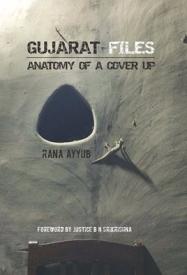
Summary: 'Gujarat Files -Anatomy of a Cover up' .
A book which has seen the worst kind of censorship by publications and is set to see the light of the day next week. It has been self published by the author and will be available for sale May 26 onwards.
Book launch on the May 27 2017, Foreword of the book has been written by the eminent jurist Justice B.N. Srikrishna
A book which has seen the worst kind of censorship by publications and is set to see the light of the day next week. It has been self published by the author and will be available for sale May 26 onwards.
Book launch on the May 27 2017, Foreword of the book has been written by the eminent jurist Justice B.N. Srikrishna
April 29, 2016
Publication Announcement: 'Indian Nationalism versus Hindu Nationalism - Politics of the RSS Combine By Ram Puniyani'
Indian Nationalism versus Hindu Nationalism
Politics of the RSS Combine
By Ram Puniyani
Introductory Chapter by Professor Richard Bonney, Leicester University, UK
About the Book
India has been witnessing an intense debate over the concept of nationalism for the last few decades, especially with the Ram Temple issue and Babri demolition, though its roots lie in the colonial period when two types of nationalisms came up simultaneously.
One was the secular-democratic Indian nationalism while the other was an idea based on religion, which in turn had two subsets, Hindu nationalism and Muslim nationalism, both of which had their roots in the declining social forces which perceived the changing social-political-economic scenario as a threat to their vested interests.
These nationalisms under the garb of religion did not participate in the anti-colonial struggle which led to our freedom. The values of Indian nationalism are enshrined in the Indian Constitution. This book casts a serious look at the RSS, its emergence, ideology, growth pattern and impact on the society and politics of India during the last few decades.
The book compares and contrasts the political phenomena of fundamentalism and fascism with the programme of Hindutva. it elaborates the agenda of Hindutva which strives to create a Hindu Rashtra (nation) and also discusses its impact on the rights of the weaker sections of society, Dalits, adivasis, women and workers in addition to its politics of the intimidation of religious minorities, muslims and Christians.
Contents
Introduction / Fascism / Fundamentalism / Rashtriya Swayamsevak Sangh / Indian National Congress / Freedom Struggle, RSS and Hindu Mahasabha / Struggle for Indian Freedom / Role of Hindu Communalists / Nationalism / Hindutva Movement / Social Base of RSS Combine / Hindutva and the exploited, oppressed sections of society / Women's movement / Dalits / Minorities / RSS Ideology in Practice / Doctoring History for Political Goals / Adivasis / Complimenting Imperialist Designs / RSS-run Schools / Ambedkar’s Ideology / Was Gandhi Impressed by RSS? / Manufacturing and Undermining National Icons / Conclusions / Ten most aggressive fringe elements of the Parivar / Pledge of RSS / Constitution of RSS
About the Author
Ram Puniyani was a professor at the Indian Institute of Technology (IIT) Bombay, and took voluntary retirement in December 2004. He working for communal harmony work, is involved with human rights activities from last two decades. He is associated with various secular and democratic initiatives like All India Secular Forum, Center for Study of Society and Secularism and ANHAD. He has written more than three dozen books. He is a well-known civil rights activist, writer and public speaker.
235 pages / Paper back Rs 250
First edition, 2016
ISBN-10: 81-7221-077-9
ISBN-13: 978-81-7221-077-9
Size 8.5 x 5.5
Non-fiction
India / Nationalism / Hindutva / RSS / Sangh Pariwar
Can be ordered online at www.pharosmedia.com
Pharos Media & Publishing Pvt Ltd
D-84 Abul Fazl Enclave-I,
Jamia Nagar,
New Delhi 110025 India
Tel: (+91-11) 26947483, 26952825
books@pharosmedia.com
Politics of the RSS Combine
By Ram Puniyani
Introductory Chapter by Professor Richard Bonney, Leicester University, UK
About the Book
India has been witnessing an intense debate over the concept of nationalism for the last few decades, especially with the Ram Temple issue and Babri demolition, though its roots lie in the colonial period when two types of nationalisms came up simultaneously.
One was the secular-democratic Indian nationalism while the other was an idea based on religion, which in turn had two subsets, Hindu nationalism and Muslim nationalism, both of which had their roots in the declining social forces which perceived the changing social-political-economic scenario as a threat to their vested interests.
These nationalisms under the garb of religion did not participate in the anti-colonial struggle which led to our freedom. The values of Indian nationalism are enshrined in the Indian Constitution. This book casts a serious look at the RSS, its emergence, ideology, growth pattern and impact on the society and politics of India during the last few decades.
The book compares and contrasts the political phenomena of fundamentalism and fascism with the programme of Hindutva. it elaborates the agenda of Hindutva which strives to create a Hindu Rashtra (nation) and also discusses its impact on the rights of the weaker sections of society, Dalits, adivasis, women and workers in addition to its politics of the intimidation of religious minorities, muslims and Christians.
Contents
Introduction / Fascism / Fundamentalism / Rashtriya Swayamsevak Sangh / Indian National Congress / Freedom Struggle, RSS and Hindu Mahasabha / Struggle for Indian Freedom / Role of Hindu Communalists / Nationalism / Hindutva Movement / Social Base of RSS Combine / Hindutva and the exploited, oppressed sections of society / Women's movement / Dalits / Minorities / RSS Ideology in Practice / Doctoring History for Political Goals / Adivasis / Complimenting Imperialist Designs / RSS-run Schools / Ambedkar’s Ideology / Was Gandhi Impressed by RSS? / Manufacturing and Undermining National Icons / Conclusions / Ten most aggressive fringe elements of the Parivar / Pledge of RSS / Constitution of RSS
About the Author
Ram Puniyani was a professor at the Indian Institute of Technology (IIT) Bombay, and took voluntary retirement in December 2004. He working for communal harmony work, is involved with human rights activities from last two decades. He is associated with various secular and democratic initiatives like All India Secular Forum, Center for Study of Society and Secularism and ANHAD. He has written more than three dozen books. He is a well-known civil rights activist, writer and public speaker.
235 pages / Paper back Rs 250
First edition, 2016
ISBN-10: 81-7221-077-9
ISBN-13: 978-81-7221-077-9
Size 8.5 x 5.5
Non-fiction
India / Nationalism / Hindutva / RSS / Sangh Pariwar
Can be ordered online at www.pharosmedia.com
Pharos Media & Publishing Pvt Ltd
D-84 Abul Fazl Enclave-I,
Jamia Nagar,
New Delhi 110025 India
Tel: (+91-11) 26947483, 26952825
books@pharosmedia.com
April 14, 2016
Invitation to Book Release and Discussion on Hindu Nationalism versus Indian Nationalism (16 April, New Delhi)
Jamia Collective &
Pharos Media
cordially invite you to the release of Ram Puniyani’s new book
INDIAN NATIONALISM
VS.
HINDU NATIONALISM
The release will be followed by a panel discussion by Ram Puniyani, Om Thanvi and Shail Mayaram
on Saturday, 16th April, 2016 at 4:30 PM.
Venue:
Saiyidain Manzil, 267 A, Near Tikona Park,
Near Faculty of Education, Jamia Millia Islamia,
Jamia Nagar, New Delhi-110025.
About the book: The debate around Hindu Nationalism and Indian Nationalism is not a new one. During colonial period, when the rising freedom movement was articulating the concept and values of Indian nationalism, the section of Hindus, keeping aloof from freedom movement asserted the concept of Hindu Nationalism. The debate has resurfaced again after the formation of a hindu right wing govt at the centre led by Narendra Modi. This book compares and contrasts the political phenomena of fundamentalism and fascism with the programme of Hindutva.It elaborates the agenda of Hindutva, which strives to create a Hindu Rashtra and also discusses its impact on the rights of the weaker sections of society Dalits, Adivasis,in addition to its politics of intimidation of religious minorities, Muslims and Christians.
About the Panelists:
Ram Puniyani was a professor at the Indian Institute of Technology (IIT) Bombay, and took voluntary retirement in December 2004 to work full time for communal harmony in India. He is involved with human rights activities from last two decades. He is associated with various secular and democratic initiatives like All India Secular Forum, Center for Study of Society and Secularism and ANHAD. He has written more than three dozen books. He is a well-known civil rights activist, writer and public speaker.
Om Thanvi is a writer and a veteran journalist. He joined Hindi journalism in 1980 in Jaipur and retired in July 2015 as the editor of Jansatta, a reputed hindi daily of Indian Express Group published from Delhi. He had been Secretary General of Editors Guild of India for two terms as well as Vice President of the South Asia Free Media Association (SAFMA).
Shail Mayaram is a professor at the Centre for the Study of Developing Societies. Her publications include Against History, Against State: Counterperspectives from the Margins; Resisting Regimes: Myth, Memory and the Shaping of a Muslim Identity; Co-authored, Creating a Nationality: The Ramjanmbhumi Movement and the Fear of Self.
Jamia Collective is a recently initiated platform of artists, intellectuals, journalists and activists to promote diversity, pluralism and constitutional values and it actively engages with citizens of the Jamia area and aims to bridging the gap between thinkers working in various fields. Jamia Collective organises Guftgu- a discussion forum every alternate Saturday at the same venue as of this event. jamiacollective15@gmail.com Facebook: fb.com/jamiacollective Tel. 9810856484, 9999010234, 9727474767
Pharos Media & Publishing Pvt Ltd was incorporated in 1996 and is into publishing books and periodicals. It has published books on Current Affairs, Politics, Terrorism, Research, Religion, Minorities, Human Rights, Conflicts and other non-fiction general issues. Pharos means lighthouse and Pharos of Alexandria was one of the seven wonders of the world.
Publishers of the book
Pharos Media & Publishing Pvt Ltd
D-84 Abul Fazl Enclave - I, Jamia Nagar, New Delhi-110025
Tel. 011-26947483, 011-26952825, +91-9868656614
Email: books@pharosmedia.com Website: www.pharosmedia.com

cordially invite you to the release of Ram Puniyani’s new book
INDIAN NATIONALISM
VS.
HINDU NATIONALISM
The release will be followed by a panel discussion by Ram Puniyani, Om Thanvi and Shail Mayaram
on Saturday, 16th April, 2016 at 4:30 PM.
Venue:
Saiyidain Manzil, 267 A, Near Tikona Park,
Near Faculty of Education, Jamia Millia Islamia,
Jamia Nagar, New Delhi-110025.
About the book: The debate around Hindu Nationalism and Indian Nationalism is not a new one. During colonial period, when the rising freedom movement was articulating the concept and values of Indian nationalism, the section of Hindus, keeping aloof from freedom movement asserted the concept of Hindu Nationalism. The debate has resurfaced again after the formation of a hindu right wing govt at the centre led by Narendra Modi. This book compares and contrasts the political phenomena of fundamentalism and fascism with the programme of Hindutva.It elaborates the agenda of Hindutva, which strives to create a Hindu Rashtra and also discusses its impact on the rights of the weaker sections of society Dalits, Adivasis,in addition to its politics of intimidation of religious minorities, Muslims and Christians.
About the Panelists:
Ram Puniyani was a professor at the Indian Institute of Technology (IIT) Bombay, and took voluntary retirement in December 2004 to work full time for communal harmony in India. He is involved with human rights activities from last two decades. He is associated with various secular and democratic initiatives like All India Secular Forum, Center for Study of Society and Secularism and ANHAD. He has written more than three dozen books. He is a well-known civil rights activist, writer and public speaker.
Om Thanvi is a writer and a veteran journalist. He joined Hindi journalism in 1980 in Jaipur and retired in July 2015 as the editor of Jansatta, a reputed hindi daily of Indian Express Group published from Delhi. He had been Secretary General of Editors Guild of India for two terms as well as Vice President of the South Asia Free Media Association (SAFMA).
Shail Mayaram is a professor at the Centre for the Study of Developing Societies. Her publications include Against History, Against State: Counterperspectives from the Margins; Resisting Regimes: Myth, Memory and the Shaping of a Muslim Identity; Co-authored, Creating a Nationality: The Ramjanmbhumi Movement and the Fear of Self.
Jamia Collective is a recently initiated platform of artists, intellectuals, journalists and activists to promote diversity, pluralism and constitutional values and it actively engages with citizens of the Jamia area and aims to bridging the gap between thinkers working in various fields. Jamia Collective organises Guftgu- a discussion forum every alternate Saturday at the same venue as of this event. jamiacollective15@gmail.com Facebook: fb.com/jamiacollective Tel. 9810856484, 9999010234, 9727474767
Pharos Media & Publishing Pvt Ltd was incorporated in 1996 and is into publishing books and periodicals. It has published books on Current Affairs, Politics, Terrorism, Research, Religion, Minorities, Human Rights, Conflicts and other non-fiction general issues. Pharos means lighthouse and Pharos of Alexandria was one of the seven wonders of the world.
Publishers of the book
Pharos Media & Publishing Pvt Ltd
D-84 Abul Fazl Enclave - I, Jamia Nagar, New Delhi-110025
Tel. 011-26947483, 011-26952825, +91-9868656614
Email: books@pharosmedia.com Website: www.pharosmedia.com

November 04, 2015
New book-Ghar Wapsi, Conversions and Freedom of Religion
Ghar
Wapsi, Conversions and Freedom of Religion

An illuminating and compelling
collection of essays by leading secular scholars, who forensically analyse the
Hindu nationalist campaign of alleged ‘home-coming’ to reconvert persons of
disadvantages castes and tribes, whose ancestors had abandoned the Hindu faith
in search of elusive social equality.
Contents
Acknowledgements
Contributors
Introduction
Section (A) Islam and
Christianity in India:- Ghar Wapsi,
Christianity and Freedom of Religion; Conversion to Islam; Anti-Muslim Violence; Islam, Freedom of Religion &
Conversion; Section (B) Agenda behind Conversion:- Towards a Hindu Nation Section (C) Sociology of Conversions;
Ghar Wapsi: Political Agenda, Religious Garb, Ghar Wapsi: Welcome to the Hellhole of
Hinduism, Return to which home?;
The Failure of Christianity in India,
Love Jihad: From Illusory Slogan to
Potent Weapon Section (D) Legal Tangle: Freedom of Religion:- How freedom of religion laws restricts
religious freedom in India?, Conversion and Freedom of
Religion.
Book Reviews; Post Script;
Appendix
Contributors
K.N. Panikkar, Faizan Mustafa, Ram Puniyani, D.Gnaniah,
Rudolf C. Heredia, Anand Teltumbde, Gopal Guru, Tony Joseph, Tehmina Arora,
Suhrith Parthasarathy, Asghar Ali Engineer, Arul
Louis.
ISBN
978-93-7495-599-4
Total Pages: 220
Price Rs.
450/-
Us $
20/-
Published by Media House,
Delhi
For
Copies Contact:
Media
House
375-A, Pocket -2, Mayur Vihar Phase 1,
Delhi: - 110 091
Ph: 011-43042096, 09555642600, 07042752030
October 31, 2015
India: Selected Writings by Govind Pandare, Narendra Dhabolkar and MM Kulbargi Just been published in English by SAHMAT
New book by SAHMAT Releasing on 1st Nov. 2015 at Mavalankar Hall, Rafi Marg, New Delhi
ISBN: 978-93-80535-41-5
Price: Rs 120/-

ISBN: 978-93-80535-41-5
Price: Rs 120/-
October 26, 2015

April 16, 2015
Book Launch and Discussion: INEQUALITY, Prejudice and Indifference in New India by Harsh Mander (22 April, 2015, New Delhi)
Speaking Tiger
cordially invites you to the launch of
Looking
away
INEQUALITY, Prejudice
and Indifference
in New India
By Harsh Mander
Followed by a panel discussion on the book with the author
Panellists :
Sir Mark Tully, author and former Bureau Chief, BBC, New Delhi
Dr Zoya Hasan, former Professor of Political Science & Dean of School
of Social Sciences, Jawaharlal Nehru University
Siddharth Varadarajan, senior journalist and columnist
Moderator :
Urvashi Butalia, Publisher, Zubaan Books, author and literary critic
Date & Time : Wedneday, 22 April, 2015, 6.30 pm
Venue : M.L. Bhartia Auditorium, Alliance Francaise,
72, K.K. Birla Marg, Lodhi Estate,
New Delhi : 110003
Please join us for tea before the book release
rsvp : Shailza Rai (shailzarai@speakingtiger.com)
phone: + 8510009989
www.speakingtigerbooks.com

October 08, 2014

December 04, 2013
Announcement: Book release Muslim Identity - Hindutva Politics 7 Dec 2013, Hyderabad
BOOK RELEASE MEETING
Muslim Identity - Hindutva Politics By K. Balagopal
5.30 pm, Saturday, 7 December 2013 Basheerbagh Press Club, Hyderabad
M.T. Khan, the noted civil rights functionary, will release the book.
Speakers:
- Khadar Mohiuddin, the poet, will introduce the book.
- Mir Ayub Ali Khan, Deputy Editor, Times of India, will speak on "Hindu nationalism - A case of Hyderabad State".
- Amit Sengupta, Associate Professor, Indian Institute of Mass Communication, Delhi, will speak on "Hindutva Politics and Democracy".
Do join us.
Human Rights Forum (HRF)
Muslim Identity - Hindutva Politics By K. Balagopal
5.30 pm, Saturday, 7 December 2013 Basheerbagh Press Club, Hyderabad
M.T. Khan, the noted civil rights functionary, will release the book.
Speakers:
- Khadar Mohiuddin, the poet, will introduce the book.
- Mir Ayub Ali Khan, Deputy Editor, Times of India, will speak on "Hindu nationalism - A case of Hyderabad State".
- Amit Sengupta, Associate Professor, Indian Institute of Mass Communication, Delhi, will speak on "Hindutva Politics and Democracy".
Do join us.
Human Rights Forum (HRF)
October 13, 2013
Explained Series: Books and Exhibition on Communalism, Terrorism - Ram Puniyani
Explained Series: Books and Exhibition on Communalism Explained and Terrorism Explained
Friends,
Violence under the garb of religion has been the major expression of the politics in current times. Sharad Sharma, and myself are working on ‘Explained Series’. The aim of the series is to present the phenomenon in the form of graphic presentations, Comic Books. Two books in this series are already out
1. Communalism Explained: Outlines the rise of Communal politics in India, The communal violence, Mumbai and Gujarat as case studies, India’s syncretic traditions, the distortions in history done by British, Communal Historiography, The values of Freedom movement, the agenda of communal politics-Muslim and Hindu, Impact of communal agenda on the human rights of workers, women, dalits, Adivasis and religious minorities, the struggle for democratic society and tasks for secular movement (Rs 300)
2. Terrorism Explained. This book is in the background of 9/11 2001 WTC tragedy and goes on to unravel the politics of control of oil wells, the setting up of Madrassas in Pakistan by US for creation of Al Qaeda, The Terror attacks in India, 26/11 2008, The Hindutva terror, path for Peace. (Rs 200)
Both these are available on
www.explainedseries.com
Selections from these books have been put into a Exhibition (30 panels). This exhibition will soon be available in plastic folders for exhibitions in various places. At present it is in the form of thick print outs. These are in Hindi and English both.
Please click the following link for viewing the panels
English Link
https://docs.google.com/file/d/0ByRns_V0ePB5dlQyNkVwYy11SEE/edit?usp=sharing&pli=1
Hindi Link
https://docs.google.com/file/d/0ByRns_V0ePB5VlZIaTRWOVYxb00/edit?usp=sharing
Do please forward it to other friends and groups. Your feedback will be welcome.
Ram Puniyani
www.pluralindia.com
Response to
ram.puniyani@gmail.com
mail@worldcomicsindia.com
arthprakashan@gmail.com
Friends,
Violence under the garb of religion has been the major expression of the politics in current times. Sharad Sharma, and myself are working on ‘Explained Series’. The aim of the series is to present the phenomenon in the form of graphic presentations, Comic Books. Two books in this series are already out
1. Communalism Explained: Outlines the rise of Communal politics in India, The communal violence, Mumbai and Gujarat as case studies, India’s syncretic traditions, the distortions in history done by British, Communal Historiography, The values of Freedom movement, the agenda of communal politics-Muslim and Hindu, Impact of communal agenda on the human rights of workers, women, dalits, Adivasis and religious minorities, the struggle for democratic society and tasks for secular movement (Rs 300)
2. Terrorism Explained. This book is in the background of 9/11 2001 WTC tragedy and goes on to unravel the politics of control of oil wells, the setting up of Madrassas in Pakistan by US for creation of Al Qaeda, The Terror attacks in India, 26/11 2008, The Hindutva terror, path for Peace. (Rs 200)
Both these are available on
www.explainedseries.com
Selections from these books have been put into a Exhibition (30 panels). This exhibition will soon be available in plastic folders for exhibitions in various places. At present it is in the form of thick print outs. These are in Hindi and English both.
Please click the following link for viewing the panels
English Link
https://docs.google.com/file/d/0ByRns_V0ePB5dlQyNkVwYy11SEE/edit?usp=sharing&pli=1
Hindi Link
https://docs.google.com/file/d/0ByRns_V0ePB5VlZIaTRWOVYxb00/edit?usp=sharing
Do please forward it to other friends and groups. Your feedback will be welcome.
Ram Puniyani
www.pluralindia.com
Response to
ram.puniyani@gmail.com
mail@worldcomicsindia.com
arthprakashan@gmail.com
Subscribe to:
Posts (Atom)