|
Showing posts with label orissa. Show all posts

January 21, 2024

25th anniversary of the midnight murder of Staines

https://www.thehindu.com/news/national/25th-anniversary-of-graham-staines-murder-to-be-observed-in-odisha-on-jan-22/article67759614.ece


January 23, 2020

India: Remembering Graham Staines, 21 Years After His Murder | Aakash Joshi / The Quint

The Quint, 22 January 2020

 
(This article has been reposted from The Quint’s archives to mark the anniversary of the murders of Graham Staines and his sons. It was first published on 22 January 2016.)
In 1965, there was no internet. A young Australian named Graham Staines though had a close friendship with Santanu Satpathy all the way in Baripada in Odisha. They had been pen pals since childhood and Graham came to Baripada to visit his friend. He never left.

For nearly 35 years, Graham Staines lived and worked with some of the poorest Adivasi communities in Odisha. On 22 January 1999, he was burnt alive along with his sons Philip and Timothy by right-wing activists, including Dara Singh who was a member of the Bajrang Dal. They were sleeping in their car, an old Willy’s four-wheel drive.
The burnt vehicle in which Graham Staines and his sons were killed on 22 January 1999. 
(Photo: Reuters)
Graham was 58 years old at the time, Philip was 10 and Timothy was nine years old. Graham was a Christian missionary and had spent his time in India working with leprosy patients in Baripada. He learnt Odia and was fluent in the local dialect, Santhali. Graham Staines was also a preacher.
The men who killed him did so because they thought he was converting Adivasis to Christianity. The charge, if that’s what it is, was denied by Graham’s widow, Gladys, repeatedly.
Gladys Staines, Graham’s wife. 
(Photo: Reuters)
The mob that committed the gruesome murders was led by Dara Singh, a member of the Bajrang Dal. Dara Singh was convicted of the crime and sentenced to death. His sentence was later commuted to life imprisonment.
Hindu activist and ringleader Dara Singh is seated in a police van in Bhubaneswar. 
(Photo: Reuters)
For the people who knew Graham, his death was more than a tragedy. It was a deep personal loss. Here’s what an India Today report in January 1999 had to say.
“But not even the harshest words could measure up to the indignation felt in Baripada, the headquarters of Orissa’s predominantly tribal district of Mayurbhanj, which Staines had made his home. “It’s as if we all have had a personal bereavement,” said District Collector R Balakrishnan. For the past 35 years, dressed in casuals, sporting his trademark hat and wheeling his rickety bicycle, Saibo – as he was popularly called – was a fixture in Baripada where he did “God’s work”, tending and nursing leprosy patients in a specially-run home on the town’s outskirts.”
Gladys Staines and her daughter Esther at the funeral of her husband and sons in Odisha. 
(Photo: Reuters)
Gladys Staines continued to stay in Odisha with her daughter Esther. In 2005, she was awarded the Padma Shri by the President of India for her work with people suffering from leprosy.

June 02, 2019

India: Pratap Sarangi champions the idea of violence, vigilantism and vitriolic idea of Hindutva | Kedar Mishra

thesamikhsya.com

A pack of bigotry wrapped in austerity: An artificial myth called Pratap Sarangi

, A pack of bigotry wrapped in austerity: An artificial myth called Pratap Sarangi
By Kedar Mishra
No doubt, he leads a simple life but one must not get swayed by the artificial narrative that simplicity is all about greatness.
Ironically, Pratap Sarangi, the new poster boy of simplicity and austerity in the national media, leads a simple life to champion the very complex ideas of social violence and bigotry.
The narrative woven around this minister of state in the new Modi government is that he is a poor or an underprivileged man, lives a simple life in a broken hut and owns only a bicycle. Is it true?
For last two decades, I have seen him living in the posh MLA Colony of Bhubaneshwar, the capital city of Odisha, whether he is elected to the assembly or not. I do not know when and how this old broken hut of his village came up to social media!
Nevertheless, Sarangi’s political journey is not as simple as what the national media wants us to believe.
He began his career as a clerk in the Nilagiri College in Balasore district and later become the state unit chief of Bjarang Dal. As the chief of Bajrang Dal in Odisha, Sarangi defended two most violent incidents, which shook the conscience of civil society in the state.
In the first incident, Sarangi strongly stood by Dara Singh, the murderer of Graham Staines. It was Sarangi who vilified Staines as a proselytiser and publicly supported the act of killing by Dara Singh.
In the second incident, his name came up in the Odisha assembly attack case in December 2001. As the president of Bajrang Dal, he led a group of saffron activists who vandalised the state assembly building and violently attacked MLAs there. It was one of the most horrible attacks on the “temple of democracy” and irony died a thousand deaths when Sarangi becomes a MLA in 2004.
His words and actions as the Bajrang Dal chief of Odisha shall not be forgotten by the new narrative. We cannot ignore the terrible facts that here is a man who stood by a murderer and who also led the attack on Odisha assembly.
After getting elected to the assembly, he remained very much that old “Hindutva” guard in the guise of a law maker. In countless television debates, I faced him personally and had the experience of knowing his ideology of violence and bigotry.
Much before Pragyan Singh’s love for Nathuram Godse, it was Sarangi who defended Godse as a patriot. In a public forum I argued against his idea of Godse brand of patriotism. He is also a strong champion of cow vigilantism and strongly stood by the hooliganism in the name of cow protection.
On the other hand, it is true that he is honest and believes in leading a simple lifestyle. Most of the time, he loves to walk on the streets of Bhubaneswar as an ordinary man. He is a lawmaker who does not have luxury cars or a big house. He lives in the MLA Colony of Bhubaneswar modestly.
However, he fought all his elections with adequate party funding. It is completely a fiction to believe that he runs his campaign riding a bicycle. His party ran the most expensive campaign in this election and Sarangi’s campaign was no different.
What is the meaning of simplicity or austerity, if you champion the cause of violence? The murderous idea of cow vigilantism and anti-minority rant cannot be hidden under the clothes of simplicity. In the guise of austerity and honesty, Pratap Sarangi champions the idea of violence, vigilantism and vitriolic idea of Hindutva.

May 31, 2019

India: Pratap Chandra Sarangi, of Bajrang Dal Orissa is now in the Modi Govt of 2019


April 24, 2018

India - Orissa: Presentation of Fact Finding Report on the incident of vandalization of Church and Temple at Sundargarh District


PRESS Release

Presentation of Fact Finding Report on the incident of vandalization of Church and Temple at Sundargarh District

Bhubaneswar: Date: 23-4-2018

A fact finding team of five members from Bhubeneswar visited Rajgangpur, Kutra and Kuarmunda block of Sundargarh district to investigate the affected areas and discussed with the local people about the incident.

The team first visited Kuarmunda block of Salangabahal Church where they saw the broken Marian Shrine at the main gate. The glass frame was broken and then the shrine too was broken and thrown into the river which was 2 ½ KM away from the incident place. After two days the broken statue was found by the fisherman from the bank of river and informed the police and brought back to the same place.

According to a local Woman the incident has taken place at 11.30pm on 1st April 2018.She heard the crushed sound of glassware but she couldn’t dare to get out of the house to see the situation.

After that team had reached to Laxmiposh of Rajgangpur block where the head of the statue of the bull which was kept in front of the Shiva temple was crushed with stone by unknown miscreants in the same night. Although the statue was immersed later in the river by the temple committee, but when talked to Ms. Julia Minz a lady priest of the temple and Naveen Minz a member of the temple committee, it was known that ,there Kishan Adivasis are Hindu and this temple is being built by MP Juel Oram and MLA Mangala Kishan with government aid.

Though it is said that the incident occurred due to the opposition of MLA George Tirkey standing with the PESA act but behind this there is a conspiracy to create conflict between Hindu tribals and Christian tribals which is seen clearly.

On 2nd April at about 1am to 1.30 am (midnight) some miscreants have broken the flower pots first and the glass panel and then statue of Marian shrine of village Gyanpali of Rajangpur block was removed and crushed at the spot.

A woman named Sasmita Tirkey staying at the side heard the broken sound and came out and saw that a man holding a bag in the hand going away slowly. She called out the neighbours from the sleep and four young men with two motorcycles tried to follow the person. But they saw the church of Bihabandh at a short distance burning and awoke the parish priest Fr. Bipin Kishor Majhi and others who were sleeping behind and together they extinguished the fire. They went to find out the miscreants but could not find anyone. Later regarding this the written complaint was logged in the police station, the police provided security at the incident occurred places but there was an atmosphere of doubt everywhere. According to the vice president of the church Cum Ex Zilla Parishad member Biramitra Minz and other villagers it is a conspiracy to break down the peace, solidarity and brotherhood which is prevailing among them from the existence of the village.

After 5 days of this incident means on 7th April some one broke the statue of Mother Mary of the church of Laphoorbeda ,Dahijira of Kutra block was thrown and crushed infront of the Church. According to the eyewitness the Kutra Police has detained a person but without proper medical enquiry and medical check up they say the person is mentally imbalance.

The team after meeting and discussing with many persons found out from the incidents these following points:-

· To create differences, doubts and enmities between the Hindu Adivasi and Christian Adivasi the temple was purposely broken. The purpose also to bring the Caste based division.

· In the same night the entire incident has occurred and there is more than one person involved in it.

· It is highly planned and purposefully executed.

· It is well planned to create fear and tension among the Christian. The purpose is to create religion based division.

· This is the purpose of the Company, Corporate to establish communal attitude and to break the unity among the Adivasis with the PESA Act.

The Fact Finding team members are Mr.Dhirendra Panda,Human Right activist,Mr.Abhiram Mallick Vice president of Mulnivasi Samata Parishad,Ajay Kumar Singh Human Rights Activist, Mr.Amiya Pandav Journalist and Mr.Anil Kumar Mallick.

March 15, 2018

India: In Odisha, no blood spilt but the fires of communal hatred are touching the skies | Harsh Mander

scroll.in - March 03, 2018

In Odisha, no blood spilt but the fires of communal hatred are touching the skies
In three incidents, the Karwan team finds a common instrument used to subjugate disadvantaged castes and minorities – arson.


In Cuttack's Gurudijhatia village, a woman who lost her life savings when upper caste neighbours burnt down her hut weeps. | Sanjukta Basu / Karwan e Mohabbat

Harsh Mander

The first day of the Karwan e Mohabbat (caravan of love) in Odisha revealed a state torn apart by the same ruptures of communal and caste mobilisation against religious minorities and disadvantaged castes that lacerate many parts of the country. But in Odisha we found that after the Kandhamal massacre of nearly a decade back, when Hindutva groups had killed over 50 Christians and attacked their homes and places of worship, the breaches between religious groups and castes have not led to many examples of targeted murders. Instead, in all the three episodes the Karwan team looked at on the first day of their Odisha travels, it was instructive to observe that the chosen instrument of subjugation of suppressed castes and minorities was the same – of arson, setting on fire their homes, a place of worship and their shops, rather than murderous attacks on the bodies of the victims.

In the first village we visited, Gurudijhatia in Cuttack district, it was the homes of Dalit residents that had been set on fire by their upper caste neighbours. The immediate provocation seemed political. For over 25 years, they had voted in Ranjan Acharya as their village sarpanch. In the panchayat elections in the summer of 2017, Acharya put up his teenaged son Deepak. He was backed by the ruling Biju Janata Dal, although nominally panchayat elections exclude party affiliations. A rival candidate decided to contest the polls. A former school teacher, he too had a long association with the ruling party, but since he had been overlooked for this candidature, he decided to fight as a rebel independent candidate. The Dalits of the village conferred and took what for them was a momentous decision – to vote for the rival candidate. “His [Deepak Acharya’s] father had done nothing for us even though we had been loyal to him for 27 years,” said one resident. “We thought, let us give a new man a chance.”

For a community that was landless and at the bottom of the caste heap, it was a brave decision. And taking the guarantees of the Constitution of electoral freedom at face value, they voted against Deepak Acharya. Deepak Acharya won by a significant margin. But it was not lost on him and his father that the Dalits of his village had dared to vote against him. Many of the Dalit men pulled cycle rickshaws in neighbouring Cuttack city. A day after the polls, as these men made their way to Cuttack, they found their path blocked. A few blows fell on them. The elders of the village were assembled, and they advised restraint on all sides. But later the same day, a large crowd of upper caste young men gathered, pulled the Dalit residents out of their homes, and set these on fire.

When we visited, the huts were burnt-out shells. The families had moved in with relatives. The continuing fear was palpable. An old woman wept quietly, recalling that their life savings had been lost in the fire. Men from both communities were jailed for brief periods. Even though the Dalits had been attacked and their homes burnt, the police were scrupulous in ensuring an even count between the communities of the men sent to prison. Even the possibility of justice seemed remote for the survivors of the violence. No state help was forthcoming for them to rebuild their homes. The best they could hope for was an end to the informal social and economic boycott, so they could find work again on the farms of their upper caste neighbours. And live without fear of another attack. The next time they stand before an election booth, they have been taught their place and it is a lesson they are not likely to forget, not for generations.


A Dalit member of Rajesh Naik's fellowship joins the Karwan team in praying for peace and truth. (Credit: Sanjukta Basu / Karwan e Mohabbat)

Prayers in hiding

In the second village in Bhadrak district that we drove to in the afternoon, it was a Christian place of worship that had been set afire and demolished. About 17 families from surrounding villages had over the last two decades decided to convert to Christianity. They were led by a man in his forties – for his safety, we will not name him or his village. Let us call him Rajesh Naik. He recalled he had read a pamphlet as a young man. It spoke of the shubha samachar or “auspicious news” that Jesus Christ had died to save them, free them from the burdens of sin and bondage, and lead them to heaven in the after-life. He found himself drawn from his soul to the pamphlet, and read the address at its bottom. It was of a Protestant church in Kolkata. He had completed his studies in electric engineering at an Industrial Training Institute. He decided to find his spiritual path in life, and took a bus to Kolkata. He spent two years there, and while there converted to Christianity.

His father was furious, he said, and his back still carries the scars of the beating he received. His mother and brother, the community elders, his friends and neighbours tried to dissuade him, but he was firm that he would live his life as a Christian. His father then disinherited him from his share of the family land. Naik found a young woman who was similarly drawn to the teachings of Christ. They married and raised a family. Over the years, more than a dozen families from various castes in surrounding villages converted to Christianity. From the savings from his work as an electrician, Naik saved money to build a small one-room chapel, which he raised on cement pillars with a roof of asbestos sheets.

Every Sunday morning, Naik would lead the prayers in this chapel. There was no major church in the vicinity, no trained and formally ordained priest to guide them in their worship. Naik became the religious head of his small community, which he described as a fellowship. On the land adjoining the chapel, he created a small graveyard, in which two members of their fellowship were buried.

One Sunday morning in August, just months before our visit, a group of men from the villages – men Rajesh Naik recognises, all members of the Bajrang Dal and other Sangh organisations – surrounded the chapel, shouting fearsome slogans. The small congregation ran away in fear, and the mob burnt down the chapel and knocked down the gravestones, desecrating and turning over the graves. Although they gave the names of the men who destroyed the chapel to the police, no action had been taken. The small Christian community lives in fear, but still takes at face value the promise of the Constitution that guarantees them their freedom of faith. They refuse to give up their chosen religious faith or their routine of meeting every Sunday to pray together. They meet quietly in different homes by turn, but even as they pray, they worry about another mob attacking them.

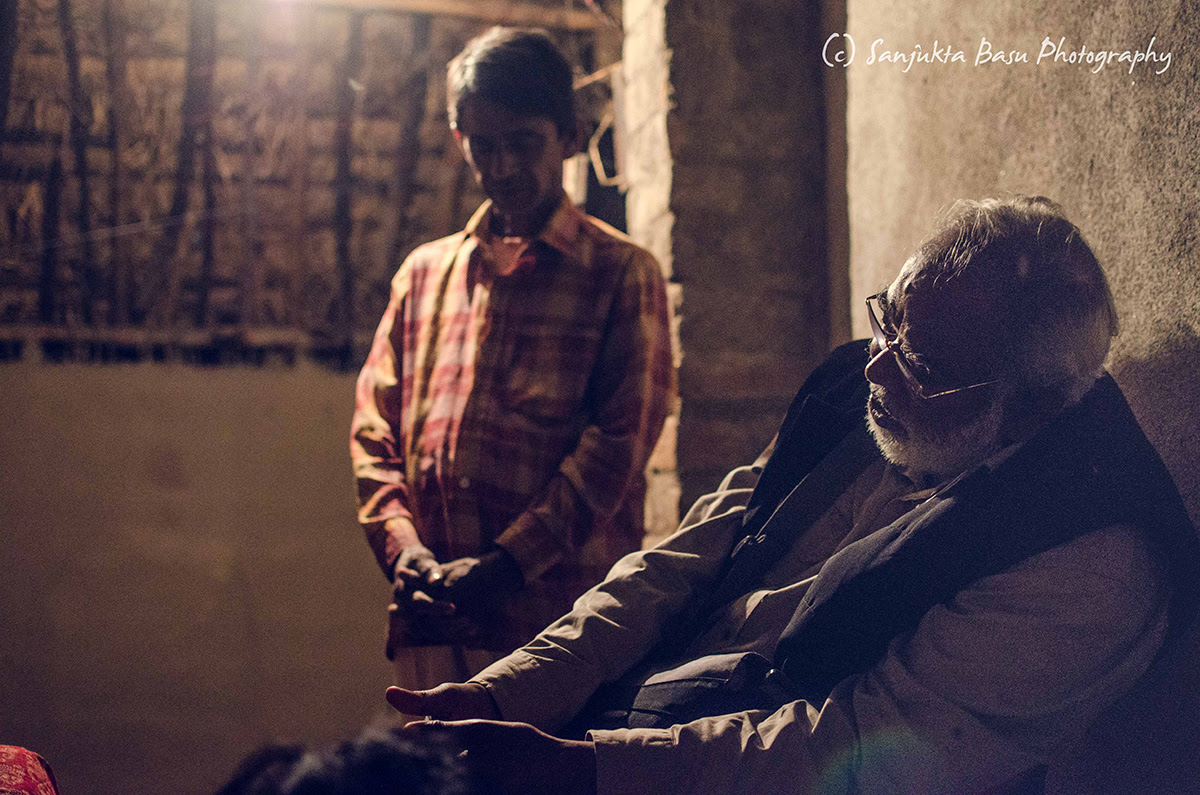
Before we left, Naik urged us to gather in the home of a Dalit brother and join them in prayer. John Dayal, the senior comrade of the Karwan team, led the prayer, saying the gathering had people of many faiths, including an agnostic like me, and he sought protection and well-being for all. Naik followed with his own prayer, speaking of their sins and the redemption he had found in Christ.

Karwan e Mohabbat member John Dayal leads the prayers at the hut of a member of Rajesh Naik's fellowship. (Credit: Sanjukta Basu / Karwan e Mohabbat) 
Karwan e Mohabbat member John Dayal leads the prayers at the hut of a member of Rajesh Naik's fellowship. (Credit: Sanjukta Basu / Karwan e Mohabbat)

WhatsApp message sets off tension

Our last halt for the day was Bhadrak town. Here, the communal tension, again from a few months ago, had seen around 25 shops set on fire. This is a town with almost an equal number of Hindus and Muslims living together since Mughal times. They live in separate settlements, although a small number of families live in the midst of the other community. It is a town of long interregnums of communal peace, interrupted from time to time by brief but bloody outbreaks, the last of which was in 1991 and saw many dead. In April 2017, tension flared up after two teenaged school friends exchanged private messages that were disrespectful of each other’s faith. The message fell into the hands of a member of a communal organisation that has been trying hard to deepen the communal divide between the religious groups. He extracted a portion of the post that was disrespectful to Hindu gods and circulated it on WhatsApp.
The aftermath was predictable, with crowds gathering, armed with sticks, daggers and cans of petrol. They set out to attack the homes of the Muslims who lived in the midst of Hindu settlements. The saving grace was that there were a number of respected seniors who gathered under the banner of the Gandhi Peace Foundation and stood between the mobs and Muslim homes. This act saved many lives. But the crowds then turned to the marketplace and set fire to many shops owned by Muslims. The next day, in retaliation, a group of Muslim youth set fire to a smaller number of shops owned by Hindus.
At a meeting at the Gandhi Peace Foundation, we took heart that unlike in most places we had traversed during the Karwan, there were still women and men from both communities in Bhadrak willing to come forward visibly to rebuild social relations. Everyone gathered in the room testified to the role the administration played in enabling the violence to continue, when it could have stemmed it at the start. They pointed also to the arrest of a much larger number of young men from the minority community, on graver charges. Some spoke openly, some in muffled tones, about the role played by organisations of the Sangh to divide the communities to gain politically at the hustings.

Scars of Kandhamal

The next day, we travelled to Kandhamal, where 10 years ago, across nearly 500 villages, Christian minorities were killed and raped and their homes burnt and looted. I will write a separate account of their unhealed wounds, of many families still too frightened to return to their homes, and the spectacular subversion of justice.
On our last day in Odisha, after our return from Kandhamal, we went to the Bhubaneswar Railway Station where in May a group of cow vigilantes, who claimed membership of the Bajrang Dal, had gone on a rampage when they found 25 cows being transported on a train. It did not matter to them that these cows were being shifted by the Tamil Nadu veterinary department from Salem to their counterparts in Meghalaya. They attacked the transporters and railway officials, chained two innocent men (including a passenger who had nothing to do with the transport of the animals) to an iron pole and beat them, released the cows, and held up the train for two hours. The railway officials did nothing to restrain the attackers, who proudly spoke of their feats in front of television cameras. Eight men were ultimately arrested but released on bail in just a few days. The cows were sent to Meghalaya on another train a few days later.
We left Odisha with sombre memories of these many fires – of Dalits homes, of a Christian place of worship, of Muslim and Hindu shops. Common to each of these were organisations on a mission to intimidate religious minorities and disadvantaged castes and compel them to submit to the power and will of the majority. We carried the grief of the families whose loved ones were killed or raped in the Kandhamal carnage, bereft of justice and healing. We encountered a seething Odisha but a land in which blood has not flowed the way it did 10 years ago. However, fires of hate have since risen to the skies in many parts of the state, vigilantes roam, and hearts have been filled with dread and fear. Meanwhile, the state government, the “secular” Opposition and even progressive civil society just stand by.

May 09, 2017

India - Orissa: Countering a resurgent BJP has become Naveen Patnaik’s biggest challenge (Edit, The Times of India)

The Times of India - May 9, 2017

Rejig in Odisha: Countering a resurgent BJP has become Naveen Patnaik’s biggest challenge

TOI Edit in TOI Editorials | Edit Page, India, politics | TOI

Odisha chief minister Naveen Patnaik carried out an exhaustive reshuffle in his three-year-old ministry by inducting 10 new faces among 24 members, while assigning important organisational tasks to outgoing ministers this Sunday. The exercise is largely aimed at reining in a coterie of ministers and politicians perceived to be running the administration. Anti-incumbency was reflected in BJD’s unimpressive performance and BJP’s surge in recently concluded local body elections. It is this that may have prompted Patnaik to try to set his house in order.

Today’s reshuffle may remind observers of 2012 when Patnaik cut short his trip to London to crack the whip on dissident leaders. The revolt was led by former bureaucrat turned politician Pyari Mohan Mohapatra, adviser to Patnaik for over a decade. Patnaik sacked two ministers and suspended two other MLAs as a course correction exercise then. Patnaik faces a major political challenge again this time. BJD won 474 out of 853 seats in recently concluded zilla parishad elections where it had won 651 seats in 2012, while BJP appears to be catching up as it won 297 this time as opposed to only 36 in 2012.

Patnaik, however, has proven ability to out-manoeuvre opposition challenges. He broke the alliance with BJP in 2009 and yet won 103 of 147 assembly seats, following it up with 117 seats in 2014. This time around, the Modi-Shah duo wants to see the lotus blooming in every state and will leave no stone unturned for this purpose in Odisha. The four-time chief minister had been relying too heavily on bureaucrats to deliver the goods so far. Patnaik needs to crack the whip on corruption, mingle more with his MLAs for valuable feedback and continue with the organisational rejig to withstand BJP’s onslaught.

This piece appeared as an editorial opinion in the print edition of The Times of India.

March 02, 2017

India: BJP makes impressive inroads in Orissa - panchayat elections 2017

BJP upbeat, Congress worried: What’s happening in Odisha panchayat elections

For a party that was long-ridiculed as the ‘signboard party’ in Odisha, Prime Minister Narendra Modi’s congratulatory message at an election rally at Kannauj on Wednesday must have come as music to BJP leaders in the state.

Had it not been the unexpected success of the party in the first two phases of the panchayat elections, Modi would perhaps never have thought of Odisha in the midst of an election rally in Uttar Pradesh. [. . .]

http://www.hindustantimes.com/india-news/odisha-panchayat-elections-upbeat-after-success-it-s-mission-2019-for-bjp/story-kkn0rTuqtbbQRSb9zulsFK.html

o o o

Odisha zilla parishad poll results out: BJD 473, BJP 297

February 03, 2016

India - Orissa: Cops Stage Flag March as Jadupur Boils

The New Indian Express

 Cops Stage Flag March as Jadupur Boils

Published: 02nd February 2016 04:07 AM
Last Updated: 02nd February 2016 04:07 AM

BHUBANESWAR: The communal flare-up in Jadupur, on the outskirts of Capital City, reached a flashpoint on Monday as clashing groups went on a rampage destroying property and targeting policemen.
FULL TEXT HERE: http://www.newindianexpress.com/states/odisha/Cops-Stage-Flag-March-as-Jadupur-Boils/2016/02/02/article3256848.ece

January 02, 2016

India: The Sangh silences the Songs of Christmas (Ajaya Kumara Singh)

https://sabrangindia.in/

The Sangh silences the Songs of Christmas
Written by Ajaya Kumara Singh | Published on: January 1, 2016

Image Courtesy: PTI
It is not Peace if forced by the Bully

A craftily called bandh call by an Adivasi outfit, that is a front for the Sangh Parivar paralysed transport and forced shops and markets to close, ensuring no prayers at yuletide for the Christians of many villages in the Kandhamals


Kandhamal remains once more, in the headlines on the Christmas and New year of 2015.[1] While the mainstream media reported ‘peaceful’ Christmas celebrations, these reports chose to ignore the fear and insecurity caused by the intimidation let loose on December 25, 2015, Christmas Day,by local leaders belonging to the Bharatiya Janata Party (BJP) and the Rashtriya Swayamsevak Sangh (RSS).

Christians of Barkhama village, 13 kilomteres from Balliguda, the sub-divisional headquarters in Kandhamal district woke to find that the main road had been blocked with heavy stones and felled trees and a mob of more than one thousand persons led by local leaders of the Bharatiya Janata Party and Rastriya Sevaka Sangh physically present to prevent any visits to the Church or celebrations. This bandh call given by the Adivasi outfit -- Kui Samaj Samanwaya Samity (KSSS) –is a front of the RSS-VHP and is the same outfit which called for a bandh both in 2007 and 2008. During the Christmas of 2007, brute violence was unleashed against the local Christian community, which further triggered the anti-Christian violence in the districts after August 25, 2008, the worst communal violence against Christian community in India, to date.

The terror-stricken leaders of the Christian community immediately informed the local police personnel as well as Special Forces deputed for Christmas celebrations. While they cleared the road, Christians were not allowed to attend Church. The community remembered the community; yet as youth leader of the village, Kartik Nayak puts it, “We could not celebrate Christmas; in place of happiness and peace, we have to live in fear and insecurity.” Christians from the district have sent a memorandum to Naveen Patnaik, Chief Minister, Odisha to ensure protection and guarantee them a life of dignity. No FIR has yet been lodged by the police authorities.

Barkhama was not an isolated incident this Christmas. The bandh affected several parts in the district. The bandh call given by this outfit was responded with many of its supporters’ (or others in fear) downing shutters of shops in the area. Buses stayed off the roads in several towns such as Tikabali, Sankarakhol, Sarangada and Barkhama ensuring that Christians living in far-flung areas could not attend Church. Christians in the area do not own shops nor have access to private transport. Thus, if bus and shop owners, participate in any bandh, Kandhamal comes to a halt. Some of these tactics played a significant role in contributing to communal violence in 2007-08 too. It may be recalled that almost every attack on Christians in this area has followed this pattern: felling of trees and blocking the roads so that the police or force could not reach the place of attacks.

The mainstream newspapers that ran the headlines declaring peaceful Christmas celebrations need to also report the successful intimidation by Sangh Parivar outfits that, in actuality, prevented Christians from celebrating Christmas; newspapers need to accurately report the fear and insecurity as well as the intimidatory tactics (which the Special forces and the Police did not counter) blocking the people’s fundamental right to attend prayer services. The district administration should take punitive action against the offenders so that this is not repeated.

The Hindu reported, ‘No untoward incident or road blocking reported from any part of the district, says SP Kunwar Vishal Singh. Kandhamal Superintendent of Police Kunwar Vishal Singh is quoted as saying that until evening no untoward incident or report of road blocking had come from any part of the district. Around 1,000 State police personnel were on duty round-the-clock since last 36 hours to maintain law and order. Apart from these, Special Operation Group (SOG) and Central Reserve Police Force (CRPF) personnel were involved in combing operations in remote pockets of the district’. How is it then that, despite police and special force, the rule of the Mob ensured that they could force buses off the roads and ensure the shutting down of shops? And what of the memorandum submitted to the authorities, should that not have been reproted?

The Kui Samaj Samanwaya Samity (KSSS), that was at the forefront of this bandh call, was initially only backed by the BJP/RSS. Now, its leaders have formally joined the BJP. For the past eight years, the BJP/RSS has been stoking communal sentiments by mobilising around the Christian feasts like Christmas, and attacking their fundamental rights, in a brazen attempt to garner votes. They succeeded by winning two of the three Assembly seats in 2009, in the first State Elections after the Kandhamal violence.

For the Christians of Barkhama village, this is not the first time that they have been a target. The first was in the early 2000s, the second one in 2007. The third major attack took place in August 2008. The village has more than 350 Christian families. In the first attack, they say, “We lost our houses and besides some people were injured; during the second attack on us, we lost two Christians and not even single house was spared; but reduced to ashes. Despite the presence of Special Forces, RSS members attacked us and killed two Christians; women too were attacked. Further houses were destroyed. Our houses are yet to be repaired and we are yet to get back to normal day to day living (after 2008); and here they are planning to attack us again! We are not sure what would happen to us. We are frightened and hence, we have asked the state administration to take necessary measures to protect our life and property”.

“Eight years after Kandhamal burst on the international news scene on Christmas Eve of 2007 with the first large scale targeted violence against Christians in centuries, the political manoeuverings of the Sangh Parivar in the forests of Orissa remain ominous. The Christian community sees them as coercive, threatening and malevolent”, says John Dayal, member National Integration Council (NIC), of the Government of India. Dayal is also past president of the all India Catholic Union, who has investigated Kandhamal violence from December 2007.

In 2008, targeted violence against Orissa’s Christians had continued for several weeks. For the first four days of intense violence, Hindutva forces went on the rampage and killed over 101 Christians. Dozens of people went missing, never to be located again. More than 56,000 people had been displaced. The violence lasted for four months. The destruction of villages was immense with 415 villages destroyed in Kandhamal alone and 40 in a neighbouring district. Over 350 churches and worship places which belonged to the Adivasi Christians and Dalit Christians were destroyed, around 6,500 houses were burnt or demolished, over 40 women were subjected to rape, molestation. Several educational, social service and health institutions were also destroyed and looted. There were several reported cases of forced conversion to Hinduism by the the Sangh Parivar during and after the violence. [One nun was gang raped in front of a crowd of over 300 people, while nine policemen looked on. This nun ran towards the policemen asking for help but they did nothing, simply standing and watching the spectacle; the incident happened a stone’s throw away from the Nuagaon police station.]

It may be recalled that both Justice Basudev Panigrahi and Justice AS Naidu Enquiry Commissions into Kandhamal Violence and the killing of Laxmananand Saraswati have submitted their reports to Orissa government during the Christmas week itself. The contents of the report(s) are yet to be made public. Justice AS Naidu has been quoted as saying that it was the Maoists who are behind the killing of the Swami in August 2008; while the Panigrahi Commission apparently points to the ‘conversion’ factor being a reason for the anti- Christian violence in December 2007. It is unfortunate, that while BJP/RSS looks for crude opportunities to politically benefit from bartering on hatred and violence, the Biju Janata Dal (BJD) that broke away from the BJP following the Kandhamal violence remains a mute spectator. Even today, eight years down.

(The author is a civil rights activist based in Orissa)

[1] Kandhamal was first noticed nationally after the attacks on Christians during the Christmas of 2007 and August of 2008; See Christmas Mourning https://www.sabrangindia.in/article/christmas-mourning; Murder and Mayhem https://www.sabrangindia.in/article/murder-and-mayhem; Living the Nightmare https://www.sabrangindia.in/article/living-nightmare

September 08, 2015

India: Why Kandhamal Should Haunt Each of Us

ndtv.com - 4 September 2015

Why Kandhamal Should Haunt Each of Us
by Brinda Karat

It is seven years since the worst carnage against the Christian community took place in Kandhamal in Odisha. I, along with some others, was there to attend the annual observance, this time in Raikia, of the anniversary organized by the Kandhamal Committee for Peace and Justice in the memory of those killed, injured in 2008 and for those whose lives have been forever marked by the trauma and terror of the communal conflagration that lasted for several months.

The toll was heavy, with 80-100 Christians reportedly murdered, thousands of homes burnt, churches and educational institutions vandalized, over 56,000 people forced to flee their homes to live in the squalor of relief camps. Chief Minister Naveen Patnaik had named the RSS, the VHP and the Bajrang Dal as being responsible. But the victim survivors still wait for justice.

Have a quick look at this fact-sheet meticulously collected and provided by advocate-activist Dibya Singh Pariccha of Kandhamal: the victim survivors made 3,000 complaints to the police of which the police filed only 825 FIRs and, further minimizing the extent of the crimes, filed chargesheets in just 605 cases.

Of these cases, nearly half have been closed due to "lack of evidence". This is a euphemism for witness intimidation which has marked the entire criminal justice process in these cases. Witnesses were terrorized into keeping quiet. A record 11,000 of the rioters were given anticipatory bail. Those criminals who had killed, burnt, and threatened were roaming around freely. Who would dare to speak? There have been convictions in just 73 cases involving lesser offences.

According to reports by inquiry teams, the number of murders were between 80-100. Many of the bodies were burnt. The Government registered only 35 deaths of the community attacked. Of these 35 murder cases, only two have ended in conviction, with a life sentence given to 10 persons. However, courts have released each one of these murder convicts on bail.

Today there is only one man in jail for the rape of a nun. Even in this horrific case, the other two accused in the case were given bail and are now absconding. Space here is inadequate to detail other aspects of the monumental injustices but are available for anyone who cares to know.

Among the crowds in Raikia, there are seven women standing to one side. These are the wives of the men, four Adivasi and three Dalits, all Christian, who have been convicted of the murder of Lakshamananda Saraswati. He was the leader of the often violent and hate-filled anti-conversion campaign against the Christian community in this part of Odisha. His murder was the pretext for the carnage. Pretext because the Maoists had already declared proudly that it was they who had killed Lakshmananda and four of his followers, including a woman. Yet the Hindutva forces targeted the Christian community after his murder, and unleashed unprecedented violence against them.

The women have large families to manage from between four to six children each, except for the youngest who has two children. They work as agricultural workers during the season for Rs. 100 a day or eke out a living through the collection of minor forest produce, earning on an average a small sum of Rs. 50 or 60 a day. I tell them that I have met their husbands in jail that morning. They smile for a second and shake my hand. Their words are translated for me: How much longer before we can see the face of justice? The women have a dignity in their desperation. Much like their husbands, the men I had met that morning.

They had walked into the room, six of them. It was the jailor's office in the Phulbani District Central jail in Kandhamal district of Odisha. There was not much time to talk. Just an expression of solidarity from us. An appeal for help from them. A few words. A few tears, quickly suppressed. They said that even the "babas" had sent them messages in jail saying that they knew they were not guilty. They stood straight when they spoke. I looked at the tallest of them. I recalled what I had read in that atrocious judgement holding them guilty. The police-tutored witness had said in response to a question - "I saw a tall, black man" .. a tall black man, a description which would fit every third Indian man, but it was enough to lock him and the others up on equally flimsy grounds for seven years for a crime they have not committed.

I was asked why I had gone to meet men convicted of murder. Would it not give a wrong message of approval? The answer is simple: I went because they are innocent. This is a case where the law has taken a terribly wrong course. You need just to read the appalling judgement of the lower court to believe as I do that these men are innocent.

Quite recently, (June 25, 2015) one of the police officers who was part of the investigating team had testified before the Naidu Commission, set up to inquire into the reasons for the riots, that documents that have been used by the prosecution to put forward the concocted theory of a conspiracy by Christians to murder Lakshmananda are false. This was a register supposedly from the Betticola church which had been given to the police by a BJP leader Ashok Sahu and quoted in the judgement as proof of the conspiracy. A forensic report now available shows that the signatures on the register are forged. Yet neither the State Government nor the police have prosecuted Sahu for cheating the court, leave alone recognizing that it knocks the bottom out of the case of conspiracy. The officer also informed the Commission that his investigations of the charge that the Christian organisations were funding a conspiracy were found to be false.

The entire case of a conspiracy is itself a conspiracy to defame the community and arrest innocent people. The appeal is currently before the High Court.

But why the double standards? Why give bail to the killers and arsonists and deny bail to those you know to be innocent?

These questions haunt you when you visit Kandhamal. The Kandhamal seven and their families need your help, your solidarity, in whatever way you can. Here are their names: Durjadhan Majhi, Goranath Chalan Seth, Buddhuadeb Nayak, Vijay Kumar Sunsat, Bhaskar Majhi, Sanatan Majhi, Munda Bara Majhi, remember them every time you think of Indian democracy.

Free the Kandhamal Seven.

(Brinda Karat is a Politburo member of the CPI(M) and a former Member of the Rajya Sabha.)

February 13, 2015

Book Review: Continuing Agony of Kandhamal; violations against women

The Economic and Political Weekly, Vol - L No. 6, February 07, 2015

... While young Christian women were raped as and when the mob found them, the followers of the swami made a special effort to hunt for nuns. Two elderly nuns report how the mob broke into their convents and shouted “Where are the sisters?” The case of a nun who was gang-raped and paraded semi-naked on the road had made headlines then. This report shows that apart from nuns, female community workers too were especially targeted. One of them suffered the same fate as that unlucky nun: dragged out on to the road and assaulted, then taken to a building, gang-raped and again dragged out on the road in a semi-nude condition. Another community worker was chased into the jungles and hunted for four days. A third was threatened with “You are doing a lot of leadergiri. Come we will cut you into pieces. Bring your daughter, we will rape you and her in the middle of the road.’ ...


Breaking the Shackled Silence: Unheard Voices of Women from Kandhamal (first edition) by Saumya Uma, published by National Alliance of Women, Odisha chapter, 2014.

Jyoti Punwani (jyoti.punwani[at]gmail.com) is a Mumbai-based freelance journalist and human rights activist.

Can you imagine how a mother would have felt when her son
repeatedly told her that he was going to die? I banged on the
door of my Hindu neighbours and pleaded with them to help me,
but out of fear that they too would be attacked, no one opened
their doors…I sat with his body for three days, safeguarding it
from dogs.

– Testimony of a 70-year-old Hindu woman from Kandhamal

It was not the “other” community that killed this woman’s (quoted above) only son, it was her own. Angered by his attempt to stop them from killing Christians in his village, which included his sister’s husband, the Hindu mob cut his legs, hands and penis and left him to die.

Those who rule us today at the centre and represent us abroad are the very people under whose mentorship this mob acted. The incident took place in August 2008 in Odisha, in the wake of the murder of Swami Lakshmanananda Saraswati of the Vishva Hindu Parishad (VHP), notorious for his opposition to Christian missionary activities in the extremely backward area of Kandhamal. Along with him, four of his disciples, including a woman, were killed. Eight persons including a Maoist leader were convicted for his murder five years later. But immediately after his murder which took place during the Janmashtami celebrations, Christians became the target of his enraged followers. Over the next three months, Hindu mobs killed 34 Christians (as per the police; the Odisha church authorities say they could account for 75 deaths), and raped and sexually assaulted an unknown number of women while leaving an estimated 30,000 displaced.

Exceptional Brutality

The National Alliance of Women, Odisha, has brought out a report on the experiences of the women survivors of the violence. Breaking the Shackled Silence has been researched and written by Mumbai-based lawyer Saumya Uma, who has been working with the Kandhamal victims since the violence.

The brutality with which the Hindu male mentioned above was killed was not exceptional. Most of the women whose menfolk were killed describe how they were dismembered. One of the women, just 32 years old, was lucky enough not to have witnessed it, but she too was not spared the horror. She found her husband’s body with his legs, hands and head cut off. Worse was to follow. She went to get the police; when she returned, the head was missing; it was found later hanging from a tree. Imagine the confidence of the killers and the message they wanted to send.

In the January 1993 phase of the Mumbai riots following the demolition of the Babri Masjid, Shiv Sainiks hunted down Muslims they found on the streets, lynching them in broad daylight and then burning them by placing logs of wood on them almost as if to Hinduise them in death by cremating them. In Kandhamal too, in at least two of the cases cited in the report, women found the remains of their husbands in the form of bones and ashes. A cow bone had been placed at the site where one of them had been killed. Significantly, both these men were pastors. A third victim worked with the village church. His wife fell at the feet of the mob, pleading with them to “cut off (her husband’s) hands and legs, but let him live. My daughter is physically challenged, how can she live without a father?’’ They responded by cutting off his neck, stabbing him in the stomach and cutting up his body into three parts. They then began looking for his wife and daughters with the intention of raping them.

While young Christian women were raped as and when the mob found them, the followers of the swami made a special effort to hunt for nuns. Two elderly nuns report how the mob broke into their convents and shouted “Where are the sisters?” The case of a nun who was gang-raped and paraded semi-naked on the road had made headlines then. This report shows that apart from nuns, female community workers too were especially targeted. One of them suffered the same fate as that unlucky nun: dragged out on to the road and assaulted, then taken to a building, gang-raped and again dragged out on the road in a semi-nude condition. Another community worker was chased into the jungles and hunted for four days. A third was threatened with “You are doing a lot of leadergiri. Come we will cut you into pieces. Bring your daughter, we will rape you and her in the middle of the road.’’ Both these women managed to escape the mob. A fourth who also ran into the jungles nearby with her family was blamed by her husband’s brother for inviting the Hindus’ wrath because of her work in a Christian organisation. She wonders now “If the mob had caught me first, maybe those others (who were raped) would have been spared.’’

Rape as punishment for having converted to a “foreign” religion, for being too assertive, for others’ misdeeds: our Hindutva heroes made sure they covered all possible reasons to violate women. One mob told a Hindu woman as they carried her off that they were taking revenge on her because her uncle had not converted to Hinduism despite being given several deadlines. She knew these men, they were Rashtriya Swayamsevak Sangh (RSS) members from her village. Their RSS compatriots later persuaded her not to file a complaint as that would bring shame upon her.

It is important to stress that these murderers and rapists were RSS men, because the organisation never fails to flaunt its moral superiority, its adherence to the ancient Hindu “way of life”. The actions of its followers in Kandhamal however, were no different from its own characterisation of Muslim invaders. Like the armies of yore, our heroes went forth, saffron flag held high, swords and trishuls in hand, to vanquish the men, ravish the women, and destroy places of worship. Shiv Sena chief, the late Bal Thackeray, had described the violence of his “boys” against Muslims in 1992-93 as a dharmayuddh (religious war). But the RSS, as befits its ideological seniority in the Hindutva brigade, went one step ahead of the Shiv Sena in their dharmayuddh: they converted their captives. Kandhamal saw a 21st century version of the spread of Hinduism by the sword.

Hollow Conversions

But these were hollow conversions. One elderly woman recounts how, forced to attend weekly satsangs, she would silently pray to her own god. After the violence died down, many of those forcibly converted went back to the church. In this competition for faith, it was obvious which one inspired genuine belief. This return to the faith of their choice by the Christians was even more courageous given that despite the arrests of some of the rioters, the intimidation by their supporters continued.

For women, this intimidation took the form of threats of sexual assault and rape. The brother of one nun got a phone call telling him that if his sister spoke to the European Union (EU) delegation that was then visiting Kandhamal, she would be gang-raped. The sister of the man who had been decapitated (mentioned above) escaped a rape attempt in her village after she accompanied her brother’s widow to the police station to lodge a complaint. The community worker who was taunted for her “leadergiri” returned to the village later to visit her uncle. Seeing her, a shop owner called her uncle and told him “Tell her I will cut off her breasts, insert a sword in her vagina, cut her into pieces and throw her in the river. Where will she go?’’

Women affected by violence have spoken out earlier, but this might be the first time that so many women raped during communal violence have done so. These interviews were conducted last year; after that, the women raped in the Muzaffarnagar riots in August-September 2013 also spoke out. It is the easiest thing to get men to talk during riots; it takes special effort to make women do so, and Uma must be thanked for making their voices heard.

The report, however, is not only about sexual assault during the Kandhamal violence and its long-term physical and emotional after-effects on the victims – it is also about loss of confidence, hatred of men, and an omnipresent fear of everything from loud noises to crowds which rule their lives. As one woman who had herself not been raped but knew three who had been, said

For sexual assault, it is not sufficient for the perpetrators to
be imprisoned for life or even punished with death. Even if they
give compensation to the woman, will it undo what they did to
her? …The women remain in hiding as if they were criminals;
their relationships are strained; engagements and marriages are
broken for no fault of theirs; they live a life of fear; they
are shunned by their communities. What justice can be done?

Women Pay the Price

The report is also about how women are affected by communal violence as a whole. A common effect of communal violence is the reduced freedom of women thereafter; in this particular case, it is even more damaging because education for girls had become the norm for daughters of adivasi and dalit Christians, though their mothers may not have been educated. The report estimates that the education of 10,000 children was disrupted due to displacement and fear after the violence. Interestingly, one convent was saved from being damaged because someone from the mob restrained his companions. The head of the convent ascribed this to the fact that the local Hindus’ daughters too studied there.

Christian girls keep dropping out if they cannot get admission to boarding schools or hostels, says the report. However, though they lost a year due to the violence, eight adolescent girls interviewed have continued with their studies, despite facing harassment from Hindu boys (and in the case of four of them, Christian boys too) both to and from school. The report notes that their parents support them but have made it clear that they cannot protect them from such harassment, advising them to simply ignore it.

Male survivors of communal riots have to live for some time with taunts, fear and the loss of livelihood. Their children have to cut short their education. For a while, they become dependent on their extended families. But they pick up the pieces and start afresh, even though some may never regain their original economic status. The difference with women survivors, especially those young and widowed by the riots, is that they become forever dependent on their parents or in-laws.

The Kandhamal story is unique because many of the Christian women were working, some in church organisations, some in self-help groups, the majority used to make products out of forest produce at home. That avenue has closed because the Hindus do not allow them to use the forest produce. Most of those spoken to lived contented lives in their own homes with a little land. That contentment has gone forever since many of them cannot return to their homes, because of the hostility with which the Hindus view them, especially since many of the Hindu men have been arrested and even convicted.

Though the church has helped rebuild lives, most of the women remain jobless and destitute. This despite a number of central government schemes designed to help destitute women. Some widows appealed to the collector for a piece of land that they could jointly cultivate, or for jobs of any kind, to no avail – the collector said he could not provide jobs for so many uneducated widows. Some of the women living in Nandagiri, a rehabilitation site for victims, said they would be happy with goats and poultry, instead of the daily wage labour they had to depend on.

These are such small demands that it is well within the powers of a collector to grant them. But the government and police in Odisha have behaved much like their counterparts in other states in their response to communal violence. Here too, the police remained passive as Hindutva mobs went about doing whatever they wanted. The official figures supplied by the superintendent of police (SP) of Kandhamal district bear this out: out of 39 killed, two were policemen and only three were rioters. When the community worker who was gang-raped and dragged to the road in a state of semi-nudity went to the police station, the police asked her to hand over whatever clothes were left on her body as they would need them for evidence. It was a stranger at the police station who gave her some clothes.

In court, the rape victims have faced the usual badgering from defence lawyers, but in two cases the judges intervened to stop that. But the rape trials here were made more traumatic because of the presence of a large number of supporters of the rapists in the courtroom while the victim testified. After all, the rapists belonged to a well-organised body, they were not just criminals! Despite this, in Kandhamal, the conviction rate for rioting, at 28.5%, has been above the national average of 21.5% (according to the SP quoted in the report).

Hindu Women

This report, unlike many others of its kind, makes it a point to talk to Hindu women too. They face fears of another kind – their husbands have been or might be arrested. Before the 2008 violence, a Hindu-Christian riot had taken place in December 2007, in which they had also been at the receiving end of the violence. In 2008, these women many of whom belong to the Durga Vahini, had been part of the mobs, allege the Christian victims.

Before the violence, the two communities – the Hindus who are adivasis and the Christian who belong to the scheduled castes (SCs) and adivasis were part of the same self-help groups, and the Christians worked on the Hindus’ lands. Their perception of each other is therefore significant. The Hindu women who were animists till they were Hinduised by the RSS, feel the Christian women are unclean because they go to church even while menstruating and do not bathe before they enter the kitchen. The Christian women are proud of their qualifications and communication skills, and resent the untouchability practised by the Hindus “They do not touch us…if they sit with us, they will have a bath and only then enter their houses.’’

However, the most significant difference is in their perceptions of peace. For the Christian women, peace means a return to the trust they shared with their neighbours, the return of their property, a guarantee that the Hindus would never attack them again, a freedom from fear. For the Hindu women, peace means freedom from domestic violence and alcoholism.

Will the peace the victims of Kandhamal desire ever be restored? It seems unlikely since their attackers might get more aggressive now that their patrons rule the country. But the work of Saumya Uma and women’s groups, which comprise women of all faiths and from almost all states, should help these victims feel that the church is not their only saviour and that all Hindus are not what most of their neighbours turned out to be.

October 27, 2014

India: Bastar Christians attacked by right-wing activists

Bastar Christians attacked by right-wing activists
TNN | Oct 27, 2014, 05.35 AM IST

Eleven of the injured are still undergoing treatment at a hospital in Jagdalpur, where they were brought in a truck.

RAIPUR: After the controversial gram sabha resolutions banning non-Hindu religious activity in villages in tribal Bastar, there was fresh tension in Madota village after local Christians were assaulted allegedly by right-wing activists, leaving 12 people injured late on Saturday.

Eleven of the injured are still undergoing treatment at a hospital in Jagdalpur, where they were brought in a truck. While the police recorded their statement, senior civil and police officials are tight-lipped about the clash.

Chhattisgarh Christian Forum (CCF) president Arun Pannalal told TOI that the manner in which the attack was orchestrated raises suspicion that local officials were hand in glove with attackers.

"An announcement was made through drum beats that residents of Kotwar village should assemble at 9am on Saturday to meet the sub-divisional magistrate, deputy superintendent of police and town inspector to discuss ways to douse tension between the two communities. They waited till evening, but nobody turned up. By evening, right-wing activists came in a truck and attacked Christians, accusing them of promoting religious conversion," he said.

Quoting local Christians, Pannalal said, a week ago BJP MP Dinesh Kashyap had visited Bhanpuri village and me gram sabha t local Christians. The MP washed their feet and then made a public announcement that they had completed the process of "ghar wapsi" or home-coming to the Hindu fold. Since then tension has been brewing between Hindus and Christians over prayer meetings at the local church.

Pannalal said that Christian organisations have already moved high court challenging the resolutions adopted by the gram sabhas.

"Now our writ is pending in the high court. We see this latest attack as a pressure tactic," he said.

Tribal Bastar was in focus in May this year after a number of gram sabhas, powerful bodies under the provisions of Panchayati Raj Act, adopted resolutions under section 129 (G) of State Panchayati Raj Act, banning "non-Hindu religious propaganda, prayers and speeches in villages".

source URL: http://timesofindia.indiatimes.com/india/Bastar-Christians-attacked-by-right-wing-activists/articleshow/44943987.cms

September 08, 2014

India - Kandhamal: life-shattering impact of communal violence on women

Voices from Kandhamal: The life-shattering impact of communal violence on women
Saturday, 6 September 2014 - 1:50pm IST | Agency: DNA

by Swarna Rajagopalan
http://www.dnaindia.com/analysis/standpoint-voices-from-kandhamal-the-life-shattering-impact-of-communal-violence-on-women-2016590

March 14, 2014

India: Three convicted over India nun rape

http://www.bbc.com/news/world-asia-india-26573230?print=true

14 March 2014 Last updated at 10:42

Three convicted over India nun rape
More than 25,000 Christians were made homeless after the violence

A court in India has found three people guilty in connection with the rape of a Catholic nun in Orissa state in 2008.

The nun was raped by a Hindu mob in Kandhamal district, days after riots between Hindus and Christian there.

Riots began after a Hindu religious leader was shot dead.

Although left-wing Maoist rebels in the state claimed responsibility for the killing, hard-line Hindu groups blamed the minority Christian community for the death.

More than 30 people were killed in the violence and dozens of churches and Christian institutions were vandalised.

Police had arrested nine people in connection with the rape of the nun. One accused is still being sought.

On Friday, Judge Gyana Ranjan Purohit found Santosh Patnaik guilty of rape, and Gajendra Digal and Saroj Badhei guilty of molestation.

Patnaik was sentenced to 11 years in prison, while Digal and Badhei were each sent to prison for 26 months.

Six of the other accused were acquitted by the court in Orissa because of lack of evidence.

The Catholic nun, working with the Divyajyoti Pastoral Centre at Kanjemandi village, alleged that she was dragged out of a Hindu man's house where she had taken shelter along with a 55-year-old priest, Father Thomas Chellantharayil.

She was taken to an abandoned house where she was raped by a mob on 25 August 2008. She also alleged that she was paraded naked through the streets.

Hindu groups in Kandhamal had accused Christian priests of bribing poor tribes and low-caste Hindus to convert to Christianity.

Christians said lower-caste Hindus converted willingly to escape the Hindu caste system.

February 03, 2014

India: Kandhamal Unresolved - A documentary film on anti christian violence by the Hindu Far Right


It's been five years since the communal violence unleashed on Christians in Kandhamal, Odisha. Until now, peace and justice have been denied to the victims. Very few were arrested and even they have been released on bail and some of them been acquitted for lack of evidence. The film looks into the present situation of Kandhamal, especially the struggles of victims, denial of peace and justice, intimidation and hate campaign by Sangh Parivar and relationship between the Hindu Identity and the Dalit/Adivasi Identity.

September 02, 2013

India: Orissa high court notice on religious structures premises of government offices, government educational institutions and police stations

HC notice on religious structures
TNN Aug 29, 2013, 10.11AM IST

CUTTACK: The Orissa high court has issued notices to the chief secretary, home secretary and secretary of general administration department in connection with a PIL, seeking demolition of temples and religious structures built on the premises of government offices, government educational institutions and police stations. "The division bench of Justices I Mohanty and B N Mohapatra has directed government officials to file reply within four weeks," said petitioner's counsel Khirod Rout.

The PIL filed by a social worker Abhiram Mallick had alleged that the constitution clearly states that the state shall have no religion of its own and the state agencies and instrumentalities shall not preach any religion in their public life or propagate any religion directly or indirectly, but government officials are violating it. Temples are being built on the premises of police stations, schools, colleges and government offices. Even the highest office of the state, the secretariat, is no exception.

source: http://articles.timesofindia.indiatimes.com/2013-08-29/bhubaneswar/41580259_1_religious-structures-hc-notice-government-offices

June 11, 2013

India: HLRN Report seeks full compensation for victims of Kandhamal riots

The Hindu
BHUBANESWAR, June 8, 2013

Report seeks full compensation for victims of Kandhamal riots

Special Correspondent

A report titled 'Unjust Compensation' prepared by Housing and Land Rights Network highlighting property losses of private individuals during the Kandhamal riots, in Bhubaneswar on Friday.—Photos: Lingaraj Panda

Centre for Sustainable Use of Social and Natural Resources (CSNR), Bhubaneswar, and Housing and Land Rights Network (HLRN), Delhi, on Friday released a report on the compensation paid to the families that had suffered damage and loss of property during the anti-Christian violence in Kandhamal in 2007 and 2008.

The report noted that though the State government provided immediate relief, compensation for ‘damaged houses’ and death, it did not enumerate and provide compensation for the loss of property (other than housing) such as household articles, vital documents (like educational certificates, land records), agricultural equipment, utensils, clothes, agricultural and forest produce, livestock, poultry, and livelihood-related losses.

The government was not having a policy to assess and compensate such losses.

The report was released here by Miloon Kothari, former UN Special Rapporteur on adequate housing.

The panel also consisted of Dhirendra Panda, Secretary, CSNR, Shivani Chaudhry, Associate Director, HLRN, and Prafulla Samantara and Nicholas Barla, human rights activists.

The findings of the impact assessment study revealed that the real costs and losses suffered by individuals and families who experienced destruction of their homes and property were immense. While extensive damage to property, both movable and immovable, had been reported, the State has only compensated families for loss of homes.

On the basis of the findings of this study, the report recommended to the State government to take immediate measures to adequately rehabilitate and resettle the victim-survivors of the Kandhamal violence.

The report further urged the government to ensure full reparation to those persons whose livelihoods were affected due to violence and strife.

The government should provide adequate financial assistance to those children whose education was affected because of destruction of books and educational material, unavailability of study material, loss of academic certificates, and inability to attend school during and after the violence, the report suggested.

It further said that the government should provide financial assistance to victim-survivors whose documents of land and property were destroyed and facilitate the process to obtain alternative documents.

The government should develop a new policy for victim-survivors of violence due to conflict, such as in the case of Kandhamal, and implement it immediately, the report said, while urging the government to prepare a long-term strategy to protect and promote secularism and non-casteism in Odisha.

May 22, 2013

Orissa: Protest against illegal temple demolition drive in Cuttack

The Times of India

2,500 devotees stay put inside temple in Cuttack to protest demolition drive
PTI | May 22, 2013, 11.06 PM IST

READ MORE Cuttack Temple Demolition Drive|Cuttack Shiridi Sai Temple
CUTTACK: For the second consecutive day on Wednesday, the Cuttack district administration held back its illegal temple demolition drive in Cuttack city.

The drive was stalled as the administration feared a major law and order problem as in a unique way of protest, more than 2500 people, including women and children, chanted night-long prayers inside the Shiridi Sai Temple here at Khan Nagar.

Members from each family of the locality gathered at the temple premises on Tuesday evening when news spread that their newly-built temple would come under the bulldozers on Wednesday morning. In an impromptu meeting, the local heads decided that they would fight tooth and nail to save the temple that was built recently at a whopping cost of Rs two crore.

"As each family of the locality had contributed voluntarily to construct the temple, it is now the responsibility of each family to save the temple," said a local leader claiming that around 2500 people spent the entire night inside the temple singing bhajans and kirtans.

While the people stayed put inside the temple on Wednesday morning and vowed not to move an inch even if bulldozers ran over them, the district administration anticipating major law and order situation, held back its demolition drive for the day.

It was for the second consecutive day that the demolition drive was stalled.

Equipped with the High Court order, the district administration had launched the illegal temple demolition drive in the city since May 1. By now as many as 22 temples and other places of religious importance have been grounded in the city, which had come up illegally on government lands.

The district administration had identified at least 207 illegal structures to be pulled down, out of which 57 are located in the eastern part of the city under Chauliaganj, Madhupatna, Badambadi and Malgodown police stations.

Sources said, the CMC by now has spent more than Rs 30 lakh towards fuel expenses of bulldozers and vibrators used for grounding the temples.

Sources further informed that the civic body has now expressed its inability to remove the debris that have accumulated after demolition of the temples.