|
Showing posts with label Himachal Pradesh. Show all posts

March 31, 2024

RSS man appointed as professor of practice by Central University in Himachal Pradesh to teach Hindu Studies


RSS pracharak as 'professor of practice' under national scheme

Shiksha Sanskriti Utthan Nyas is a self-appointed adviser to the government on curriculum reforms and has suggested the teaching of 'Vedic mathematics' at schools, among other recommendations

Basant Kumar Mohanty New Delhi Published 31.03.24, 05:49 AM
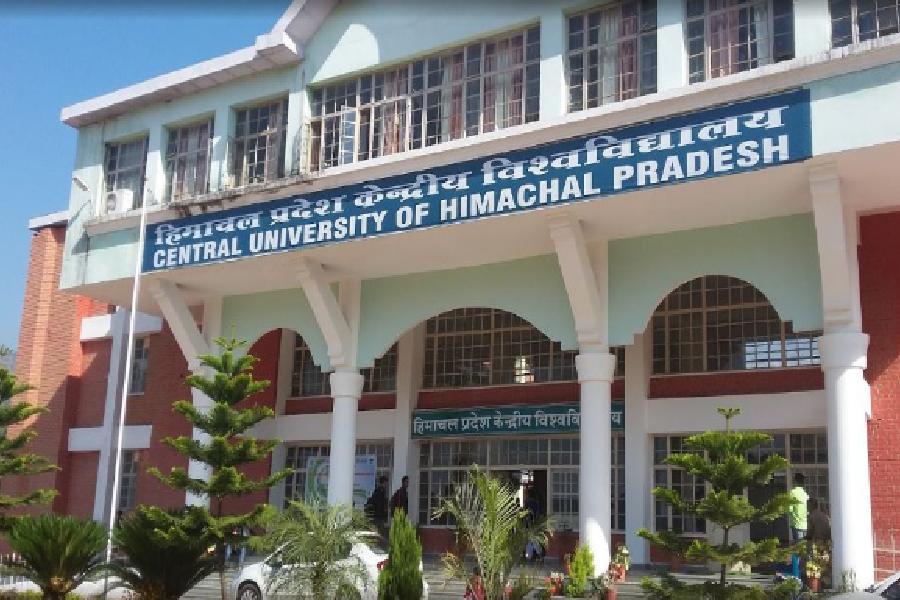
Central University of Himachal Pradesh

Central University of Himachal Pradesh www.cuhimachal.ac.in

The Central University of Himachal Pradesh has decided to appoint an RSS pracharak as “professor of practice” under a national scheme that relaxes the requirements of academic degrees and publications for these posts.

Atul Kothari, national secretary of the Shiksha Sanskriti Utthan Nyas, will be professor of practice in Hindu studies. The Nyas is a self-appointed adviser to the government on curriculum reforms and has suggested the teaching of “Vedic mathematics” at schools, among other recommendations.

[ . . . ]

 https://www.telegraphindia.com/india/central-university-of-himachal-pradesh-appoint-rss-pracharak-as-professor-of-practice-under-national-scheme/cid/2010139

May 13, 2019

India - Himachal Pradesh: People made to pledge their votes in temples...(BBC Hindi Report)

 https://www.bbc.com/hindi/india-48245442

हिमाचल: क्या है 'लूण लोटा’ जिससे डराकर होती है वोट लेने की कोशिश


Image caption प्रतीकात्मक तस्वीर
हिमाचल प्रदेश की गिनती भारत के सबसे शिक्षित राज्यों में होती है. 2011 की जनगणना के अनुसार 68.6 लाख की आबादी वाले इस छोटे से पहाड़ी प्रदेश की साक्षरता दर 81.85 प्रतिशत थी.
मगर हिमाचल प्रदेश के कुछ हिस्सों में अब भी ऐसी प्रथाएं और परंपराएं हैं जो काफ़ी चौंकाने वाली हैं.
इन्हीं में से एक है- देवताओं का डर दिखाकर या देवताओं के प्रति आस्था का दोहन करने के लिए क़सम खिलाकर लोगों को किसी काम के लिए मजबूर करना. इनमें चुनाव के दौरान अपने पक्ष में वोट करवाने के लिए ब्लैकमेल करना भी शामिल है.
सुनने में यह बात भले ही अजीब लगे मगर हिमाचल प्रदेश के दूर-दराज के पिछड़े हुए पहाड़ी इलाक़ों में इस तरह की परंपरा अब भी मौजूद होने के संकेत जब-तब सामने आते रहते हैं.
इस प्रथा की बात अभी चल रहे लोकसभा चुनाव के दौरान भी उभर कर आई. अप्रैल महीने में कुल्लू से कांग्रेस के विधायक पर घाटी के अराध्य देव रघुनाथ की क़सम देकर कांग्रेस प्रत्याशी के पक्ष में वोट मांगने के आरोप लगे. हालांकि उन्होंने इस आरोप को ग़लत बताते हुए कहा था कि उनके बयान को तोड़-मरोड़कर पेश किया गया.
इमेज कॉपीरइट Getty Images
Image caption प्रतीकात्मक तस्वीर
इसके राज्य सरकार में कृषि मंत्री रामलाल मारकंडा पर लाहौल-स्पीति के पूर्व विधायक ने आरोप लगाया कि उन्होंने माला फेरकर लोगों को वोट देने की क़सम दिलाई. मारकंडा भी इस आरोप को निराधार बता रहे हैं.
यह मामला चुनाव आयोग तक भी पहुंचा है. हिमाचल प्रदेश के मुख्य निर्वाचन अधिकारी देवेश कुमार बताते हैं कि अभी इस मामले की जांच चल रही है.
मगर उन्होंने स्पष्ट किया कि धर्म के आधार पर कोई भी चुनाव प्रचार नहीं कर सकता. उन्होंने कहा, "धार्मिक आधार पर अगर कोई परंपराओं को इस तरह से इस्तेमाल करता है तो इसे आचार संहिता का उल्लंघन माना जाता है."
क्या है यह प्रथा
हिमाचल प्रदेश के अलग-अलग इलाक़ों में यह प्रथा अलग-अलग रूप में मौजूद होने की घटनाएं सामने आती रही हैं. उदाहरण के लिए शिमला और सिरमौर के आंतरिक इलाक़ों में इसे 'लूण लोटा' कहा जाता है.
जिन देवताओं के नाम पर क़सम या शपथ दिलाए जाने की बात आती है, वे मुख्यत: गांवों के देवता हैं. इन देवताओं के अपने मंदिर हैं और श्रद्धालु उन्हें पालकी से त्योहारों, मेलों और उत्सवों में ले जाते हैं.
Image caption प्रतीकात्मक तस्वीर
ये देवता अधिकतर हिंदू धर्म के मुख्य देवताओं में से एक हैं या फिर ऋषि हैं, जिन्हें देव रूप में पूजा जाता है.
हिमाचल में बहुत से गांवों में इन देवताओं के अपने प्राचीन मंदिर हैं, जिनके अपने प्रभाव क्षेत्र माने जाते हैं. उन इलाक़ों के लोगों की अपने इन देवताओ को पर गहरी आस्था होती है.
सिरमौर के ज़िला मुख्यालय नाहन में मौजूद वरिष्ठ पत्रकार शैलेंद्र कालरा बताते हैं कि देवताओं की क़सम दिलाकर वोट मांगने का चलन पंचायत स्तर के चुनावों में अधिक देखने को मिलता रहा है.
Image caption वरिष्ठ पत्रकार शैलेंद्र कालरा
वह कहते हैं, "पंचायत और वॉर्ड मेंबर वगैरह के चुनावों में इसका चलन माना जाता है और विधानसभा में भी. इसे लूण लोटा कहा जाता है. कसम दिलाते हुए पानी के लोटे में लूण (नमक) डाल दिया जाता और कहा जाता है कि आपने कसम तोड़ी तो जैसे नमक पानी में घुल गया, वैसे आप भी ख़त्म हो जाएंगे."
शैलेंद्र कहते हैं कि यह प्रथा शहरी इलाक़ों में नहीं है मगर सुदूर इलाक़ों में है. वह बताते हैं, "हिमाचल में अभी भी सिरमौर, चंबा, मंडी, कुल्लू और लाहौल-स्पीति में ऐसे लोग मिल जाएंगे जिन्होंने आज तक शहर नहीं देखा. वहां यह सब होता होगा. सिरमौर में तो कुछ गांव ऐसे हैं जहां के कुछ लोग अपने गांव से बाहर नहीं निकले होंगे. कुछ साल पहले मैंने एक स्टोरी की थी जिसमें संगड़ाह डिवीज़न से बच्चे आए थे जो पहली बार बस में बैठे थे.
हालांकि शैलेंद्र कहते हैं, "यह पक्के तौर पर कहना और साबित करना मुश्किल है कि कहां पर लूण लोटा हो रहा है. अगर हो रहा है तो लोग तो बताएंगे नहीं, ऐसे में कौन साबित करेगा?"
वहां अगर लूण लोटा हो राह है तो कौन प्रूव करेगा, लोग तो बताएंगे नहीं.
कहां से आया यह चलन
जिस तरह की परंपराएं शिमला और सिरमौर में हैं, वैसी ही मंडी और कुल्लू के अंदरूनी इलाक़ों में बताई जाती हैं. वे कमोबेश वैसी ही हैं, मगर उनका स्वरूप थोड़ा अलग है.
ये वे पहाड़ी इलाक़े हैं, जो सदियों से कटे रहे और इनका बाहरी दुनिया से संपर्क बहुत कम रहा. उस दौर में समाज गांव तक ही सीमित थे और गांव के लोगों में अपने ग्राम के देवता और उनके पुजारियों का बड़ा महत्व था.
Image caption प्रतीकात्मक तस्वीर
इनमें से बहुत से इलाक़े सड़कों से जु़ड़ गए हैं, सुविधाएं भी आई हैं मगर परंपराएं अधिक नहीं बदलीं. आज भी लोग कोई भी काम करने से पहले, यात्रा आदि पर जाने से पहले वे गूर (पुजारी) के माध्यम से अपने ग्राम देवता की इजाज़त लेना ज़रूरी समझते हैं.
कुल्लू में रहने वाले यतिन पंडित हिमाचल प्रदेश की कला और संस्कृति पर शोध करते हैं और इन विषयों पर लंबे समय से लिख रहे हैं.
वह कहते हैं, "जैसे-जैसे पुराने दौर में अलग-अलग क़बीलाई क्षेत्रों के लोग इधर से उधर गए, वे अपने साथ अपनी मान्यताएं और परंपराएं भी ले गए. कुल्लू और मंडी के इलाक़े में सिरमौर और निरमंड के इलाक़े से बहुत सी परंपराएं आई हैं."
Image caption यतिन पंडित हिमाचल प्रदेश की कला और संस्कृति के जानकार हैं.
यतिन बताते हैं कि पहले के दौर में क़सम खिलाने का यह सिलसिला पहले विवाद निपटाने का ज़रिया था और बाद में इसे तरह-तरह से इस्तेमाल किया जाने लगा. वह कहते हैं, "जैसे गीता आदि की शपथ दिलाई जाती है, यह वैसा ही मामला है."
सिरमौर और शिमला में लूण लोटा परंपरा है, वैसे मंडी और कुल्लू में देवता के मंदिर के सामने पानी पिलाने या चावल देने की प्रथा है. वहीं लाहौल स्पीती में बौद्ध और हिंदू परंपराओं का समायोजन है, ऐसे में वहां जाप के लिए इस्तेमाल की जाने वाली माला के माध्यम से क़सम दिलाई जाती है.
लेकिन आख़िर इस तरह क़समें खिलाने की ज़रूरत क्यों पड़ी होगी, इस पर यतिन बताते हैं, "लोगों की पुराने समय से देवताओं पर गहरी आस्था रही है. शुरू में दूर के इलाकों में व्यवस्थाएं नहीं थीं. आपसी विवाद और झगड़े मिटाने के लिए पहले लोग थान देवता (स्थान देवता का अपभ्रंश) के पास जाकर क़सम खाते थे कि यह काम मैंने नहीं किया."
यतिन बताते हैं कि कुल्लू में इस मामले में एक ख़ास देवता हैं जिन्हें कश्यप नारायण और स्थानीय बोली में 'कसमी नारायण' यानी क़सम वाला देवता कहा जाता है. वह कहते हैं, "आज भी कश्यप नारायण देवता की झूठी क़सम खाने से यहां पर लोग डरते हैं, उन्हें लगता है कि झूठी क़सम खाई तो देवता का प्रकोप उनपर होगा. कुल्लू घाटी के बड़े देवताओं में गिने जाने वाले जमलू देवता की क़समें भी खिलाई जाती हैं."
कसम दिलाकर वोट मांगने की बात पर यतिन का कहना है कि बचपन से वह क़सम खिलाने की परंपरा सुनते और देखते आए हैं और आज भी सुनने में आता है कि कुछ लोग चुपके से ऐसा करवाते हैं.
शिक्षित राज्य में ऐसे हालात क्यों?
भारत के चौथे सर्वोच्च नागरिक सम्मान पद्मश्री से सम्मानित चंबा ज़िले के पहाड़ी चित्रकार और कला इतिहासकार विजय शर्मा हिमाचल प्रदेश की कला और संस्कृति की गहरी समझ रखते हैं.
वह अपने बचपन का एक क़िस्सा साझा करते हुए कहते हैं, "मुझे बचपन की एक बात याद है. यहां कोई नेता थे जो हाथ में चांदी का त्रिशूल रखते थे और लोगों से कहते थे कि यह देवी मां का त्रिशूल है, इस पर हाथ रखकर बोलिए कि आप मुझे ही वोट देंगे.यह पुरानी बात है मगर आज भी पढ़ने को मिल जाता है कि फलां गांव में किसी ने देवता के नाम पर या क़सम किलाकर वोट मांगे हैं. लोग झांसे में आ भी जाते हैं, यह लोकतांत्रिक देश के लिए ठीक नहीं है."
Image caption पहाड़ी चित्रकार और कला इतिहासकार विजय शर्मा
विजय शर्मा बताते हैं कि हिमाचल में लोग धर्मभीरू हैं, ईश्वर से डरते हैं. उनका कहना है कि बहुत से भोले-भाले लोग ऐसे हैं जो चालाक नेताओं के झांसे में आ जाते हैं और मजबूरी में वोट दे देते हैं. उनके अनुसार हिमाचल में ऐसी घटनाएं पहले भी होती आई थीं और कुछ इलाक़ों में अब भी होती हैं.
हिमाचल प्रदेश पिछले कुछ सालों में शिक्षा के क्षेत्र में अच्छा काम करने वाले राज्यों में उभरा है. साक्षरता दर तो अच्छी है ही, जगह-जगह और दूर-दूर के गांवों में भी स्कूल अच्छी ख़ासी संख्या में मौजूद हैं.
कनेक्टिविटी भी बढ़ी है और बहुत से दूर-दराज के गांव पिछले कुछ दशकों में सड़कों से जुड़े हैं. फिर भी क्या वजह है कि लोग इस तरह की परंपराओं के आगे विवश नज़र आते हैं?
इस पर विजय शर्मा कहते हैं, "देखिए शिक्षा के क्षेत्र की बात करें तो बहुत से स्कूल-कॉलेज खुल गए मगर हकीकत पर क्या बोलें?
स्कूलों को अपग्रेड करके कॉलेज के फट्टे टांग दिए गए मगर इन्फ्रास्ट्रक्चर का कुछ किया नहीं गया. किसने किया, क्यों किया मैं इस पर नहीं जाता. देखने को यह भी आता है कि कुछ पढ़े-लिखे लोग, गांव के लोग जो ईश्वर पर गहरी आस्था रखते हैं, वे शपथ दिलाए जाने पर मजबूर हो जाते हैं. फिर उन्हें इसके हिसाब से चलना पड़ता है."
क्या कहना है देवता समाज का
हिमाचल के बहुत से गांवों के लोग अपने ग्राम या कुल देवताओं में गहरी आस्था रखते हैं. उनका मानना है कि ये देवता आज भी अपने गूर (पुजारी) के माध्यम से उनकी बातें सुनते हैं और कहते हैं.
बहुत से लोगों के लिए इन देवताओं की अहमियत परिवार के मुखिया की तरह है, जिसकी इजाज़त के बग़ैर वे कोई काम नहीं करते.
Image caption प्रतीकात्मक तस्वीर
मंडी ज़िले में भी बहुत से देवी-देवता हैं, जिनकी लोगों के बीच गहरी मान्यता है. शिवपाल शर्मा सर्व देवता समिति ज़िला मंडी के अध्यक्ष हैं. देवताओं का सहारा लेकर चुनाव के दौरान जनता को प्रभावित करने की कोशिशों को वह देवताओं का अपमान बताते हैं.
उन्होंने कहा, "देवी-देवता राजनीतिक नहीं होते और न राजनीति में जाते हैं. देवताओं का काम समस्याओं को दूर करना, समाज की कुरीतियों को दूर करना है. हर देवता अपने क्षेत्र तक सीमित रहते हैं और वहां सारे काम जनता और देवता के योगदान से होते हैं.
वह कहते हैं कि पहले के समय लोग बहुत से कामों के लिए इन देवताओं पर निर्भर थे और आज भी हैं. वे समाज को जोड़कर रखते हैं. मगर कुछ लोग इसका नाजायज़ फ़ायदा उठाना चाहते हैं.
वह कहते हैं, "राजनेताओं को देवताओं के नाम पर इस तरह के काम नहीं करने चाहिए. राजनीतिज्ञ देवता के पास जाएं, वहां प्रार्थना करें, लोगों से जो बात कहनी है कहें मगर देवता की क़सम दिलाना तो बहुत ही ग़लत है."
बहरहाल, कुल्लू घाटी की देव परंपराओं और इसके इतिहास में दिलचस्पी रखने वाले यतिन पंडित कहते हैं चीज़ें बदल रही हैं. वह उम्मीद जताते हैं कि जल्द ही इस तरह की चीज़ें पहाड़ के समाज से हट जाएंगी.
यतिन कहते हैं, "मेरा मानना है कि अभी भी कुछ लोग हैं, जैसे कि बुज़ुर्ग, वे इस तरह की मान्यताओं का पालन करते हैं. जो युवा हैं, पढ़-लिख गए हैं, जिन्होंने समझना शुरू कर दिया है, वे इन मान्यताओं को महत्व नहीं दे रहे. मान्यताओं में भी जेनरेशन गैप आ गया है. अब ये चीज़ें कम हो रही हैं, 20 साल पहले जैसे हालात थे वैसे अब नहीं."
(बीबीसी हिन्दी के एंड्रॉएड ऐप के लिए आप यहां क्लिक कर सकते हैं. आप हमें फ़ेसबुक, ट्विटर, इंस्टाग्राम और यूट्यूब पर फ़ॉलो भी कर सकते हैं.)

July 01, 2016

India: Part-time Businessman, Full-time Gaurakshak (Seema Guha in Arre)

Arré

by Seema Guha June 28, 2016

Their tongues are calling for a law banning cow slaughter; their eyes keeping tabs on meat-eaters and Muslims. Vigilante gaurakshaks are prepared to kill to protect the cow.

Kapil Prabhakar was in his IP Extension office in East Delhi, sorting some papers related to his milk-distribution business, when his phone rang. He ignored it. It had been a busy morning; he was tired and hungry. He reached for the stainless-steel lunch box his wife had packed for him when the phone rang again. It was 1:50 pm. He answered it reluctantly. The lunch box remained unopened that day.

A volunteer from Punjab was on the line. Three truckloads of cows had left the state that morning. They had been driven through neighbouring Haryana and were heading towards East Delhi. Prabhakar was being called to the rescue.

Time was of the essence. Prabhakar knew that despite a ban on truck movement during the day, the Delhi Police allowed lorries to go through. He reached out to his core team, and about 37 swung into action. They asked volunteers to spread the word and get people out to Shastri Park close to the main road towards Ghazipur. In less than an hour, about a 1,000 people were squatting in the middle of the road.

Around 3:30 pm, the trucks were spotted. Two ambulances, fitted with cranes, were already in place. Nineteen cows and 12 bulls were “rescued”. The police asked the crowd to disperse. The operation was a success, but Prabhakar was not satisfied.

“The police allowed the drivers and their helpers free passage,” he said. “They should have been put behind bars.” According to him, the truckers were armed with country-made guns, talwars, and knives. Prabhakar admits, sometimes the chase can be in vain, as the police may be on the take and allow drivers to get away. “We are getting them to co-operate more.”

“The government spends crores on saving the tiger, why can’t it spend that money on cows?”

The East Delhi head of the Vishwa Hindu Parishad’s Bharatiya Gau Vansh Rakshan Evam Samvardhan Samiti (cow-protection and improvement organisation), is a man on a mission. The 52-year-old, self-employed graduate, who owns a Mother Dairy dealership and foundry, believes it’s his life’s calling to protect cows. Aside from a countrywide ban on cow slaughter, he also wants the cow to be declared India’s national animal. His argument is flawless. “The government spends crores on saving the tiger, why can’t it spend that money on cows,” he asks. The idea of extinction has never crossed his razor-sharp mind. But then logic has never had any place in fanatical ideology.

***

Born into an orthodox Brahmin family from Himachal Pradesh, Prabhakar grew up in Delhi. His father, who worked for HSBC, was a devout Hindu, who ensured religion was an integral part of the upbringing of his six children. Although the elder Prabhakar wasn’t a member of the Rashtriya Swayvamsevak Sangh, he believed in the organisation’s ideology. As the youngest in the family, Prabhakar began visiting RSS shakhas when he was eight, playing around and observing the adults.

Gaurakshak3

This group of vigilantes in Rajasthan’s Ramgarh is just one of dozens of such groups that have emerged since the beef ban.

Allison Joyce/Getty Images

It’s a tradition that’s being passed on. One of his sons is an engineer, and his nephew is an aspiring model in Mumbai – they are both members of cow-protection groups. Prabhakar sees no contradiction between modern pursuits and traditional beliefs. “I have been to five-star hotels… also to discotheques,” he says earnestly, sitting cross-legged at a temple in South Ganesh Nagar. “I was a good break-dancer in my youth.”

Over the course of the evening, he spells out how groups like his are successfully rescuing ill and ageing cows across India, through a zealous network of volunteers and informers. They are ordinary people: shopkeepers, cobblers, house help. Women working in housing societies are especially valuable in keeping tabs on meat-eaters. “Close to 10,000 people have our numbers,” Prabhakar says. “We take their call anytime of the day or night. We rescue 20-25 cows every month.”

The demand for a ban on cow slaughter is not new. Soon after Independence, the first president Rajendra Prasad had made the same appeal to Mahatma Gandhi. Since the Narendra Modi-led BJP came to power in 2014, the cow slaughter issue reached a fever pitch with cases as extreme as the Dadri lynching.

But according to Prabhakar, Modi is not the reason for their pro-bovine activities. “The move began eight years ago when the VHP decided to take a decorated cow around localities on festive days, to promote respect,” says Prabhakar. But he admits that it helps having a pro-cow government. “We have a cabinet where, from the prime minister downwards, all have a special place in their heart for cows.”

Flattered by the interest in his favourite subject, he now launches into a listing of its virtues. “Every part of the cow is useful to us,” he says, insisting high blood pressure can be cured if a patient runs his palms over a cow’s body. “If that doesn’t work, I’m ready to pay for doctors and medicine for a lifetime,” he says grandly, sweeping modern medicine aside with one dismissive wave of his hairy hand.

And he is hardly alone. This line of thinking is embraced by the old, the young, the unlettered, and the highly educated. Akilesh Vishwakarma, for instance is a bright 34-year-old science graduate from Allahabad University, who uses science to justify politics. “All farmers believe that unless they use fertilisers and pesticides filled with chemicals, their plants will not be healthy,” he says. “My mission is to teach them to use cow dung as fertiliser and pesticides made from cow urine.” The East Delhi gaurakshaks are planning to promote soap, phenyl, and agarbattis made from cow urine and dung, under the brand name “Goband”.

When asked about the violence vigilante gaurakshaks and self-proclaimed defenders of Hindu dharma have unleashed on Muslims, Akhilesh says blandly, “They are not true followers of religion. Many of them are uneducated and get misled. My religion respects every other religion.”

Gaurakshak2

Members of a vigilante group try to free cows from the back of a truck in Ramgarh.

Allison Joyce/Getty Images

Prabhakar agrees, with the infallible logic and conviction displayed most often by right-wing bhakts on social media. “First, we Hindus don’t want to kill. We don’t want to hurt anyone. But please respect our sentiments. If you don’t, we can’t help some of the hotheads.”

With this convenient “we-can’t-help-it” disclaimer, Prabhakar signs off and gets back to work, glad to have delivered his views on the subject. The more people he converts, the higher the chances of his cows becoming part of currency, stamps, and maybe one day, the symbol of the Indian government. The sky is the limit.


Seema Guha is a senior journalist writing mainly on India’s foreign policy. She has covered conflict situations in the northeast and has reported extensively on the ethnic war in Sri Lanka. She also contributes to openDemocracy, a prestigious international website.

April 18, 2016

The Business of Changing City Names According to Fancies of the Hindu Right - Now will they change Shimla into Shyamla?

The Indian Express - April 18, 2016

Shimla as ‘Shyamla’: Seriously?

Manoj Singh, general secretary of the VHP’s state unit says the name 'Shimla’ is derived from the Hindu Goddess Shyamala Devi who is an incarnation of Kali.

Written by Ashwani Sharma | Shimla | Updated: April 18, 2016 5:59 pm

Shimla, Shyamla, shimla name change, himachal, himachal pradesh, Gurgaon, Gurugram, Haryana, beyond the news, india news The argument by the VHP in favour of changing the name is more mythological than historical. Express photo by Lalit Kumar.

The BJP government’s decision to change the name Gurgaon to Gurugram in Haryana seems to had its impact on Shimla. The move has inspired the Vishwa Hindu Parishad (VHP) to ask for renaming Shimla to Shyamla.

The demand has been rejected by the Congress government in the state and Chief Minister Virbhadra Singh but that hasn’t stopped the Hindu outfit from justifying its demand. The argument by the VHP in favour of changing the name is more mythological than historical.

Manoj Singh, general secretary of the VHP’s state unit says the name ‘Shimla’ is derived from the Hindu Goddess Shyamala Devi who is an incarnation of Kali. He says the continuation of ‘Shimla’ as a name is a sign of abeyance to British rule in sovereign and independent India.

Simla, as it was known originally, was selected by the Britishers as a hill station surrounded by dense forests and untouched by human habitation. It came under the British Raj in 1817 to become the summer capital of the British Raj in India and thereafter it has borne witness to several historical events, most famously the Simla Agreement of 1972 between Indian Prime Minister Indira Gandhi and her Pakistan counterpart Zulfikar Ali Bhutto. Earlier, there there was the Simla Accord of 1914 and the Simla Conference of 1945 in pre-independence days.

“The Britishers were very wise in their choice for places and Shimla perhaps aptly suited their needs being an isolated green hill top. The climatic conditions attracted the British to establish the city in the dense forests of Himalayas. It was free from human inhabitation and whatever habitations existed then were in the peripheral foothills, not at the top of the hill. If we allow the demand to change its name, that will be complete negation of the history, and could also be an unending process,” says Dr Chetan Singh, Director Indian Institute of Advanced Study (IIAS) and a noted historian.

It was only in 1974 that Simla became Shimla –mainly to pronounce it correctly just as Kulu became Kullu. There was no demand to name Shimla as Shyamla even during the BJP state governments in Himachal Pradesh. During Shanta Kumar’s chief ministerial term in 1990-92, a decision was taken to rename Dalhousie as Subhash Nagar after Netaji Subhash Chandra Bose but nothing has been done in this regard.

Virbhadra Singh is in favour of Shimla remaining as Shimla because of its internationally acclaimed status, history and brand as a popular tourist destination. “If we keep changing names just for the heck of it there will be no end to it,’’ he said.

Dinesh Malhotra, a former Deputy Commissioner of Shimla who recently brought out a voluminous book on ‘DCs of Shimla’ based on the 200 years of the town, says he did find a mention of Shyamla during his research but whether any such village existed by that name cannot be ascertained.

So Shimla it is, for now.

February 05, 2015

BJP doesn't back demand for Hindu state in Himachal (but is happy it doesn't have many non-Hindus)

SANGH POLITICS
BJP doesn't back demand for Hindu state in Himachal (but is happy it doesn't have many non-Hindus)
'The fact is that we are a peaceful state because there is negligible presence of minorities,' says party spokesman.
Aarefa Johari

http://scroll.in/article/704187/himachal-is-peaceful-because-of-negligible-presence-of-minorities-says-bjp-spokesman

January 10, 2010

MF Hussain purged from Himachal Textbook


Hindustan Times

http://epaper.hindustantimes.com/ArticleImage.aspx?article=08_01_2010_001_015&mode=1

December 31, 2007

Kuldip Nayar on Congress’ soft-Hindutva

The Asian Age
December 31, 2007

Congress’ soft-Hindutva is destroying pluralism

Kuldip Nayar

Cassius told Brutus that the fault was not in their stars but in themselves. After losing Gujarat and Himachal Pradesh in a row the Congress Party should realise that the fault lies with them, their strategy, not in their campaign. In both the states, it is the Congress that has lost. The party should analyse why. I concede that there was the incumbency factor in Himachal Pradesh. But the same factor did not help the Congress in Gujarat. The party has become too uncertain.

I do not know why the Congress changed its strategy not to take on the communalists in Gujarat. Party president Sonia Gandhi rightly characterised chief minister Narendra Modi and his supporters as maut ke saudagar (merchants of death). How else can they be described when they have fattened themselves on the sufferings of and denials to Muslims? After having effected an ethnic cleansing in Gujarat, Modi and the BJP continue to ostracise the Muslim community. It is boycotted economically and socially, and is treated in a manner that it seems as if the nine per cent Muslim population in the state does not exist. It is the best specimen of the BJP’s best governance.

Up to a point, Sonia Gandhi stuck to her remark of maut ke saudagar and told the Election Commission of India that calling a spade a spade did not violate any code of election. But then she herself watered down her stand. Whoever advised her, did great harm to the party and its cause.

Even if Sonia Gandhi had not made the remark, Modi would have turned the polls into a Hindu-Muslim conflict. Communalism is the only field in which he and his kind excel. The person-to-person propaganda against Muslims had already begun in Gujarat. Sonia Gandhi’s observation gave Modi a chance to bring it out in the open a day or two earlier than the timing he had in view. The Congress needs no introspection. It needs courage to challenge the Hindutva forces within and outside the party. It is shirking a confrontation with the communal forces, without realising that at stake is our pluralistic society, the bedrock of our democratic polity.

In fact, Modi and the BJP’s ideology of Hindutva are dividing the country into two communities, Hindus and Muslims, or maybe three, because the Vishwa Hindu Parishad, a front organisation of the RSS, like the BJP, is also targeting the Christians. It is a shame what the VHP did in Orissa with the connivance of the state government, an ally of the BJP.

Communalism is bad enough, but worse is the BJP’s attack on the ethos of our freedom struggle. India’s independence was won on the resolve to keep it pluralistic and democratic. Muslim leaders like Maulana Abul Kalam Azad, Khan Abdul Ghaffar Khan (the Frontier Gandhi) and Sheikh Abdullah (the Kashmir Gandhi) made as much sacrifice as Mahatma Gandhi, Jawaharlal Nehru and Sardar Patel did. Pluralism is our proud heritage. The Congress is diluting this heritage. For improving chances in elections it has even embraced erstwhile BJP members. This has harmed the Congress most.

A Pakistani friend has written to me, "The Gujarat election debacle should open our eyes. I mean the eyes of those who ask for vote on the basis of abstract values and value system." I beg to differ with him. Election is the means, not an end in itself. Even if you may win elections without adhering to values, you are creating a society where there would be no elections one day. The value system is what distinguishes a democracy from other systems. There can be no letting down of the fight against communalism, because if it succeeds, fascism is bound to emerge.

Gujarat is not a state anymore. It has become an ideology. It is a "Hindutva laboratory" as chief minister Narendra Modi had put it when the state went to polls. He reduced the whole campaign to a single point: if you are a Hindu, you vote for me. In fact, it is a slur on Gujaratis, because he sells them Hindutva in the name of Gujarat pride.

The development part is all right. The Gujaratis inside or outside the state are pouring so much money and skill into the state that a new Gujarat was emerging despite the government. The credit is due to him that he did not come in their way, something which is happening in many states. Yet, his whipping boy is a Muslim. During the election campaign, he went on emphasising on the fake encounter death of Sohrabbudin Sheikh, although the case is pending before the Supreme Court of India. At different gatherings he brought the crowd to such a pitch of frenzy that they said in response, "Kill him, kill him." These are fascist tactics.

I sympathise with the Gujaratis, for Modi has fouled the atmosphere in the state so much that any liberal thinking or dissent is difficult. He has made them believe that India is part of Gujarat. I heard the slogan, "Gujarat is India." This is reminiscent of the Emergency days when India was Indira. Modi has done great harm to Gujaratis by mixing their achievements with Hindutva. Their economic progress has been dwarfed by Modi’s large-size anti-Muslim bias. I feel that Gujaratis need to be retrieved. Modi has given them a bad name in the country and abroad, as if they are a community of fanatics, totally opposed to pluralistic thinking.

L.K. Advani, the prime minister-in-waiting, has said that Gujarat will be a turning point in national politics. He is mistaken. The turning point is going to be the re-thinking on the part of BJP’s allies. Except the Shiv Sena from Maharashtra, there does not seem to be any party agreeing to BJP’s Hindutva. They have, by and large, secular credentials. They cannot go to the voter with Modi who is the BJP’s mascot.

The Congress is still learning its lesson from Gujarat. Sonia Gandhi is a crowd-puller, but not a vote-catcher. No use re-emphasising that Rahul Gandhi is not making any impact. Younger leaders in the Congress and persons like Lalu Prasad Yadav who are on the side of the Congress might have done better if they had campaigned.

Yet the biggest drawback with the Congress is that — this is not in Gujarat alone — it does not come across as an unequivocal exponent of pluralism, as it should. The party gives the impression of being Hindutva’s soft version. Expected to carry the ethos of the freedom struggle, the Congress should not compromise with the ideals. The BJP is understandably against secularism, but a diluted, half-hearted Congress can only do harm. It is sad that the party is not conscious of this.