|
Showing posts with label funding. Show all posts

May 24, 2021

Twitter's Sewa International donation: Image rehabilitation for RSS-linked charity? | Pieter Friedrich


Twitter's Sewa International donation: Image rehabilitation for RSS-linked charity?
Beyond a financial boost, Twitter's donation legitimizes a non-profit tainted by exposés

As COVID plagues India, Indresh Kumar and Shyam Parande stepped forward — on more than one occasion in May 2021 — to release consignments of oxygen concentrators donated by non-profit organization Sewa International.

The raging pandemic is not the first time that the two have publicly partnered. Parande, the global coordinator of Sewa International, is not just linked to Kumar through the non-profit but also through their shared activism with another organization: the Rashtriya Swayamsevak Sangh (RSS). In past years, for instance, the two travelled to Cambodia together to prepare a report about how India’s RSS can make a “cultural investment” there.

Parande, whose participation in the Cambodia project was reported as that of a “senior” RSS leader, has additionally been reported as head of the RSS’s “Vishwa Vibhag (foreign department)” and, with his wife, even described as one of “RSS’s power couples.” Kumar, for his part, is a senior member of the RSS’s national executive committee.

In December 2010, Kumar was in Pune, Maharashtra to speak at the Vishwa Sangh Shibir (VSS). “The VSS is a once-in-five-years conclave of the RSS-supported Hindu Swayamsevak Sangh [HSS],” explained The Indian Express. Noting that the event is often the first trip to India for some HSS members, senior RSS executive Manmohan Vaidya said that the conclave focuses on “how to spread the work and the message of RSS.”

Speakers at the multi-day VSS included a “who’s who” of the Sangh Parivar — the “family of organizations” springing from the RSS.

Aside from Kumar, there was RSS Chief Mohan Bhagwat, who argued that “a Hindu alone can think of the welfare of the humanity” and declared, “The world has to acquire Hindu values to survive.” There was Ashok Singhal, then chief of the Vishwa Hindu Parishad (VHP), the religious wing of the RSS. From the Bharatiya Janata Party (BJP), the political wing of the RSS, came the party’s then second-in-command, Ram Lal. From Sewa Bharati — the service wing of the RSS and parent organization of Sewa International — came Sitaram Kedilaya. And from the US and the UK came the presidents of the HSS branches of those countries.

Travelling all the way from Texas to attend was Ramesh Bhutada, the vice-president of HSS-USA. The event gave Bhutada — who has hosted Mohan Bhagwat in his Houston home — a chance to not only wear the RSS’s official uniform but meet and pose with the founder of the HSS. It also gave him a chance to travel with a Houston delegation that included Arun Kankani.

Aside from their shared interest in the HSS/RSS summit in Pune, Kankani and Bhutada are connected through their ties to Sewa International USA. Kankani became the non-profit’s president in 2020. Bhutada is the organization’s chairperson.

Sewa International, according to one report about a VSS from the 1990s, is among “several affiliated organisations of RSS” operating abroad. Sewa USA is, reported The New Indian Express, “a part of the Sangha Parivar in the US.” It is also, as of 10 May 2021, the recipient of a $2.5 million donation from Twitter.

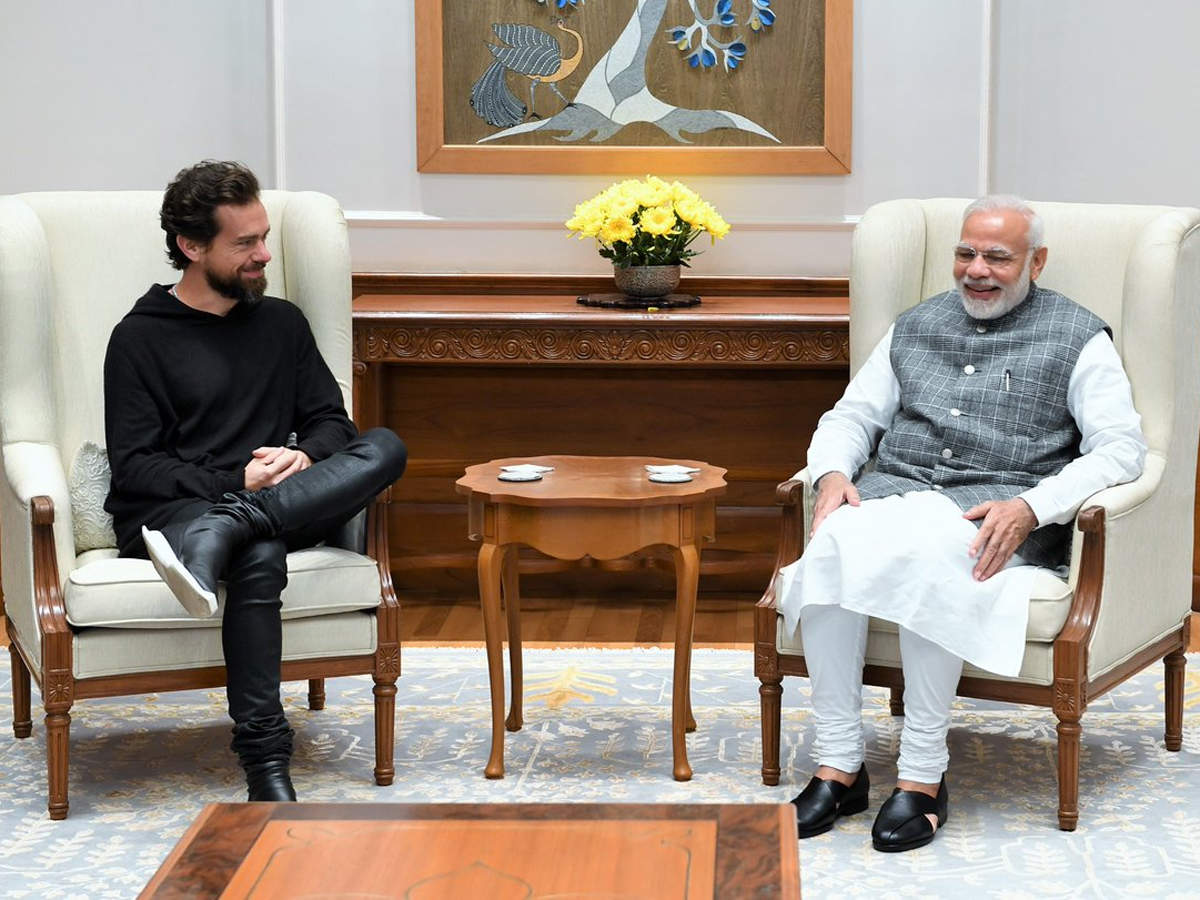
Twitter’s donation, announced by CEO Jack Dorsey, has outraged some. Nearly 2500 people have signed a petition demanding that Dorsey rescind it due to the organization’s connection with the RSS. The money, though it is officially earmarked to aid Sewa International’s campaign to provide emergency relief medical equipment in India’s struggle against COVID, also seems likely to assist the RSS-linked non-profit’s public image.

The RSS and Sewa International are both in need of image rehabilitation. Bhutada, as both the RSS’s number two man in the US as well as chair of Sewa USA, likely knows that more than most. And he — along with Kankani — has a history of playing a crucial role in helping to rehabilitate the image of the man some hold responsible for India’s current COVID crisis: Prime Minister Narendra Modi, an RSS member.

In September 2019, Bhutada served as a leading patron of “Howdy, Modi,” a mega-reception organized in Houston to promote the Indian prime minister. While Bhutada’s son, Rishi, was the event’s head spokesperson and his brother-in-law, Jugal Malani, chaired the event’s organizing committee, Kankani served as head of operations. Meanwhile, Sewa International (Houston) President Gitesh Desai served, alongside Rishi Bhutada, as an event spokesperson.

“Howdy, Modi” was the third such mega-reception organized in the US since Modi’s election in May 2014. His visits were an opportunity to pay back his thousands of Indian-American supporters who worked for his election (including people like Bhutada as well as Desai, who actually travelled to India to campaign). They also marked a personal victory as they were the first times that Modi — as a beneficiary of diplomatic immunity in his new position as prime minister — was allowed into the US after being banned from entry in 2005. The US State Department, at the time, held him responsible for “particularly severe violations of religious freedom” that occurred in Gujarat in 2002. Extreme anti-Muslim violence erupted days after Modi was appointed chief minister of the state; according to Human Rights Watch, the groups responsible primarily included the RSS and its affiliates.

While Modi and the RSS (which, in 2008, was again implicated in an anti-minority pogrom) had — before the 2014 election — faced a great need for international image rehabilitation, so too did Sewa International.

Founded in 1989 by then RSS Chief Madhukar Deoras, Sewa Bharati — in India — “is an umbrella organisation which constitutes over nine hundred NGOs of the Sangh,” explains The Caravan. In the organization’s own words, it was founded to provide a formal structure for “volunteers of RSS and other allied organisations” to engage in charity. It is “affiliated to the RSS,” “RSS-led,” and operates as “the main agency for social work in the RSS.”

“We make no secret of the fact that we are members of the RSS,” one senior Sewa Bharati leader has said.

According to political scientist Malini Bhattacharjee, the RSS’s focus on sewa — meaning “selfless service” — “stemm[ed] from the need to rehabilitate the RSS’ image as a social and humanitarian organisation as opposed to a communal and paramilitary body.” As she explains, “Participation in relief and rehabilitation activities have not only helped create a compassionate image for the RSS, but also provided it with opportunities to undertake cadre building, consolidate its organisational network, and even penetrate those regions where it had no traditional support base.”

“The RSS also has an international wing, Sewa International, which organizes welfare work outside India and raises funds for parivar projects in India,” reports sociologist Chetan Bhatt. Founded in 1997, Sewa International has repeatedly described Sewa Bharati as its “local partner organization.“ It has various branches abroad, including, as noted, in the US.

Raising funds abroad while rarely mentioning its connections to the RSS (an organization about which many non-Indians are already ignorant, anyways), Sewa International managed to make inroads. It — and its sister groups — even secured patronage from politicians and agreements for corporate matching of donations. In the early 2000s, however, a series of events dented the non-profit’s image. 

In August 2002, the late Lord Adam Patel resigned as a patron of Sewa International UK (SI-UK). “I very much regret ever having been part of this racist organisation,” said Patel. “Sewa International is a front for controversial militant Hindu organisations, and so I have been forced to resign my position as one of its patrons.” His resignation came “amid claims that it has links with rightwing Hindu extremist groups blamed for provoking rioting in India.”

That was followed in December 2002 by a Channel 4 News special. British authorities, said the channel, were investigating allegations that money raised through SI-UK “might fund communal violence in India.” According to the channel, “We wanted to find out whether money given by British donors to Sewa International, apparently to help the poor in India, could actually end up funding sectarian violence there.”

Meanwhile, in November 2002, a report in the US claimed that Sewa International, in India, was affiliated with the US-based India Development and Relief Fund (IDRF). “Sewa International is [an] IDRF affiliate in India overseeing IDRF’s Indian operation,” stated the report. “In terms of international funding, it may be amongst the most significant of IDRF’s ‘sister’ organizations. It is a Sangh Parivar organization set up primarily to coordinate foreign contributions for different Sangh projects in India.” As Financial Times subsequently reported, “According to IDRF’s tax filings, more than 80 per cent of the almost $3.2m[illion] it directly sent to India between 1994 and 2000 went to projects managed by groups that are explicitly part of the RSS family.”

In response, matching corporate donors like Cisco Systems and Oracle Corporation suspended their collaboration with IDRF while the US Justice Department reportedly “launched an investigation into charges that millions of dollars… were used to fund Hindu fundamentalism in India.” IDRF’s spokesperson, Vijay Pallod — a relative of and long-time co-activist with Bhutada who also wore an RSS uniform at the 2010 VSS — shot back: “The accusations are falsehoods packaged by propagandists masquerading as concerned citizens.” Nevertheless, IDRF’s star briefly faded, and, over the following year, Sewa USA was founded with Bhutada at its helm. 

The pounding continued. In 2004, a new report emerged in the UK which revealed that SI-UK “is the fundraising arm of the HSS UK,” alleged that it is “directly linked with the RSS and its affiliates, including Sewa International India and Sewa Bharati,” and claimed that “Sewa Bharati has been openly involved in Hindutva [Hindu nationalist] extremist political work in India.” The report argued that SI-UK’s “main purpose” was to “raise funds in the UK for RSS projects in India in order to directly help the expansion of the extremist RSS’s networks across Indian society in line with the long term political and sectarian aims of the RSS.”

“Sewa Bharati is the main recipient of funds from SIUK,” stated the report. “The fundamental aim of these projects is to penetrate communities through service activities in order to promote RSS ideology and organization.” Arguing that the RSS was “distributing relief selectively to higher caste victims and neglecting Dalits and Muslims” as well as “organizing training cells (shakhas) in relief camps,” the report explained:

“An alarming chain links unsuspecting donors in the UK to the active political promotion and glorification of the extremist RSS in Gujarat. UK donors gave funds in good faith to SIUK for humanitarian reconstruction and rehabilitation following the 2001 Gujarat earthquake; these funds went from SIUK to the RSS’s Sewa Bharati which managed the work, with additional funds from government agencies; work was started through RSS ceremonies, or completed villages were inaugurated by very senior RSS officers…. The extremist RSS and its dangerous ideology were actively promoted in Gujarat through these processes. The Hindutva political agenda of the RSS was explicit in the reconstruction and opening ceremonies of several villages funded by SIUK. The agenda to glorify and expand the RSS was well known by SIUK but not revealed to donors.”

It was an inauspicious launch into the 21st century for Sewa International but, 20 years on, the RSS-linked non-profit seems to be successfully rehabilitating its image as it opens its coffers to receive the outpouring of financial support offered by Twitter. A rising tide floats all boats, however. Thus, Indresh Kumar of the RSS seems to also be benefitting from the self-promotional PR opportunities that arise as international aid pours into India.

Kumar certainly needs the image boost. After a series of blasts targeting Indian Muslim locations in the mid-2000s, Kumar’s name figured in the diary of a key accused, another key accused claimed he had prior knowledge of a blast, and yet another accused — Swami Aseemanand, a full-time RSS worker affiliated with Vanvasi Kalyan Ashram, an RSS-affiliate named as both a participant in anti-minority violence as well as a top recipient of funding from the IDRF and SI-UK — confessed that Kumar (along with Mohan Bhagwat) gave their blessings to his plans for staging the blasts. “This is great,” Aseemanand claimed Kumar and Bhagwat said about his plans. “It’s very important that it be done. But don’t link it to the Sangh.”

Although Kumar certainly never hoped for that (alleged) conversation to be made public, the things he has unapologetically said in public in recent years do little to improve his image anywhere other than in Hindu nationalist circles. He has denounced conversion as an act of Satan, demanded national legislation against “Love Jihad” (the conspiracy theory that Muslim men are systematically duping Hindu women into marrying them), and described protestors against the Citizenship Amendment Act (which sets “a legal criterion for citizenship based on religion”) as “traitors.”

From Kumar to Modi and the RSS to Sewa International, image rehabilitation is certainly a need of the past two decades. As COVID continues ravaging India and the nation still faces a catastrophic shortage of oxygen, it appears that the crisis comes as a fresh of breath air to a supremacist movement that has been increasingly hounded by bad publicity. While the Modi regime’s pandemic policy includes suffocating dissent, the regime’s apologists — thanks, in part, to millions donated by a social media giant — are, for now, breathing a little easier.

Chances are, however, that the Sangh, although it thinks the donation is very important, doesn’t want it linked to them.


Pieter Friedrich is a freelance journalist specializing in analysis of South Asian affairs. He is the author of Sikh Caucus: Siege in Delhi, Surrender in Washington and Saffron Fascists: India's Hindu Nationalist Rulers as well as co-author of Captivating the Simple-Hearted: A Struggle for Human Dignity in the Indian Subcontinent. Discover more by him at PieterFriedrich.net.

May 12, 2021

Twitter Gives $2.5 million to --Sewa International-- "Welfare Wing" of India's RSS Paramilitary | Pieter Friedrich


Twitter Gives Millions to "Welfare Wing" of India's RSS Paramilitary
Sewa International gets $2.5 million despite ties to militant Hindu nationalist group

Twitter CEO Jack Dorsey, who on 10 May 2021 announced a $2.5 million donation to Sewa International, must have missed journalist Neha Dixit’s viral tweet, published a week earlier, urging Non-Resident Indians (NRIs) not to support the controversial nonprofit organization because “they work as the welfare wing of RSS.”

As COVID-19 ravages India, Sewa International recently announced its plan to raise $10 million for medical equipment to support the country’s struggle against the virus. Meanwhile, Indian Prime Minister Narendra Modi — a member of the Rashtriya Swayamsevak Sangh (RSS), the paramilitary which gave birth to the ruling Hindu nationalist Bharatiya Janata Party — faces scathing international criticism for his regime’s apparent indifference to and outrageous mishandling of the COVID crisis.

Yet, just weeks after Modi’s regime ordered Twitter to censor tweets critical of his pandemic policy, the social media giant now, ironically, plans to pour millions into the coffers of an RSS-BJP affiliate which has been accused of funneling international funding to “racist and anti-Muslim” groups in India.

“I am satisfied that Sewa International is a front for controversial militant Hindu organisations,” said British Lord Adam Patel in August 2002. As a patron of the nonprofit, Patel had helped it raise relief funds for victims of a 2001 earthquake in Gujarat. Yet he resigned in disgust — “I very much regret ever having been part of this racist organisation,” he declared — after an earthquake of a different nature shook Gujarat immediately after Modi became chief minister of the state in February 2002.

The 2002 Gujarat Pogrom left thousands of Muslims dead. The RSS-BJP, reported Human Rights Watch, were “the groups most directly responsible” for the violence. The RSS, explained UK human rights outfit Awaaz South Asia Watch, follows a “supremacist ideology called Hindutva” which was “formed in the 1920s and 1930s,” was “influenced by Fascism and Nazism,” and teaches that India should be an “exclusive Hindu nation-state.” In a 2004 exposé, Awaaz claimed that Sewa International’s “main purpose is to raise funds for and support a distinct family of organizations associated with the extremist RSS.”

Madhukar Deoras, third chief of the RSS, founded Sewa Bharati in 1989 as a service — or welfare — wing of the paramilitary. Sewa International was subsequently launched, states the nonprofit’s website, “to engage the Indian Diaspora (NRI) worldwide.” The US branch — the recipient of Twitter’s largesse — was registered in 2003 to, it says, to serve as part of the “larger movement that started in India in 1989” under Deoras. “Rashtriya Sewa Bhar[a]ti and Sewa International both are part of the same non-profit organisation affiliated to RSS,” explained right-wing Indian media outlet OpIndia in May 2021. “While Rashtriya Sewa Bhar[a]ti operates nationally, Sewa International has volunteers working both in the US and India, coordinating the work of raising funds.”

According to Awaaz, both organizations “are dedicated to building a Hindu nation based on Hindu extremist ideas, glorifying the RSS, recruiting for the RSS and expanding RSS physical and ideological training cells (shakhas) in India.”

Sewa International, reported historians Walter Andersen and Shridhar Damle, is “managed mainly” by “activists” of the Hindu Swayamsevak Sangh (HSS), the international wing of the RSS. Outside of India, the nonprofit is chaired by Ramesh Bhutada. An industrialist based in Houston, Texas, Bhutada also serves as vice-president of HSS-USA and has worked closely with Overseas Friends of the BJP USA (OFBJP-USA) — the American wing of the BJP, which is now registered as a foreign agent — to help get Modi elected in 2014.

Sewa International’s board also includes HSS Global Coordinator Saumitra Gokhale. In 1995, while in India, Gokhale reportedly served as a pracharak (full-time officer) of the RSS. In 2012, he and Bhutada helped host RSS’s Suresh Joshi — who recently retired as the paramilitary’s second-in-command — on a six-week tour of HSS shakhas in the US. “For our activities outside of Bharat [India], the source of inspiration remains the Rashtriya Swayamsevak Sangh,” he later saidat a presentation in California.

In July 2020, Gokhale gave the concluding remarks at a Sewa International conference where Arun Kankani was announced as the nonprofit’s new president. Kankani — an employee of Bhutada’s Star Pipe Products — has a long track record of involvement with the RSS-affiliated family of organizations known as the Sangh Parivar. In 2010, for instance, he joined a Houston delegation to attend an HSS-RSS summit in India; in 2019, he keynoted an HSS conference in Houston.

When Kankani became president of Sewa International, the nonprofit suggested it was because he had proved his worth serving as head of operations for the team that organized the September 2019 “Howdy Modi” mega-reception in Houston. Bhutada and several members of his close family also took a leading role in organizing the controversial event, as did Sewa International (Houston) President Gitesh Desai.

In January 2014, Desai introduced Bhutada at an OFBJP-USA event organized to support Modi’s election. “To make a strong India, Narendra Modi and the BJP are the right vehicles,” said Bhutada. Detailing plans to organize up to 10,000 volunteers in the US to campaign for Modi, he described how he was coordinating closely with BJP in India. One of those volunteers was Desai himself, who joined a team of so-called “volunteers turned political warriors” to travel from Texas to India to serve as boots on the ground for Modi. In parting remarks to the political warriors, Bhutada told them it was “the moment to pay our debt to our motherland.”

After Modi won in May 2014, Bhutada argued that his “upbringing in the culture of RSS is an asset” and praised his “RSS training” as the reason for his success. When Modi won re-election in May 2019, Bhutada and Desai both spoke in his honor at a victory party in Houston. “There is no leader better than Prime Minister Narendra Modi ji with vision and mission to lead India in the 21st century,” declared Desai.

Sewa’s leadership — aside from Desai, Kankani, Gokhale, and Bhutada — also includes at least a half-dozen directors and advisors who are apparently either HSS executives in the US or long-time activists with the RSS in India or both.

Advisor Yashwant Pathak is a former RSS pracharak who has been described as a joint coordinator for HSS. Honorary board member Radheshyam Dwivedi, who reportedly joined the RSS in 1947, is a former president of HSS-USA. Both Pathak and Dwivedi have regularly spoken at RSS summits alongside senior Sangh Parivar leadership. Manohar Shinde, a director, has been described as “an RSS-trained man who was one of the founders of the HSS” and reportedly maintains close ties to the BJP regime in India.

Sewa International’s sentiments towards the Hindu supremacist paramilitary are no secret.

Its sympathies were further exposed when, in 2017, the nonprofit opened its annual report with a glowing commemoration of the late RSS pracharak K Suryanarayan Rao. Praising the 70-year veteran of the RSS (who died in November 2016) as “a visionary,” the report explained that Rao was both inspired by the vision of first RSS chief, KB Hedgewar, as well as “deeply influenced by the ideological, philosophical and spiritual stance” of second RSS chief, MS Golwalkar.

The RSS’s “cardinal principle,” Rao once said, is the belief that India is a Hindu Rashtra (nation). “It is our life breath,” he proclaimed. “RSS is convinced that only when every person in this country realises that he is after all part and parcel of this Hindu Rashtra, this nation can progress, standing up as one man.”

Rao’s vision mirrored Golwalkar’s. The vision Golwalkar spoke of, however, explicitly included an India where minorities were stripped of citizenship if they refused to glorify it as a Hindu nation. Golwalkar, the longest-serving and most notorious of the six chiefs the RSS has had to date, was inspired and influenced by Hitler’s Germany and Mussolini’s Italy. Describing non-Hindus in India as “threats,” “foreign,” and even traitorous, he suggested they should be stripped of citizenship. Praising Hitler’s “purging” of the Jews as “race pride manifested at its highest,” he concluded that the Nazi dictator’s racial policy was a “good lesson” from which to profit.

Nearly 100 years after the RSS’s founding in 1925, its political wing, the BJP, is now attempting to weather a public relations crisis alongside the raging healthcare crisis; yet the RSS-BJP, no stranger to controversy, refuses to miss the chance to turn the situation to its advantage even as COVID tears across India.

In March 2020, India’s first lockdown extinguished the pressure of mounting protests against the regime’s Citizenship Amendment Act; now, as the regime loses control of the virus, it has diverted growing international pressure away from the ongoing farmers protest. Meanwhile, as local administrations empower the RSS by partnering with it for COVID relief efforts, the paramilitary’s members have gotten special passes and sometimes even police powers. Furthermore, when Sewa International gets showcased as a role model relief organization, the Sangh Parivar as a whole reaps huge public relations dividends — especially as the organization is granted global legitimacy in the form of, for example, a multi-million dollar donation from Twitter.

As Twitter offers millions to Sewa International despite its links to a violent, Hindu nationalist, and literally Nazi-inspired paramilitary, humanitarians everywhere can only hope that Jack Dorsey might be persuaded to listen to reason and reconsider financing the welfare wing of the RSS.


Pieter Friedrich is a freelance journalist specializing in analysis of South Asian affairs. He is the author of Sikh Caucus: Siege in Delhi, Surrender in Washington and Saffron Fascists: India's Hindu Nationalist Rulers as well as co-author of Captivating the Simple-Hearted: A Struggle for Human Dignity in the Indian Subcontinent. Discover more by him at PieterFriedrich.net.

October 20, 2020

India: On How 736 Sangh Parivar NGOs qualified for government funds, subsidised rations during the COVID-19 lockdown | Sagar - 11 July 2020, The Caravan

The Caravan - 11 July 2020

736 Sangh Parivar NGOs qualified for government funds, subsidised rations during the COVID-19 lockdown

by Sagar 

As of 13 May, at least 736 NGOs affiliated to the Rashtriya Swayamsevak Sangh featured among a list of organisations enlisted by the central government for relief interventions during the ongoing lockdown to control the novel coronavirus pandemic. All these entities come under the umbrella of the Rashtriya Sewa Bharati, which is a registered trust, and works in the fields of education, health and “self-reliance,” according to its website. The RSB’s NGOs are among the 94,662 NGOs which are working as “COVID warriors” with district administrations across the country since the first week of April, and are being monitored by a group of bureaucrats, constituted by the home secretary. Owing to this enlistment, the RSB’s NGOs became entitled to funds from the State Disaster Relief Fund, or SDRF—set up under the Disaster Management Act, 2005 for states to use during a crisis—and for buying subsidised foodgrains from the Food Corporation of India, a central government body.

In an ongoing series, The Caravan tracked the RSS’s relief interventions since the beginning of the lockdown. As demonstrated in the first report, the Sangh, a three-time banned organisation, employs disaster-relief interventions, such as the ongoing pandemic, to gain influence and acceptability for its foundational aspiration—the formation of the Hindu Rashtra. Consequently, the RSB’s organisations’ use of government funds and resources to carry out relief work is significant because the RSS has never publicly acknowledged financial support from any government for its disaster-relief work.

As of 2014, the RSB’s roster included 57,000 social and economic projects which were being executed by at least 928 NGOs registered under its domain. All these organisations are listed on the RSB’s website. The central government’s list of enlisted NGOs is collated on a portal called NGO-Darpan, run by the Niti Aayog, the central government’s planning body. The RSB’s website claims that all its organisations are voluntary and independent, and it is only ideologically attached to the RSS. However, the RSB’s own five-yearly report, last published in 2014, has a section by Bhaiyyaji Joshi, the RSS’s sarkaryawaah, or second in command. Joshi wrote that these sewa bharati units “are independent but being supported and inspired by RSS.” He further noted, “The workers of these organisations are connected with the local RSS pattern … None of the service programmes work with RSS banners though these works are directed by swayamsevaks.” Senior members of the RSB’s organisational hierarchy have held similarly high positions in the Sangh, too.

According to Sankar Das, a bauddhik pramukh—intellectual head—of Assam, the Sangh has “46 national platforms,” which include the RSS’s labour wing, the Bharatiya Mazdoor Sangh and the student wing, the Akhil Bharatiya Vidhyarthi Parishad, among others. It should be noted that there seems to be no consensus among scholars as to the exact number of organisations which come under the ambit of the Sangh. Since the Sangh is neither a registered organisation nor does it pay taxes, this has helped it avoid scrutiny of its finances and those of its affiliates, collectively referred to as the Sangh Parivar. Instead, the mythos of the Sangh is based on its voluntary nature—the RSS’s own literature and outreach has meticulously created and projected an image of an organisation that is “self-reliant” and does not take money from external sources. An oft-repeated refrain is that the RSS raises its money from voluntary members, called swayamsevaks, in the form of a donation known as “gurudakshina”—a gift given to honour a guru.

I spoke to around two dozen RSS members, including those associated with the RSB, from 11 states. Speaking about the Sangh’s funding, one of the RSB’s members gave me a response that the rest of them echoed: “Khud se kartey hain ya kabhi kabhi samaj ke logon se madad mil jati hai”—We do it ourselves or sometimes we get help from people in the society. There was no mention of any funding from the government.

In addition, the RSB’s website offers its NGOs to private corporations as “avenues” to spend their CSR funds. In fact, a week into the second phase of the lockdown, the Niti Aayog had “urged” private companies to consider the NGOs registered on the NGO-Darpan portal for their CSR spending. Under the existing law, a private corporation has to spend two percent of its profit on social projects, either through its own non-profit foundation or independently registered non-profit organisations. Earlier, on 23 March, the ministry of corporate affairs had allowed spending on COVID-related activities to be counted as CSR. Consequently, all of the NGOs on the Niti Aayog portal, including the RSB’s, qualified for these CSR funds.

According to a notification by the ministry of home affairs, the decision to engage NGOs and support them with government resources and money was formulated four days after the lockdown began on 25 March. The lockdown, enforced without any assurances on food, wage and shelter security, forced thousands of migrant workers living in the cities to return to their homes on foot, and severely impacted the most vulnerable segments of Indian society. By 28 March, at least 12 lakh migrants were grounded at various state borders after the ministry of home affairs ordered the director generals of police of all states to stop all movement of migrants. On 29 March, to deal with the situation, the government formed 11 “empowered groups” headed by bureaucrats attached to the central government to prepare a “well planned and coordinated emergency response” system against the outbreak. One of the empowered groups, EG 6, was headed by Amitabh Kant, the chief executive officer of Niti Aayog. The mandate of the group was “coordinating with the private sector, NGOs and international organisations for response related activities.”

The EG 6’s first meeting, on 5 April, was chaired by Kant, and the subsequent press release said, “CEO NITI Aayog has written to over 92000 NGOs/ CSOs registered on the Darpan portal of NITI Aayog, appealing them to assist the government.” The assistance sought was wide-ranging and included delivery of essential services to vulnerable populations, awareness drives, and community kitchens, among others. The notice also said that Kant had written to “all Chief Secretaries urging them to instruct the local administration at the district level to utilise the physical and human resources made available by NGOs and CSOs.”

Five days later, the prime minister Narendra Modi chaired a review meeting of all the empowered groups, which was also attended by the national security advisor, Ajit Doval, and the principal secretary, PK Mishra. According to the update on Modi’s website, Mishra had suggested that “coordination with NGOs at district level be done to avoid overlaps and ensure efficacious utilization of resources.”

A day after Modi’s review, on 11 April, the Food Corporation of India, which comes under the ministry of consumer affairs, food and public distribution, released a circular on supplying foodgrains to NGOs. The notice stated that “in view of the extraordinary situation … it has been decided that as an one time measure, charitable/non-governmental organizations running relief camps/providing food to needy people may be provided foodgrain … without the need for registration/empanelment with FCI or the need to participate in e-auction.”

Two weeks later, on 25 April, a group of ministers, the highest executive body set up by Modi to monitor the administration’s response system, also held its review meeting. This GoM was formed on 3 February, and was headed by Harsh Vardhan, the union minister for health and family welfare. According to a press release, Kant told the GoM, “These NGOs are supported by the States by allotting funds from SDRF funds and by FCI who is providing the foodgrains at subsidized cost.”

The very next day, Akhilesh Yadav, the president of the Samajwadi Party and a former chief minister of Uttar Pradesh, accused the RSS of receiving food from the government but distributing it as its own relief material. “BJP governments are doing politics instead of working honestly. There is no difference between community kitchen and the storage of RSS in the state. The RSS is claiming the food items received from voluntary organisations and government institutions as its own and then distributing them in the Modi bag to some BJP families.” Yadav is one of the few senior politicians who have publicly criticised the RSS’s relief work during the lockdown. When I posed this allegation to Ramashish Singh, an RSS pracharak—full-time member—based out of Varanasi, he evaded it. He is also a member of the Prajna Pravah, a Sangh affiliate that describes its mission as “incorporating the theme of nationalism in spiritual terms.” Instead, Ramashish told me, “What credibility or legitimacy does Akhilesh Yadav have?”

However, a senior central tax official, who chose to remain anonymous, told me that even though the RSB organisations can recruit volunteers of their choice, including swayamsevaks, to execute their COVID-related programmes and their regular social projects, one cannot rule out the possibility that the government funds given to sewa bharati units were used by the RSS. The RSB’s own annual report of 2014 categorically states that the sewa bharti’s projects are designed and supervised by local RSS administrators, and executed by swayamsevaks, among other members. 

On 4 May, Kant chaired another meeting of EG 6, which included details of the entire plan implemented by the group. A press release about the meeting said, “The EG 6 is monitoring and coordinating with NGO and CSO networks in all State / Union Territories and with 700 District Magistrates in the country on a real time basis to fight the spread of COVID-19. The mobilisation of these 92000 NGOs has resulted in commendable outcomes.” It had details of foodgrains and their prices, for NGOs to procure and distribute. According to the statement, the EG 6 had requested all the chief secretaries “to appoint State-level Nodal Officers to coordinate with all NGOs and resolve their issues apart from leveraging their resources and networks.”

Currently, there is no way to quantify the actual transaction of money between the SDRFs and the government-enlisted NGOs since the disbursals of SDRFs during the lockdown are not in the public domain. The data on the amount of subsidised food sold to these NGOs during the pandemic is also not public.

When I spoke to the national general secretary of the RSB, Shrawan Kumar, and asked him about the funds coming from the government, he denied taking any money from the administration. He said, “I do not know about SDRF.” Kumar said that “all our state units function independently. It’s possible that the state unit knows about it and they are doing it on their own, since all our units work independently.” He agreed that “yes, we got the FCI circular and we told all our state units to use this scheme.” In addition, Kumar said that while he himself had not enlisted the RSB’s NGOs with the government but “RSB is an umbrella organisation. Each state works at its own level. They keep doing things independently; maybe one of them did this.”

While Kumar denied any knowledge of SDRF, D Vijayan, the president of the Kerala unit of the RSB, told me that they had availed of both, the FCI’s subsidised foodgrains and the SDRF. He said “we are waiting for the [SDRF] funds” and had submitted the necessary documentation for the funds to be released to them.

Kumar also insisted that “we are a registered trust and follow all the legal requirements.” Since it is registered, as per the law, RSB units can raise funds from people and private corporations. Its website states: “In order to promote its CSR activities, the company needs to identify social entrepreneurs, self-help groups or an individual from an impact and influence area and support them by impact investment. Rashtriya Sewa Bharti is an impactful avenue for channelizing the corporate CSR resources.”

It should be noted here that in its 95-year history, the RSS has never registered itself. In September 2018, during an  address at the Vigyan Bhawan in the national capital, the RSS chief, or sarsanghchalak, Mohan Bhagwat, gave a rather convoluted reason for why the Sangh is not registered or does not pay taxes. “When the Sangh started, the government was not of independent Bharat. It was 1925. It started and went on like that,” he said. “After Independence also it went on like that. In all the laws after Independence, there was no such law that every organisation has to get itself registered. And by law, the Sangh has a status—Body of Individuals. As per this status, by law, we don’t have to pay tax.”

Irrespective of the lack of a money trail, it would not be amiss to say that the RSB and the RSS are conjoined at more than an ideological level. Rishipal Dadwal, the current vice-president of the RSB, is also a rashtriya sangathan mantri, or national organisational secretary, of the RSS. In February 2019, when the former Samajwadi Party leader Amar Singh donated a part of his family property to the RSB, Dadwal was present during the registration of the property in Lucknow. Until 2018, Parag Abhyankar, the present sampark adhikari, or communication liaison of the Rashtriya Sewa Bharati, had been a prant pracharak –a full-time member who handles state-wide activities—for the RSS’s Malwa prant. The RSS’s state boundaries are different from the union map. An RSS publication titled, Rashtriya Swayamsewak Sangh: Ek Parichay, says that as per the Sangh’s administrative divisions, India has 41 states and seven union territories. 

Kumar told me that his organisation implements social-welfare projects because it is in the “interest of the nation” and part of “Indian culture.” All the two dozen office-bearers of the RSS and the RSB that I spoke to used a similar vocabulary when questioned about the Sangh’s role during disasters. All of them invoked the concept of “sewa”—service—as an essential pillar of the “nation” and “nation-building.” Their notion of “nation” was unerringly conflated with being “Hindu.” Most of them studiously avoided any reference to fundraising for the RSB’s nine-hundred plus NGOs, insisting that “people from the society” chipped in with whatever money and resources they could.

The Caravan compared the database of NGOs enlisted by the government, which is available in the Niti Aayog-run portal, NGO-Darpan, with the list of organisations registered under the Rashtriya Sewa Bharti. The RSB’s website has the details of at least 928 NGOs. Duplication or repeating entries were eliminated by cross-matching emails and mobile numbers from the NGO-Darpan database. A total of 736 RSB’s organisations, spread across 25 states, were found on the Darpan database. Uttar Pradesh, Gujarat, Karnataka and Kerala accounted for the maximum number of RSB’s NGOs enlisted with the government.

This is the second report of a series on the Rashtriya Swayamsewak Sangh’s relief interventions during the COVID-19 lockdown. You can read the first and third report, here and here, respectively.

 Sagar is a staff writer at The Caravan.