https://bridge.georgetown.edu/research/factsheet-hindu-swayamsewak-sangh-hss/
|

Showing posts with label HSS. Show all posts
Showing posts with label HSS. Show all posts
January 04, 2024
June 06, 2023
USA: What Kailasa's Con Job Says About The Hindu Swayamsevak Sangh | Pieter Friedrich
What Kailasa's Con Job Says About The Hindu Swayamsevak Sangh
The international wing of India's fascist RSS dupes American elected officials
|

 |
The New Jersey city of Newark was caught in an embarrassing situation in March 2023. Just two months previously, the city signed a “sister cities” agreement with the United States of Kailasa, but when the truth finally emerged after the 12 January 2023 signing, the embarrassment was two-fold: not only is Kailasa a fake nation governing no territory, but its founder and self-appointed “prime minister,” Nithyananda, is a rape-accused swami absconding from India.
It’s unclear what first red-flagged the situation for Newark. Perhaps it was the late February 2023 appearance of a colorfully clad Kailasa representative at a United Nations meeting, where she somehow managed to slip in to protest the persecution of the “supreme pontiff of Hinduism.” When that incident made international headlines, maybe Newark officials recognized her as the same person who had accepted their “sister city” agreement: a turbaned woman wearing a saffron sari, one arm bared to reveal a garish tattoo of Nithyananda’s face.
Pieter Friedrich is a reader-supported publication. To receive new posts and support my work, consider becoming a free or paid subscriber.
According to Nithyananda, Kailasa is the world’s only “sovereign Hindu nation.” Despite the overtly Hindu nationalist ethos of the fake nation, however, Kailasa has managed to secure at least 30 or more recognitions by American cities over the past few years, not to mention acknowledgements by a member of US Congress, the capital of Sierra Leone, and even the Prime Minister of Canada. Yet, within the US, where it has apparently been the most active, Kailasa’s pseudo-diplomatic rampage exposes a far deeper problem: other much wealthier, older, and far more genuinely powerful Hindu nationalist organizations throughout the country have similarly duped naive American politicians over many years.
The Hindu Swayamsevak Sangh’s American branch (HSS-USA) tops the list.
It’s easy to point and laugh at what happened in Newark. To date, however, most media outlets seem to overlook the underlying gravity of the situation. Around the US, politicians stand willing and ready to award recognition to practically any organization which approaches them requesting it, no vetting apparently ever required, and, upon gaining it, even the most illegitimate of organizations can begin to establish a veneer of legitimacy.
“The plan, in a basic sense, relies on the fact that most cities and government entities are pretty liberal in handing out proclamations, and Kailasa happily promotes its victories on social media,” reported New York Magazine. Such proclamations, whether to Kailasa or anyone else, are typically solicited by the celebrated organization. As the spokesperson for one duped American city noted, “More often than not, requests are accommodated.” Noting that they usually give up to two dozen such proclamations a month, the spokespersonexplained that, when Kailasa approached them with a stack of previous recognitions, it made them look legitimate.
In other words, until the point at which its con job faced widespread exposure, the pile of proclamations Kailasa had amassed was worth far more than the paper it was printed on. In a sense, these recognitions represented a small-scale version of a fledgling nation finally receiving diplomatic recognition from a major world power – or the UN itself.
Such, once again, is the case with the HSS-USA.
Unlike Kailasa, however, the HSS-USA is not “fake,” but rather a real — though deeply problematic — organization. It is the American wing of India’s nearly 100-year-old paramilitary, the Rashtriya Swayamsevak Sangh (RSS), which is the parent organization of the country’s ruling Bharatiya Janata Party (BJP). The RSS-BJP combined are ideologically devoted to an ethnocentric, Hindu nationalist vision for India — one, however, which the RSS’s corollary in the US does not lead with when soliciting support from local governments.
The HSS-USA — like Kailasa — has benefited greatly from the ignorance and naïveté of American politicians who are all too willing to sign off on official proclamations. Recognition, though generally considered meaningless by the city which grants them, carry deep significance for the recipient organization. As these otherwise worthless proclamations stack up at an astonishing rate, HSS’s credibility in the eyes of American elected officials expands exponentially.
For years, HSS-USA has approached American city and county councils, in particular, to solicit proclamations recognizing a wide variety of things: an annual (in January) “yogathon” by the HSS (which is separate from the UN-recognized International Day of Yoga in June), Raksha Bandhan (an otherwise benign Hindu festival in which sisters tie a “protection bracelet” around their brothers’ wrists — but which, when celebrated by HSS-USA, typically involves doing the same with local police and fire departments), “Hindu Heritage Month” recognitions (which invariably include promotion, within the text, of HSS-USA specifically), and more.
This tactic, however, is now getting noticed.
“Although the HSS has received proclamations for various reasons, the vast majority are for its Yogathon events,” reported by The Nation in April 2023. “For the last four consecutive annual Yogathons, the HSS has received 439 proclamations.” Invariably, “the group itself drafted the text of the proclamation.’
As the outlet reported, it “reached out to more than 80 congresspersons, state representatives, and mayors, speaking with 15, and found that in most cases, proclamations are awarded to the HSS without a background check.”
Not a single one of the elected officials contacted by the outlet was aware of the HSS’s links to the RSS. In other words, cities and counties around the US are frequently passing proclamations platforming and praising the HSS with apparently total ignorance of the credentials of the group. Apparently, no one in any of these cases ever bothers even taking five seconds to Google the HSS!
Further exposing the system, some cities have even passed proclamations for both the HSS and Kailasa, even recognizing the latter after being informed about the former’s ties to the RSS.
On 17 November 2021, Roseville presented the HSS with a “Hindu Heritage Month” proclamation. On 15 December 2021, I attended the city council meeting to warn officials that the HSS is “serving as an international support base and propaganda mouthpiece for the RSS’s fascist agenda.” Exactly a week later, Nithyananda’s Facebook account published an official “City of Roseville Certificate of Recognition” acknowledging the “Sovereign of the Sovereign State of Kailasa.” The certificate highlighted Nithyananda’s “global humanitarian contributions to Hinduism.” Twice in two months, the same city was duped into platforming and praising dubious groups simply, it seems, due to a failure to do even basic research.
A few miles from Roseville, Folsom is a more recent example of a city falling for the HSS scam. On 28 February 2023, the city passed a proclamation recognizing HSS’s “Health for Humanity Yogathon.” The proclamation specifically called out HSS as a “nonprofit organization with over 235 branches in 164 cities” and praised the group for its “community service.” Its verbiage – both about HSS and the yogathon – was practically identical to that used for previous such proclamations in neighboring cities.
Contacted for comment, a Folsom spokesperson was coy.
“No,” they could not discuss the research conducted on HSS before granting the proclamation. It was given, they said, “to highlight the significance of yoga as an ancient Hindu practice.” They were (but only because my questions brought their attention to coverage in The Nation) aware that three neighboring cities had recently rescinded identical resolutions, but could not comment on it.
This is not to single out Folsom or Roseville – or, indeed, even Newark – but rather to expose a chink in the armor that should surround and protect secular democracy in America. In the apparent interest of maintaining an equal opportunity open door policy to all citizens, and upholding a pluralistic ethos that welcomes and celebrates all that is good in humanity, these cities have neglected to filter out bad actors who can and do use these local governmental platforms to their own less than honorable ends.
In contrast to Roseville and Folsom, three of their neighboring cities did, in fact, become the first few in the nation to retract their proclamations after learning about the HSS’s antecedents.
Manteca, CA – an hour south of Folsom and Roseville – led the way in August 2022. Lathrop and Elk Grove immediately followed suit.
The retraction process at Manteca, in particular, vividly illustrated just how much the HSS apparently values these proclamations.
It was a swift process. After HSS critics (including myself) raised the issue at a regular city council meeting, the city convened a special meeting just two weeks later to consider retraction. When HSS supporters got wind of it, approximately 75 of them mobilized to attend in protest. As Manteca ran a hybrid meeting permitting public comments both in person and via Zoom, perhaps another 40 called in to oppose retraction.
The city’s solution to the whole matter, once evident, provoked outrage from these HSS sympathizers.
After briefly considering amending the proclamation to remove references to the HSS, the city decided to instead fully retract it since it not only praised the HSS but was also given to them. In return, the city proposed to pass — from itself — a proclamation recognizing the International Day of Yoga (which is in June) rather than the Health for Humanity Yogathon (a distinctly HSS event in January).
Yet the HSS supporters appeared aghast. Several of them became visibly disturbed, started standing up, and even cried out in protest. “No,” they seemed to say, “we don’t want you recognizing yoga unless it includes mention of the HSS.”
Their reaction, combined with the massive number speaking against retraction (an estimated 4-1 against versus for, judging by the list of nearly 60 speakers recorded in official minutes of the meeting), indicated the immense importance – to the HSS – of these city proclamations.
Just like Kailasa, the HSS routinely “happily promotes its victories on social media.” Just as reported about that fake nation, the large and growing stack of prior proclamations that the HSS can present when approaching new cities does much to “make the group seem legitimate.”
Yet, just as with Kailasa, if American cities relied on a bit of basic research on Google rather than the face value claims of the HSS, they would swiftly discover a truth which would almost certainly compel them to close off the group’s official access to these local halls of political power.
That truth is that, just as Gandhi was being assassinated by an RSS member in India in January 1948, a group of RSS members emigrating from the country founded the HSS to be, in the words of its founder, a “Sangh expansion overseas.” Rather than the “Rashtriya Swayamsevak Sangh” (National Volunteer Corps), they called it the “Hindu Swayamsevak Sangh” (Hindu Volunteer Corps) because it was based outside India.
Today, the HSS — which exists in perhaps 100 or more countries — is especially entrenched in English-speaking nations like Australia, Canada, the UK, and, of course, the US. Just as at most RSS meetings, the HSS’s meetings typically feature, on stage, garlanded photos of the first two chiefs of the RSS. Every five years, the RSS hosts India-based training camps for HSS members from around the world. Not only does the HSS regularly host tours of its chapters by senior RSS leaders, but many of its teaching sessions are also reportedly conducted by visiting RSS members. Moreover, the HSS’s Global Coordinator is a full-time RSS worker.
Data collated from a wide variety of sources — including RSS-approved researchers, Indian diaspora media reports (usually put out by HSS sympathizers), and HSS social media — confirms beyond a shadow of a doubt that the HSS is linked to the RSS. Aside from the legal distinction between the two entities, in practice, the HSS and the RSS appear to be one and the same thing.
The HSS is, in short, the international wing of the RSS.
In that context, the most important lesson the Kailasa con job can teach us is that the naïveté and negligence of American elected officials can have real world consequences. These officials seem to assume that every organization soliciting their support is acting in good faith, as though no one requesting a governmental stamp of approval needs to be verified as legitimate before they get it.
With Kailasa, the outcome is, thankfully, nothing more than embarrassment — as well as mild amusement for those of us observing from the sidelines. Yet it’s a far graver situation when local governments are similarly hoodwinked into platforming and praising the HSS. While Kailasa is a fake nation holding no real political power, the HSS is the international wing of the world’s oldest, largest, and fastest-growing fascist movement: the RSS.
Through the BJP, the RSS has ruled India since 2014. Thus, although the HSS is probably betting on the likelihood that local American governments won’t realize it is the international wing of the RSS, every time these governments award the HSS a proclamation (or some other kind of recognition), they’re aiding and abetting — albeit inadvertently — the RSS-BJP’s ongoing and escalating implementation of an authoritarian, anti-minority agenda in India.
Ultimately, the Kailasa con job reveals how easily real harm can occur when these local governments so readily grant acclamation without double-checking whom they are acclaiming. “With little or no background checks, the HSS’s political outreach continues to yield results,” reported The Nation. Not only has HSS stockpiled hundreds of proclamations, but it has also — like Kailasa — been embraced even by members of US Congress. Beyond that, various state legislatures and governors have even applauded it in formal greetings, platformings, and resolutions. In fact, HSS’s infiltration into the US political arena has been so unnoticed and unopposed that an HSS-USA director was even appointed to a Department of Homeland Security role in 2022.
Yet, as the few cities which have now rescinded proclamations to the HSS demonstrate, enlightenment about its true nature as the international wing of the RSS can — and should — make it persona non grata for those enlightened.
Ultimately,
as the truth spreads, many officials in the US at city, county, state,
and federal levels will have to grapple not with the embarrassment
endured by Newark but with a far deeper level of shame. Had they
bothered to check, they could have avoided empowering the RSS’s
international wing. The amends they must make when they learn the
reality of what they have done ought to extend far beyond simply quietly
backtracking. That’s the least they owe to the marginalized people of
India who are being crushed beneath the boots of the RSS-BJP.
Please consider supporting this reportage:
GoFundMe | Patreon | PayPal


May 12, 2021
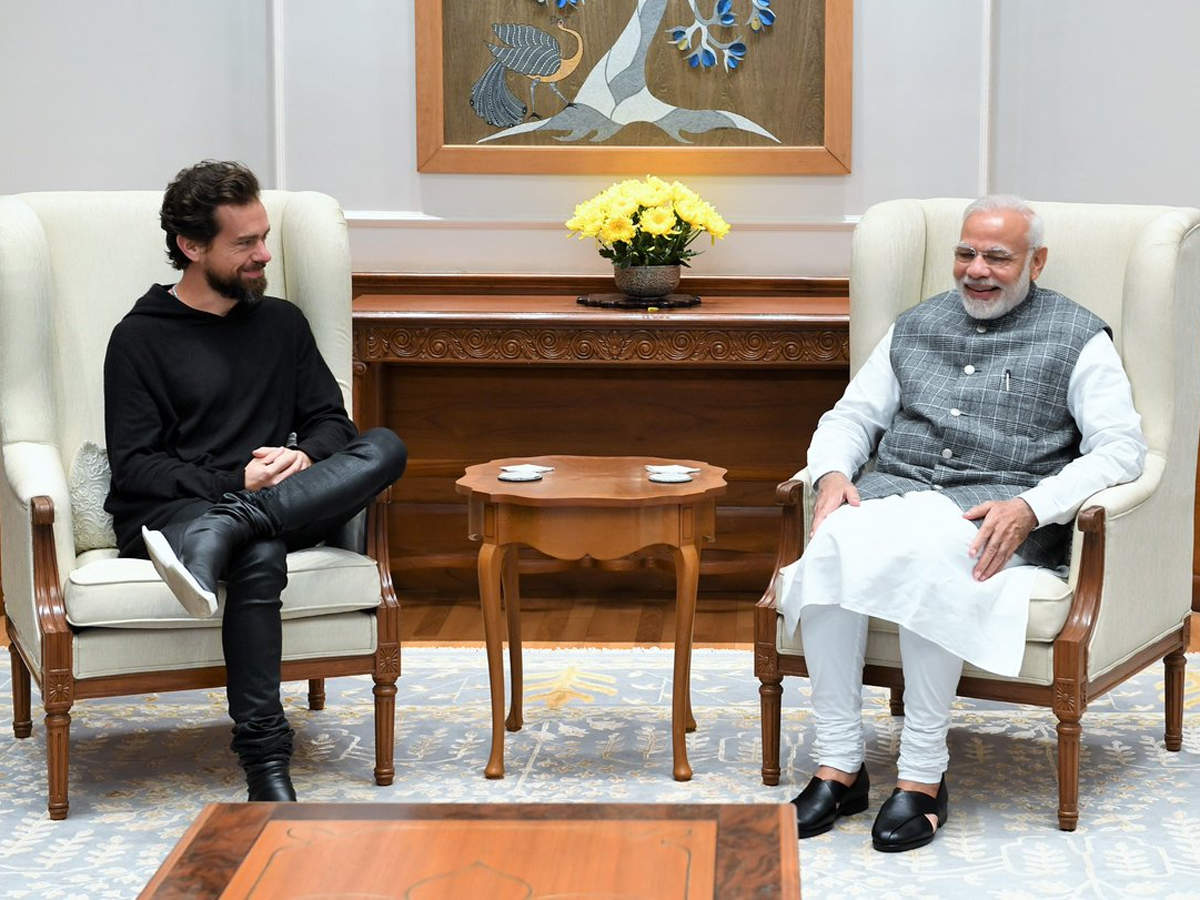
Twitter Gives $2.5 million to --Sewa International-- "Welfare Wing" of India's RSS Paramilitary | Pieter Friedrich
|
|
|
|
|
|
|
|
November 03, 2018
Canada: Consul General of India in Toronto Delivers Keynote Speech at Hindu Nationalist Event organised by International arm of RSS
Toronto’s Consul General of India Keynotes Hindu Nationalist Event

“Dinesh Bhatia’s presence at an RSS event inspires fear,” say Indian minorities
ONTARIO, Canada: Oct. 31, 2018 — Some minorities of Indian origin are asking for Dinesh Bhatia, the Consul General of India’s Toronto consulate, to resign after he appeared as the keynote speaker at an Oct. 19 event which was hosted by Hindu Swayamsevak Sangh (HSS), the international wing of Rashtriya Swayamsevak Sangh (RSS), the world’s largest paramilitary.“Thousands of Indians fled religious and ethnic persecution in India to find refuge in Canada,” says Ram Mohan, an activist with Canadian Minorities of India (CMI). “Many refugees, including Christians, Dalits, Muslims, and Sikhs have endured persecution at the hands of the RSS. The moment Consul General Bhatia spoke on a stage featuring photographs of RSS leaders, he discarded his diplomatic credentials. Bhatia’s presence at an RSS event inspires fear in the hearts of many Canadians from Indian minority communities. He must resign.”
Bhatia was joined at the event by Ved Nanda, Sanghchalak (Leader) of HSS North America, and Saumitra Gokhale, International Coordinator of HSS. Garlanded photos on the stage included K.B. Hedgewar and M.S. Golwalkar. Hedgewar, who founded the RSS in 1925, said his intention was “to put in reality the words ‘Hindustan of Hindus.’” He stated, “Hindustan is a country of Hindus. Like other nations of other people (eg. Germany of Germans), this is a nation of Hindu people.” Golwalkar, who was the RSS’s longest-serving leader, stated, “We repeat: in Hindustan, the land of the Hindus, lives and should live the Hindu Nation.”
“The RSS calls Indian Christians ‘foreigners’ and murders them,” says Bill Rogers, a U.S.-based observer of international Christian persecution. “One horrible example is the 2008 Odisha Pogrom, where the government of Odisha is on record saying that it was the RSS and its affiliates who massacred dozens of Christians and made so many tens of thousands refugees in their own country. A diplomat who claims to represent a secular country has no business going anywhere near an RSS event.”
The RSS is the parent of a family of organizations known as the Sangh Parivar. According to the U.S. Commission on International Religious Freedom, “Sangh Parivar entities aggressively press for governmental policies to promote their Hindu nationalist agenda, and adhere in varying degrees to an ideology of Hindutva, which holds non-Hindus as foreign to India.” In June 2018, the CIA labeled the RSS as a nationalist organization and its affiliate, the Vishwa Hindu Parishad (VHP), as a religious militant organization.
“The RSS, VHP, and HSS are supremacist groups which spread hatred against non-Hindu Indians,” explains Pieter Friedrich, an analyst of South Asian affairs. “The RSS and VHP are implicated in pogroms against Indian minorities, assassinations of journalists, and terrorist acts. They share ideological affinity with white nationalists. White nationalists want a whites-only nation while the RSS wants a Hindus-only nation. Both are anti-Semitic. Both glorify Aryanism. Both lynch minorities. Horrifying events like the Tree of Life Synagogue massacre in Pittsburgh are regularly replicated in India by Hindu nationalists who invade churches, mosques, and gurdwaras.”
Friedrich notes, “The goals of the RSS are very clearly indicated in the writings of Golwalkar and of Savarkar — the originator of the term Hindutva. Both suggested that Indian minorities should be treated the same way as Nazi Germany treated the Jews.” He identifies a selection of quotes from both figures taken from the 1920s to 1960s.
“We are Indians because we are Hindus and vice versa,” wrote Savarkar. He said that, “India must be a Hindu land, reserved for the Hindus.” Asserting that “so far as the Moslem minority is concerned… we must watch it in all its actions with the greatest distrust possible,” he concluded, “If we Hindus in India grow stronger, in time these Muslims… will have to play the part of German-Jews.”
“Conversion of Hindus into other religions is nothing but making them succumb to divided loyalty in place of having undivided and absolute loyalty to the nation,” wrote Golwalkar. He demanded, “Muslims and Christians here should give up their present foreign mental complexion and merge in the common stream of our national life.” Claiming that “the first Semitic religion was Judaism — an intolerant faith,” Golwalkar declared,
“To keep up the purity of the race and its culture, Germany shocked the world by her purging the country of the Semitic races — the Jews. Race pride at its highest has been manifested here. Germany has also shown how well-nigh impossible it is for races and cultures, having differences going to the root, to be assimilated into one united whole, a good lesson for us in Hindustan to learn and profit by.”
Bhatia courted controversy earlier this year when his office protested the presence of a Punjab pavilion at the July 2018 Carabram multicultural festival in Brampton, Ontario.
According to Brampton Mayor Linda Jeffrey, consular officials threatened to “go to the highest office in the country and cancel this festival.” Their objection was that the Sikh community wanted to host a Punjab pavilion apart from the India pavilion. “This type of unwarranted interference by Indian officials in a local cultural festival in Brampton was shocking,” said Jeffrey. The office of Foreign Affairs Minister Chrystia Freeland stated, “Interference in domestic affairs by foreign representatives in Canada is inappropriate.”
Meanwhile, RSS Sarsanghchalak (Supreme Leader) Mohan Bhagwat and HSS Sanghchalak Ved Nanda have both sparked protests in the U.S. over the past year.
In September 2018, Bhagwat faced relentless resistance when he keynoted the VHP-organized World Hindu Congress (WHC) in Chicago. African-Americans, Buddhists, Christians, Dalits, Muslims, and Sikhs united in two days of street protests. Several U.S. politicians who were scheduled to attend dropped out, some issuing statements.
Representative Tulsi Gabbard, the first Hindu elected to U.S. Congress, was confirmed to chair the WHC but dropped out after protests against her sharing the stage with Bhagwat. She stated, “Due to ethical concerns and problems that surround my participating in any partisan Indian political event in America, effective immediately, I respectfully withdraw myself.” Ram Villivalam, a nominee for Illinois State Senate, was scheduled to appear but also dropped out. Citing the presence of “nationalist individuals and organizations affiliated with WHC 2018,” he stated, “Therefore, I cannot participate in this convening…. I do not support any group and/or an event arranged or led by organizations that intimidate minorities, incite discrimination and violence, commit acts of terror based on race or ethnic background, promote hate speech, and/or believe in faith based nationalism.”
In November 2017, Nanda stirred controversy in California when the Uberoi Foundation for Religious Studies, an organization he chairs, sponsored demands to revise school curriculum. A broad spectrum of Indian minority groups — including Dalits, Muslims, Sikhs, and Ravidassias — protested proposed revisions which included removal of the word “Dalit,” insertion of language claiming that the caste system created “social stability,” insertion of language suggesting that Dalits (formerly known as Untouchables) chose to do “dirty work” which made them untouchable, insertion of references to the mythical Saraswati River as a geographical reality, removal of references to Sikh Guru Nanak’s opposition to Brahmanism (the philosophy holding the highest caste, Brahmans, as superior) and the caste system, and labeling of U.S. Congressman Dalip Singh Saund as an Indian instead of a Sikh.
“Nanda directly modeled his efforts to revise American curriculum after efforts by Bhagwat and his predecessors to rewrite Indian curriculum according to the whims of Hindu nationalists,” notes Arvin Valmuci, a spokesperson for Organization for Minorities of India (OFMI). “We have seen solidarity among diverse communities protesting the California curriculum changes as well as the WHC in Chicago. Indians in Canada, including freedom-loving Hindus, should also unite, speak out, expose, reject, and eject Consul General Dinesh Bhatia’s affiliation with the agenda of militant religious nationalism.”
May 06, 2016
Arunabha Bagchi on Hindutva in America (in The Statesman)
The Statesman - 1 May 2016

Hindutva in America
Arunabha Bagchi
| 01 May, 2016
In
a recent article, “The Hindu Consensus” (13 March 2016), I had analysed
the reason behind the rise and rise in India of the Hindu Majoritarian
Consensus, and had pointed out that the traditional arguments of our
liberal intellectuals need to be reconfigured to effectively counter
this alarming trend. To my utter surprise, two US-based Hindutva
organisations picked up my article and published it on their websites.
They must have agreed to the reasoning provided for the phenomenal rise
of the Hindu Majoritarian Consensus, and ignored the rest. This made me
think about the Hindutva movement abroad that gained momentum in
conjunction with the Ram Janmabhoomi movement starting in 1990, and now
has a significant presence in many countries. This has been
spectacularly demonstrated by the grand show at the Madison Square
Garden in New York where Narendra Modi delivered the ‘victory speech’ to
his countless admirers in the United States. The same show was repeated
elsewhere, most notably in Sydney and London.
The most effective Hindutva movement abroad developed in America. Hinduism has been practised in the United Kingdom for a long time, but it was essentially fragmented along regional lines reflecting the diverse regions in India with different languages and religious practices. The same trend started in the United States as well, when the first wave of immigration began after 1965 with the dramatic relaxation of immigration rules for people of non-European origin. This group consisted mostly of engineers, scientists and other professionals, and they were brought up in a milieu where the Gandhi-Nehru ethos prevailed. They were happy to observe their regional religious festivals and gather together to teach their children rudiments of their own languages. I had personal experience of this period in Los Angeles.
The second wave, from 1980 to 1995, consisted primarily of entrepreneurial and corporate management professionals. They included migrants from Africa of Indian origin. These migrants were wealthy and highly religious. They started constructing temples in large cities, originally devoted to deities specific to their regions in India. This was also the period of resurgence in Hindutva politics in India. Due to lack of choice, Hindus in America coming from all regions of India started flocking to those temples for pujas, just as their counterparts do in pan-Indian places of pilgrimage back home. This fit well with the ideal Hindutva ideology of forming a united Hindu community without any regional bias. I had direct experience of this development during my sabbaticals and professional visits to the US during summers. The third group of immigrants from 1995 onwards were IT professionals, and they used these temples for their religious needs. This period also saw a large increase in relatives of already settled Indian Americans migrating to the US under the family reunion schemes, which only increased the popularity of those temples.
With the resurgence of Hindutva politics in India, the Sangh Parivar made significant efforts to increase its footprint in America. Of course, the RSS went global on a modest scale decades ago when it set up branches in Africa to satisfy the demand among the Indian trading communities there. This received a new impulse with the setting up of the HSS (Hindu Swangsewak Sangha) in the UK in 1966 and subsequently in the US in 1973. Viswa Hindu Parishad (VHP), the religious/ cultural offshoot of the RSS, also opened its UK and US branches, VHP-UK and VHPA, respectively, around the same period. America provided a fertile ground for the rapid expansion of VHPA. They could use the social and economic homogeneity of the upper caste Indians that largely formed the Indian diaspora there. Many new Hindutva organisations sprang up in course of time, with no declared connections with one another. Scholars have now discovered, through detailed studies of their cyber-activities, that they are all parts of the Sangh Parivar. The most intriguing among them is HMEC (Hindu Mandir Executives’ Conference), a yearly get together of community leaders who control the temples in North America. This seemingly innocent organisation provides a significant forum for propagating the Hindutva ideology in North America. James McCallum Wiker, in his Masters thesis at the University of Washington, made a detailed study of their activities.
The first joint activity of the Hindutva brigades in India and abroad was ingeniously devised by the VHP at the start of the Ram Janmabhoomi Andolon in 1990. They came up with the idea of collecting Ram shila from everywhere to be used for building the planned Ram temple after the destruction of the Babri Masjid. These were consecrated bricks, to be collected from all corners of India, but in which the Hindutva advocates in diaspora participated with full vigour. Once a common purpose was identified, it was a small step for the diaspora to start actively helping in the political campaign of the BJP in national and state elections. They contributed financially, and used their knowledge of the election process in the United States to provide voluntary services to the BJP candidates in India. All these started slowly during the 1990s and took a massive form during the 2014 parliamentary election that brought Narendra Modi to power. The most obvious sign of their contribution, besides the financial one, was to transform our parliamentary election into a US presidential one.
Sangh Parivar activities in America, to be relevant to the diaspora there, have some specific features with no direct counterpart in India. Two such critical areas are ‘proper’ history of Hindus and practical descriptions of sanskaras; or, more specifically, the rites of marriage and death. State boards of education in the US, in keeping with the changing demographics with increasing non-Christian population of students, are paying some attention to other world religions. VHP associates are actively advocating more ‘Hindu’ accounts in the school history lessons. This is in line with the efforts of the previous BJP administration under Atal Behari Vajpayee to ‘adjust’ school textbooks in India to reflect their viewpoint about our unblemished glorious past. HMEC fought hard to ‘adjust’ the curriculum of the California State Board of Education. Reputed American scholars of Indian history, as well as Indian historians and anthropologists there, have largely thwarted their efforts. However, on some points of contention they did have their say. Meanwhile they are distributing their view of our history to the guardians of Indian students for additional reading. Rewriting history by ‘experts’ is now in full swing with the advent of the latest BJP dispensation in Delhi. This is sure to make the job of Hindutva advocates in America considerably easier. Regarding sankskaras, VHP associates are writing simple tracts explaining the procedures to be followed during the marriage ceremony and cremation rituals in regional languages, as well as in English. They come very handy with the Indian diaspora who feel helpless on such occasions. Providing these indispensable services reinforces their support among the Indian migrants. The liberal Indian intellectuals in the US are alarmed with these developments, but are too fragmented and too high-browed to have much impact among most of the migrants.
The Hindutva advocates in America are increasingly behaving like the Jewish interest groups there. The negative perception of Muslims after 9/11 is making their efforts somewhat easier. One has to be careful, however. Americans are largely Christian and highly religious. In fact, as far as religion is concerned, the country does not seem to have progressed much beyond the state of affairs in late nineteenth century Europe, as Bertrand Russell often pointed out. The yoga hype and weird followers of Indian babas notwithstanding, Americans are not really interested in Hinduism. Judaism is an altogether different matter. Pushing Hindutva too far in America may backfire with intensified anti-Indian attitude among the common people there.
The writer is former Dean and Emeritus Professor of Applied Mathematics, University of Twente, The Netherlands.
The most effective Hindutva movement abroad developed in America. Hinduism has been practised in the United Kingdom for a long time, but it was essentially fragmented along regional lines reflecting the diverse regions in India with different languages and religious practices. The same trend started in the United States as well, when the first wave of immigration began after 1965 with the dramatic relaxation of immigration rules for people of non-European origin. This group consisted mostly of engineers, scientists and other professionals, and they were brought up in a milieu where the Gandhi-Nehru ethos prevailed. They were happy to observe their regional religious festivals and gather together to teach their children rudiments of their own languages. I had personal experience of this period in Los Angeles.
The second wave, from 1980 to 1995, consisted primarily of entrepreneurial and corporate management professionals. They included migrants from Africa of Indian origin. These migrants were wealthy and highly religious. They started constructing temples in large cities, originally devoted to deities specific to their regions in India. This was also the period of resurgence in Hindutva politics in India. Due to lack of choice, Hindus in America coming from all regions of India started flocking to those temples for pujas, just as their counterparts do in pan-Indian places of pilgrimage back home. This fit well with the ideal Hindutva ideology of forming a united Hindu community without any regional bias. I had direct experience of this development during my sabbaticals and professional visits to the US during summers. The third group of immigrants from 1995 onwards were IT professionals, and they used these temples for their religious needs. This period also saw a large increase in relatives of already settled Indian Americans migrating to the US under the family reunion schemes, which only increased the popularity of those temples.
With the resurgence of Hindutva politics in India, the Sangh Parivar made significant efforts to increase its footprint in America. Of course, the RSS went global on a modest scale decades ago when it set up branches in Africa to satisfy the demand among the Indian trading communities there. This received a new impulse with the setting up of the HSS (Hindu Swangsewak Sangha) in the UK in 1966 and subsequently in the US in 1973. Viswa Hindu Parishad (VHP), the religious/ cultural offshoot of the RSS, also opened its UK and US branches, VHP-UK and VHPA, respectively, around the same period. America provided a fertile ground for the rapid expansion of VHPA. They could use the social and economic homogeneity of the upper caste Indians that largely formed the Indian diaspora there. Many new Hindutva organisations sprang up in course of time, with no declared connections with one another. Scholars have now discovered, through detailed studies of their cyber-activities, that they are all parts of the Sangh Parivar. The most intriguing among them is HMEC (Hindu Mandir Executives’ Conference), a yearly get together of community leaders who control the temples in North America. This seemingly innocent organisation provides a significant forum for propagating the Hindutva ideology in North America. James McCallum Wiker, in his Masters thesis at the University of Washington, made a detailed study of their activities.
The first joint activity of the Hindutva brigades in India and abroad was ingeniously devised by the VHP at the start of the Ram Janmabhoomi Andolon in 1990. They came up with the idea of collecting Ram shila from everywhere to be used for building the planned Ram temple after the destruction of the Babri Masjid. These were consecrated bricks, to be collected from all corners of India, but in which the Hindutva advocates in diaspora participated with full vigour. Once a common purpose was identified, it was a small step for the diaspora to start actively helping in the political campaign of the BJP in national and state elections. They contributed financially, and used their knowledge of the election process in the United States to provide voluntary services to the BJP candidates in India. All these started slowly during the 1990s and took a massive form during the 2014 parliamentary election that brought Narendra Modi to power. The most obvious sign of their contribution, besides the financial one, was to transform our parliamentary election into a US presidential one.
Sangh Parivar activities in America, to be relevant to the diaspora there, have some specific features with no direct counterpart in India. Two such critical areas are ‘proper’ history of Hindus and practical descriptions of sanskaras; or, more specifically, the rites of marriage and death. State boards of education in the US, in keeping with the changing demographics with increasing non-Christian population of students, are paying some attention to other world religions. VHP associates are actively advocating more ‘Hindu’ accounts in the school history lessons. This is in line with the efforts of the previous BJP administration under Atal Behari Vajpayee to ‘adjust’ school textbooks in India to reflect their viewpoint about our unblemished glorious past. HMEC fought hard to ‘adjust’ the curriculum of the California State Board of Education. Reputed American scholars of Indian history, as well as Indian historians and anthropologists there, have largely thwarted their efforts. However, on some points of contention they did have their say. Meanwhile they are distributing their view of our history to the guardians of Indian students for additional reading. Rewriting history by ‘experts’ is now in full swing with the advent of the latest BJP dispensation in Delhi. This is sure to make the job of Hindutva advocates in America considerably easier. Regarding sankskaras, VHP associates are writing simple tracts explaining the procedures to be followed during the marriage ceremony and cremation rituals in regional languages, as well as in English. They come very handy with the Indian diaspora who feel helpless on such occasions. Providing these indispensable services reinforces their support among the Indian migrants. The liberal Indian intellectuals in the US are alarmed with these developments, but are too fragmented and too high-browed to have much impact among most of the migrants.
The Hindutva advocates in America are increasingly behaving like the Jewish interest groups there. The negative perception of Muslims after 9/11 is making their efforts somewhat easier. One has to be careful, however. Americans are largely Christian and highly religious. In fact, as far as religion is concerned, the country does not seem to have progressed much beyond the state of affairs in late nineteenth century Europe, as Bertrand Russell often pointed out. The yoga hype and weird followers of Indian babas notwithstanding, Americans are not really interested in Hinduism. Judaism is an altogether different matter. Pushing Hindutva too far in America may backfire with intensified anti-Indian attitude among the common people there.
The writer is former Dean and Emeritus Professor of Applied Mathematics, University of Twente, The Netherlands.
January 31, 2016
Academics Open Letter to the University of California, Irvine regarding donors’ intentions to fund only certain kinds of religious practitioners
The Petition
(sign this petition here)
Open Letter to the University of California, Irvine
We write to you to express our concern regarding the initiative to establish four endowed chairs at the University of California, Irvine: the Thakkar Family-Dharma Civilization Foundation Presidential Chair in Vedic and Indic Civilization Studies, the Dhan Kaur Sahota Presidential Chair in Sikh Studies, Shri Parshvanath Presidential Chair in Jain Studies, and the Swami Vivekananda-Dharma Civilization Foundation Presidential Chair in Modern India Studies.
While such endowments have the potential to greatly enhance the study of South Asia, we are troubled by news reports that the Dharma Civilization Foundation (hereafter DCF) has put forward its own list of acceptable candidates based on race and religion. Further, we are concerned about reports that the DCF has already brought their favoured candidates to the UC Irvine campus, in the absence of any advertised search for these positions. According to Inside Higher Ed’s report on December 21, 2015, the DCF has proposed a list of possible candidates to fill the chairs, as well as a list of proscribed candidates, describing these lists as a “suggestion” to the University. Prevailing normative codes at public Universities and standard academic procedures require an advertised search where qualified candidates are vetted by established scholars selected from a wide pool of academic expertise. Reshaping academic selection via criteria based on ethnic origin or religious belief opens the door to discriminatory practices that are consequential for educators and students everywhere, not just at UCI.
Donors’ intentions to fund only certain kinds of religious practitioners, or only supporters of certain religiously-defined communities, contravenes not only anti-discrimination law but also standards of academic excellence. While it is possible that scholar-practitioners of a religion can enrich its study, it is widely accepted that being a practicing member of a religious group should not be a requirement for studying and teaching that religion. We fear the DCF’s efforts will lead to the appointment of scholars who do not represent the intellectual richness and rigour in religious studies and South Asian history. South Asia is a deeply heterogeneous multi-religious sub-continent, and its religious practices are highly decentralised, varying across region, class and caste. Academic study requires empathy, curiosity, and rigour, not a certificate of belonging or a methodology that is monitored by donors. We are particularly concerned about the specific ideological sympathies of DCF associates, and the commitment to compliance with donors’ intent currently embedded in the gift agreement (as published in the Orange County Register on December 16, 2015).
The DCF is part of a right-wing Hindu group of organisations that has been known to undermine Indian pluralism through an agenda that seeks to redefine true “Indianness” in terms of a historically-fabricated continuity in “Indic” religions (a list of religions that excludes the sub-continent’s traditions of Islam, Christianity and Zoroastrianism), and a privileging of upper-caste, “Vedic” Hindu identity. The DCF, although registered as a US non-profit organisation, is directly tied, through its office holders and its ideological roots, to the Rashtriya Swayamsevak Sangh (hereafter RSS), an organization that is the main proponent of the political ideology of Hindu nationalism, or "Hindutva." DCF office holders have held, or continue to hold, positions within the Hindu Swayamsevak Sangh (hereafter HSS), which is a global partner organisation of the RSS (with an international program to extend RSS ideology, including raising money in the UK and US to be used for RSS schools).
The RSS and HSS misrepresent not only Hinduism’s relationship to other religions but also the historical fluidity and philosophical complexity within Hinduism itself. The RSS defines ‘Hindu-ness’ using an especially narrow interpretation of Sanatana Dharma and Vedic thought. The RSS is a militarist organization that has upheld violence as a means to reach political goals; it has used fatal force against religious minorities and political adversaries in the past. The RSS has been banned three times in India for its active participation in mass violence against Christian and Muslim minorities and its role in the 1948 assassination of Mahatma Gandhi. The HSS promotes a similar sectarian, exclusive, and xenophobic idea of Hinduism. Organisations linked to the DCF have been actively involved in hate campaigns and public smearing of diverse scholars of Hinduism who disagree with their interpretations of Indian history. Many members of the DCF board are office-holders and members of the HSS, and have tried to advance their ideological agenda in other educational settings. DCF affiliates have attempted to introduce factually inaccurate changes to California sixth-grade textbooks about Hinduism. The right-wing Hindu campaign to change California textbooks promoted a reductive idea of the religion, seeking to introduce elements that had been widely discredited by scholars of Hinduism. The Endowed Chair agreement between the DCF and UC Irvine, to our surprise, specifies that adherence to this intellectually discredited interpretation of Hinduism will serve as a litmus test for future faculty in the UC system. The candidates hired will be required to forge “partnerships with the Vedic and Indic heritage community in the Western diaspora,” and to fulfill the “Donors’ primary foundational intention” to uphold their vision of “Applied Dharma.” It is a matter of scholarly and financial concern that a gift agreement would specify that candidates prove alignment with Donor intent in order to be hired, and that certain faculty members of the UC system will be required to meet annually with private donors “to preserve a constructive collaboration with the Donors’ intent” in perpetuity.
We value the mission of the University of California and its commitment to robust faculty governance, public education and academic freedom. We support the diversification of research and pedagogy, but urge you to recognise the danger of privileging forms of expression which present themselves within the spectrum of “diversity,” while promoting or justifying religious or ethnic hatred, discrimination, or intolerance. Based on recent statements by the DCF and our understanding of the agreements that the School of Humanities signed, we are extremely concerned that it will be difficult to maintain a clear separation between “donor intent” and university processes. If UCI is unable to establish clear academic criteria for the vetting and hiring of candidates based on wide consultations with present faculty who teach South Asia-related courses, and if UCI is unable to ensure that there is no involvement of donors in academic decisions, we urge UCI to return the gifts and to end this relationship with the DCF and its associates.
Academic research and decision-making processes ought to evolve in the best traditions of independent thought and inquiry. At a time of State disinvestment from public education and the rising importance of private money in the growth of education, we understand the pressures on administrators to promote fundraising initiatives. However, the University of California has the responsibility to conduct due diligence, to protect its faculty, staff and students, and to follow ethical guidelines for broad democratic participation in our joint educational futures. We urge the University of California system to uphold the best ideals of academic freedom, and to reject partnerships with donor organisations or individuals who propagate narrow sectarian agendas that violate the very spirit and mission of a public university.
Sara Abraham
Researcher, Lahore University of Management Sciences
Meena Alexander
Distinguished Professor of English, Graduate Center/ Hunter College, City University of New York
Frederick M. Asher
Department of Art History,University of Minnesota
Jayadev Athreya
Director, Washington Experimental Mathematics Lab University of Washington
Gajendran Ayyathurai
Postdoctoral Research Fellow, Göttingen University, Germany
Paola Bacchetta
Associate Professor, University of California, Berkeley
Amit R. Baishya
Assistant Professor, Department of English, University of Oklahoma.
Sarada Balagopalan
Associate Professor and Director of Graduate Studies, Department of Childhood Studies, Rutgers, The State University of New Jersey
Sukanya Banerjee
University of Wisconsin-Milwaukee
Srimati Basu
University of Kentucky
Dr. Rachel Berger
Associate Professor, History Department, Concordia University
Varuni Bhatia
Assistant Professor, Hindu Studies, Asian Languages and Cultures, University of Michigan, Ann Arbor
Nilanjana Bhattacharjya
Honors Faculty Fellow, Barrett, the Honors College, Arizona State University
Tithi Bhattacharya
Director, Global Studies, Associate Professor, History, Purdue University
Debjani Bhattacharyya
Assistant Professor, Drexel University, Department of History, 3250-60 Chestnut Street, Suite 3025 MacAlister Hall, Philadelphia, PA 19104
Purnima Bose
Associate Professor, English and International Studies, Indiana University, Bloomington
Timothy Brennan
Professor, U of Minnesota
Laura C. Brown
Assistant Professor, University of Pittsburgh
Madhurima Chakraborty
Assistant Professor, Department of English, Columbia College Chicago.
Mrinalini Chakravorty
Associate Professor, English, University of Virginia
Shefali Chandra
Associate Professor of South Asian History, Washington University in St. Louis
S. Charusheela
Associate Professor, Interdisciplinary Arts and Sciences, University of Washington, Bothell
Partha Chatterjee
Professor of Anthropology, Columbia University
Indrani Chatterjee
Professor, History, UT Austin
Angana Chatterji
Center for Race and Gender, University of California, Berkeley
Swati Chattopadhyay
Professor, History of Art and Architecture, University of California, Santa Barbara
Zahid Chaudhary
Princeton University
Preeti Chopra
Professor, Department of Art History, University of Wisconsin, Madison
Rohit Chopra
Associate Professor of Communication, Santa Clara University
David Clingingsmith
Dept. of Economics, Case Western Reserve University
Ananya Dasgupta
Assistant Professor, History, Case Western University
Veena Deo
Professor, English,CLA, Hamline University
Jigna Desai
Chair & Professor, Dept. of Gender, Women, and Sexuality Studies, University of Minnesota 425 Ford Hall
Wendy Doniger
University of Chicago
Richard M. Eaton
Professor of History, University of Arizona
Mayanthi L. Fernando
Associate Professor of Anthropology, Director of Undergraduate Studies, Department of Anthropology, University of California, Santa Cruz
Keya Ganguly
Professor, Department of Cultural Studies and Comparative Literature, University of Minnesota
Toorjo Ghose
Associate Professor, Chair,School of Social Policy & Practice, University of Pennsylvania
Bishnupriya Ghosh
Professor, English, UC Santa Barbara
Jayati Ghosh
Professor, Jawaharlal Nehru University, New Delhi, India
Prof. David Gilmartin
North Carolina State University
Priyamvada Gopal
University of Cambridge
Inderpal Grewal
Yale University
Richard Grusin
Professor of English, University of Wisconsin-Milwaukee
Charu Gupta
Associate Professor, Department of History, University of Delhi
Mary Hancock
Professor of Anthropology and History, University of California, Santa Barbara
Ziaul Hasan
Retired Professor, University of Illinois, Chicago
Qadri Ismail
Associate professor, University of Minnesota.
Dr.Chinnaiah Jangam,
Assistant Professor, Department of History, Carleton University, Ottawa, Canada
Pranav Jani
Associate Professor, English, Ohio State University
Vidya Kalaramadam
Assistant Professor, William Paterson University of New Jersey
Sangeeta Kamat
Associate Professor, Education, University of Massachusetts at Amherst
Suvir Kaul
A. M. Rosenthal Professor, Department of English, University of Pennsylvania
Prashant Keshavmurthy
Assistant Professor of Persian-Iranian Studies, Institute of Islamic Studies, McGill University
Jesse Ross Knutson
Assistant Professor of Sanskrit and Bengali, Department of Indo-Pacific Languages and Literatures, University of Hawai'i at Mānoa
Sankaran Krishna
Professor of Political Science, University of Hawaii at Manoa
Aishwary Kumar
Stanford
Smita Lahiri
Visiting Lecturer, Anthropology, Harvard University
James W Laine
Professor of Religious Studies, Macalester College, Saint Paul. MN
Joy Laine
Philosophy Department, Macalester College
Vinay Lal
Professor of History, UCLA
Premesh Lalu
Director of the DST-NRF Flagship on Critical Thought, Centre for Humanities Research, University of the Western Cape.
Jean M Langford
Professor, Anthropology, U of Minnesota
David Lelyveld
Professor (retired), William Paterson University
Simon Leung
Professor, Department of Art UC Irvine
Ania Loomba
Catherine Bryson Professor of English, University of Pennsylvania
Kama Maclean
University of New South Wales, Australia
Sudhir Mahadevan
Associate Professor, Comparative Literature, Cinema and Media, University of Washington, Seattle
Saba Mahmood
Professor, Department of Anthropology, University of California at Berkeley
Sunaina Maira
Professor, Asian American Studies UC Davis
Neepa Majumdar
Associate Professor, Department of English, University of Pittsburgh,
Marc Matera
Assistant Professor, department of history, UC Santa Cruz
Biju Mathew
Associate Professor, College of Business , Rider University, New Jersey
Saloni Mathur
Associate Professor and Director, Graduate Studies, Chair, Art Journal Editorial Board, UCLA | Dept of Art History
Monika Mehta
Associate Professor of English, Binghamton University
Dilip M Menon
Director Centre for Indian Studies in Africa, University of Witwatersrand, South Africa
Raza Mir
Professor of Management, Cotsakos College of Business, William Paterson University
Madhuchhanda Mitra
Professor, English, College of Saint Benedict/St. John’s University
Durba Mitra
Assistant Professor of History, Fordham University
Megan Moodie
Associate Professor of Anthropology, UC Santa Cruz
Projit Bihari Mukharji
University of Pennsylvania
Sucharita Sinha Mukherjee
College of Saint Benedict/Saint John’s University, Minnesota, USA
Rahul Mukherjee
University of Pennsylvania
Richa Nagar
University of Minnesota, Twin Cities
Vijaya Nagarajan
Associate Professor, Dept. of Religious Studies, Program in Environmental Studies, University of San Francisco
Sandhya Devesan Nambiar
JMC, University of Delhi
Balmurli Natrajan
Associate Professor, Anthropology, William Paterson University of New Jersey
Britta Ohm
Institute of Social Anthropology, University of Bern, Switzerland
Goldie Osuri
Associate Professor, Sociology, University of Warwick
Shailaja Paik
Assistant Professor of South Asian History and Women, Gender, and Sexuality Studies Affiliate, University of Cincinnati, Ohio, USA
Joyojeet Pal
Assistant Professor, University of Michigan, School of Information
Gyan Pandey
Emory University
Vasudha Paramasivan
University of California, Berkeley
Andrea Marion Pinkney
Assistant Professor, Faculty of Religious Studies, McGill University
Sheldon Pollock
Arvind Raghunathan Professor of Sanskrit and South Asian Studies, Chairman, Department of Middle Eastern, South Asian, and Africa Studies, Columbia University in the City of New York
Gyan Prakash
History, Princeton University
Shalini Puri
University of Pittsburgh
Neshat Quaiser
Associate Professor Department of Sociology, Jamia Millia Islamia, Central University New Delhi
Gloria Goodwin Raheja
Professor of Anthropology, University of Minnesota
Arvind Rajagopal
Professor, Dept of Media, Culture and Communication, New York University
Rajeswari Sunder Rajan
English, New York University
M. V. Ramana
Nuclear Futures Laboratory & Program on Science and Global Security, Woodrow Wilson School of Public and International Affairs, Princeton University
Lucinda Ramberg
Cornell University
Maia Ramnath
Professor of History and Asian Studies, Pennsylvania State University.
Anupama Rao
History, Barnard College, Columbia University
Raka Ray
Professor, Department of Sociology, Department of South and Southeast Asian Studies, University of California, Berkeley
Chandan Reddy
Associate Professor, English and Gender, Women and Sexuality Studies
Vanita Reddy
Assistant Professor, English, Texas A&M University
Marcus Rediker
University of Pittsburgh
Sharmila Roy
Attorney at Law, Laveen, Arizona 85339
Modhumita Roy
Associate Professor of English, Tufts University
Parama Roy
University of California, Professor of English, Davis
Poulomi Saha
Assistant Professor of English, University of California, Berkeley
G.S. Sahota
Assistant Professor, Literature, UC Santa Cruz
Yasmin Saikia
Hardt-Nickachos Chair of Peace Studies & Professor of History, Arizona State University
Laila Shereen Sakr
Assistant Professor , Department of Film and Media Studies, UC Santa Barbara
Bhaskar Sarkar
Associate Professor, UC Santa Barbara
Priya Satia
Associate Professor, Department of History, Stanford University
Freya Schiwy
Associate Professor, University of California, Riverside
J. Barton Scott
Assistant Professor, University of Toronto
Arijit Sen
Associate Professor of Architecture, University of Wisconsin, Milwaukee
Nayan Shah
Professor, American Studies & Ethnicity and History, University of Southern California
Svati P. Shah
Associate Professor, University of Massachusetts, Amherst
S. Shankar
Professor and Director of Creative Writing, Department of English, University of Hawai'i at Mānoa
Aradhana (Anu) Sharma
Chair and Associate Professor, Anthropology, Wesleyan University
Jenny Sharpe
Professor of English, Comparative Literature, and Gender Studies , Department of English, University of California, Los Angeles, CA
Elora Shehabuddin
Rice University
Dr. Zoe C. Sherinian
Associate Professor of Ethnomusicology, Women and Gender Studies (Affiliate Faculty), University of Oklahoma
Greg Siegel
Associate Professor, Department of Film and Media Studies, University of California, Santa Barbara, CA
Pritam Singh
Professor of Economics, Faculty of Business, Oxford Brookes University
Shana Sippy
Religion Department, Carleton College
Ajay Skaria
Professor, Department of History/Institute for Global Studies, University of Minnesota
Gayatri Chakravorty Spivak
University Professor, Columbia University, New York, USA.
Mytheli Sreenivas
Associate Professor of History and Women's, Gender and Sexuality Studies, Ohio State University
Tulasi Srinivas
Associate Professor, Emerson College.
Banu Subramaniam
Women, Gender, Sexuality Studies Program, University of Massachusetts, Amherst
Ajantha Subramanian
Professor of Anthropology and of South Asian Studies, Harvard University
Abha Sur
Program in Women's & Gender Studies, MIT
Raja Swamy
Assistant Professor, Department of Anthropology, University of Tennessee
Ratnakar Tripathy
Senior Research Fellow, Asian Development Research Institute (ADRI)
Siva Vaidhyanathan
Director, Center for Media and Citizenship, Robertson Professor, University of Virginia, Department of Media Studies
Vamsi Vakulabharanam
Associate Professor of Economics, University of Massachusetts Amherst.
Peter van der Veer
Director Max Planck Institute for the Study of Religious and Ethnic Diversity, Göttingen, Germany
A.R. Vasavi
Social Anthropologist, Bengaluru, India
Gowri Vijayakumar
UC Berkeley
Rupa Viswanath
Professor of Indian Religions, University of Goettingen, Germany.
Gauri Viswanathan
Class of 1933 Professor in the Humanities, Columbia University
David Gordon White
J. F. Rowny Professor of Comparative Religion, University of California, Santa Barbara
Michael Witzel
Wales Professor of Sanskrit, Harvard University
Benjamin Zachariah
University of Trier, Germany
to sign the petition go here:
http://www.ipetitions.com/petition/open-letter-UCI
Subscribe to:
Posts (Atom)