|

Showing posts with label Jamiat Ulema-e-Hind. Show all posts
Showing posts with label Jamiat Ulema-e-Hind. Show all posts
November 17, 2017
November 12, 2013
India: RSS, Madani, Laxmanpur Bathe by Kuldip Nayar
From: Mainstream Weekly, 9 November 2013
RSS, Madani, Laxmanpur Bathe
Kuldip Nayar
Fundamentalism is rearing its ugly head once again. The Rashtriya Swayamsevak Sangh (RSS) has openly said that it would take part in politics. On the other hand, even the liberal Jamiat Ulama-i-Hind has talked about the Muslim vote. The impending parliamentary elections may be compelling the political parties. Yet the polarisation they are trying to effect is telling upon the co-existence of Hindus and Muslims, something which they have come to accept.
Take the RSS first. Apparently, it is not happy with the working of the Bharatiya Janata Party (BJP), its political wing. The RSS had its way in imposing Hindutva’s poster-boy, Guajrat Chief Minister Narendra Modi, as the BJP’s candidate for the office of Prime Minister. Maybe the RSS is upset over leaders like L.K. Advani, Sushma Swaraj and Arun Jaitley who are seen as the liberal elements in the BJP.
By entering politics, the RSS is going back on the undertaking it gave Sardar Patel, the Union Home Minister, after the partition of the country. The RSS promised and wrote in its constitution not to participate in political activities. This was the price it paid to have the ban lifted following the assassination of Mahatma Gandhi. Nathuram Godse, the assassin, was found having links with the RSS.
True, Patel, known for his pro-Hindu views, did not think that the RSS had a hand in the Mahatma’s murder. He said so in his letter dated January 27, 1948, to Prime Minister Jawaharlal Nehru. Yet Patel believed that the Sangh’s “violent” ways had contributed to the climate in which the Mahatma was killed.
The then Sangh chalak, Madhav Sadashiv Golwalkar, pleaded not guilty. Nor did his telegrams to Nehru and Patel, expressing shock over the murder, make any difference. The Sangh had to specify in its constitution that it had “no politics” in mind and would remain “devoted purely to cultural work”.
Yet the ranting by Mohan Bhagwat, the RSS chief, that it would directly participate in politics is the violation of the promise given to Patel. However, this is one case which the Election Commission would have to ponder over. How can a cultural organisation jump into the political arena? Even if the RSS changes its constitution, how justified is it when it gave an undertaking to the Central Government to have the ban lifted?
Take the statement of Mahmood Madani, chief of Jamiat Ulama-i-Hind. He asked the so-called secular parties not to invoke the bogey of Narendra Modi to create fear among Muslim voters. He said that the parties should instead seek votes “on the basis of promises fulfilled during their tenure and the promises they would make through election manifestoes”.
I do not take exception to the statement Madani made except his invoking the phrase of “Muslim vote”. There is no Hindu or Muslim vote, but only the Indian vote. What holds good for one community holds good for the other community. To single out the Muslims is exactly what the RSS does for Hindus. And I have not been able to comprehend Madani’s love for Modi. He should have said in the same statement that his remark should not be misunderstood and that he was opposed to Modi’s parochial politics. In fact, he let the Congress and Samajwadi Party too off the hook.
The Congress got the opening and said: “We do not make strategy keeping in mind any individual. Our strategies are with regard to the policies and programmes of the party.” However, this self virtue does not convince anyone. It is a fact that the Congress has decided to attack Modi alone. And this can be seen in the manner in which the Union Ministers are taking turns to criticise Modi. It is unfortunate that the Congress has not raised any substantial issue like development and has played into the hands of Modi who has converted the 2014 polls into a presidential form of election. He, instead, is talking about development and covering up his Hindutva ideology.
The Achilles’ heel of the Congress is non-governance as well as the incumbency factor. I wish there had been early elections so that the new government would have planned some-thing for the country for a long tenure. But the six months between now and the elections will be without any serious work. Ministers will be only crossing the T-s and dotting I-s. Consequently, the economy is going haywire. If the ventures in the private sector can register a phenomenal growth, why not then the public sector undertakings?
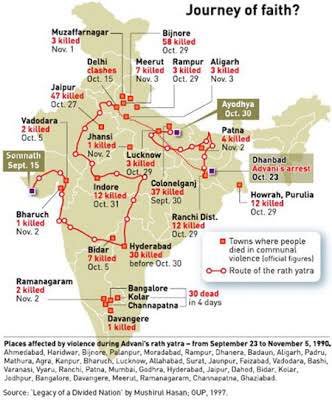
Yet the worst is what the Vishwa Hindu Parishad and the BJP are doing at Ayodhya. They were responsible for the demolition of the Babri Masjid and the killing of hundreds of Muslims. They are trying to create a similar atmosphere by wanting to stage a rally which the State Government has rightly banned. I wish the two parties were to show the same verve in getting justice for the Dalits, who are Hindus but still undergoing all kinds of indignities and humiliations. They are not getting their due even in law courts. The latest case relates to a Bihar village, Laxmanpur Bathe, where the members of Bhoomihars (the landlords) killed 58 Dalits, including 27 women and 10 children. An upper-caste judge has released all the 16 accused on the plea that there was no evidence. It is a travesty of justice. The lower court had sentenced the accused to life imprisonment.
If the High Court judge did not find any evidence he could have constituted a special investigation team (SIT) to work under its supervision to hold a fresh probe. The result of his judgment is that the Dalits have migrated from the village where they and their forefathers had lived for years. What has happened at Laxmanpur Bathe is the fate of Dalits all over the country. Equality before law, enshrined in the Constitution, has become a farce.
Attention is now focused on the Supreme Court where an appeal has been filed against the High Court judgment. The Supreme Court would do well if it were also to look into the functioning of the Bihar High Court which is dominated by the upper caste.
The author is a veteran journalist renowned not only in this country but also in our neighbouring states of Pakistan and Bangladesh where his columns are widely read. His website is www.kuldipnayar.com
RSS, Madani, Laxmanpur Bathe
Kuldip Nayar
Fundamentalism is rearing its ugly head once again. The Rashtriya Swayamsevak Sangh (RSS) has openly said that it would take part in politics. On the other hand, even the liberal Jamiat Ulama-i-Hind has talked about the Muslim vote. The impending parliamentary elections may be compelling the political parties. Yet the polarisation they are trying to effect is telling upon the co-existence of Hindus and Muslims, something which they have come to accept.
Take the RSS first. Apparently, it is not happy with the working of the Bharatiya Janata Party (BJP), its political wing. The RSS had its way in imposing Hindutva’s poster-boy, Guajrat Chief Minister Narendra Modi, as the BJP’s candidate for the office of Prime Minister. Maybe the RSS is upset over leaders like L.K. Advani, Sushma Swaraj and Arun Jaitley who are seen as the liberal elements in the BJP.
By entering politics, the RSS is going back on the undertaking it gave Sardar Patel, the Union Home Minister, after the partition of the country. The RSS promised and wrote in its constitution not to participate in political activities. This was the price it paid to have the ban lifted following the assassination of Mahatma Gandhi. Nathuram Godse, the assassin, was found having links with the RSS.
True, Patel, known for his pro-Hindu views, did not think that the RSS had a hand in the Mahatma’s murder. He said so in his letter dated January 27, 1948, to Prime Minister Jawaharlal Nehru. Yet Patel believed that the Sangh’s “violent” ways had contributed to the climate in which the Mahatma was killed.
The then Sangh chalak, Madhav Sadashiv Golwalkar, pleaded not guilty. Nor did his telegrams to Nehru and Patel, expressing shock over the murder, make any difference. The Sangh had to specify in its constitution that it had “no politics” in mind and would remain “devoted purely to cultural work”.
Yet the ranting by Mohan Bhagwat, the RSS chief, that it would directly participate in politics is the violation of the promise given to Patel. However, this is one case which the Election Commission would have to ponder over. How can a cultural organisation jump into the political arena? Even if the RSS changes its constitution, how justified is it when it gave an undertaking to the Central Government to have the ban lifted?
Take the statement of Mahmood Madani, chief of Jamiat Ulama-i-Hind. He asked the so-called secular parties not to invoke the bogey of Narendra Modi to create fear among Muslim voters. He said that the parties should instead seek votes “on the basis of promises fulfilled during their tenure and the promises they would make through election manifestoes”.
I do not take exception to the statement Madani made except his invoking the phrase of “Muslim vote”. There is no Hindu or Muslim vote, but only the Indian vote. What holds good for one community holds good for the other community. To single out the Muslims is exactly what the RSS does for Hindus. And I have not been able to comprehend Madani’s love for Modi. He should have said in the same statement that his remark should not be misunderstood and that he was opposed to Modi’s parochial politics. In fact, he let the Congress and Samajwadi Party too off the hook.
The Congress got the opening and said: “We do not make strategy keeping in mind any individual. Our strategies are with regard to the policies and programmes of the party.” However, this self virtue does not convince anyone. It is a fact that the Congress has decided to attack Modi alone. And this can be seen in the manner in which the Union Ministers are taking turns to criticise Modi. It is unfortunate that the Congress has not raised any substantial issue like development and has played into the hands of Modi who has converted the 2014 polls into a presidential form of election. He, instead, is talking about development and covering up his Hindutva ideology.
The Achilles’ heel of the Congress is non-governance as well as the incumbency factor. I wish there had been early elections so that the new government would have planned some-thing for the country for a long tenure. But the six months between now and the elections will be without any serious work. Ministers will be only crossing the T-s and dotting I-s. Consequently, the economy is going haywire. If the ventures in the private sector can register a phenomenal growth, why not then the public sector undertakings?
Yet the worst is what the Vishwa Hindu Parishad and the BJP are doing at Ayodhya. They were responsible for the demolition of the Babri Masjid and the killing of hundreds of Muslims. They are trying to create a similar atmosphere by wanting to stage a rally which the State Government has rightly banned. I wish the two parties were to show the same verve in getting justice for the Dalits, who are Hindus but still undergoing all kinds of indignities and humiliations. They are not getting their due even in law courts. The latest case relates to a Bihar village, Laxmanpur Bathe, where the members of Bhoomihars (the landlords) killed 58 Dalits, including 27 women and 10 children. An upper-caste judge has released all the 16 accused on the plea that there was no evidence. It is a travesty of justice. The lower court had sentenced the accused to life imprisonment.
If the High Court judge did not find any evidence he could have constituted a special investigation team (SIT) to work under its supervision to hold a fresh probe. The result of his judgment is that the Dalits have migrated from the village where they and their forefathers had lived for years. What has happened at Laxmanpur Bathe is the fate of Dalits all over the country. Equality before law, enshrined in the Constitution, has become a farce.
Attention is now focused on the Supreme Court where an appeal has been filed against the High Court judgment. The Supreme Court would do well if it were also to look into the functioning of the Bihar High Court which is dominated by the upper caste.
The author is a veteran journalist renowned not only in this country but also in our neighbouring states of Pakistan and Bangladesh where his columns are widely read. His website is www.kuldipnayar.com


October 28, 2013
Jamiat Colony, 100-house colony in Khampur village in Muzaffarnagar being built for riot-hit ; paid for by Jamiat Ulema-e-Hind
Indian Express
Their homes lost, riot-hit victims unite to rebuild lives on their own
Apurva : Muzaffarnagar, Sun Oct 27 2013
MuzaffarnagarRiot victims who fled their homes work to build a new, 100-house colony in Khampur village in Muzaffarnagar. (IE Photo: Gajendra Yadav)
As the Congress and BJP continue to play their game of political football with the riot-hit people of Muzaffarnagar, the victims of the communal violence have begun to quietly rebuild their lives-on their own.
Ten kilometres away from the district headquarters town, in a place called Khampur, a cluster of brick buildings is coming up on land donated by local Muslims-the new home for families who fled from their villages as clashes broke out over a swathe of western UP early last month.
At least 130 men, all refugees who escaped with their families, have been toiling hard at the site every day since October 6. Once completed in a few months' time, this settlement of 100 houses will be the first permanent colony of the victims and survivors of the riots in the district. Similar colonies are in the pipeline in Bassikalan, Kamkheda and Khedi Firozabad.
"I fled from Badal village with my family on September 9 and lived in the Budhana refugee camp until early this month," Imamuddin Hassan (46), said. "We were then offered a house, free of cost, in Khampur as long as we helped build it, and we readily agreed. I have nothing left in Badal, and I never want to go back."
The driving force behind the Khampur settlement is the Jamiat Ulema-e-Hind, which is bearing the cost. Boards at the site announce the 'Jamiat Colony, Khampur'. Nazar Mohammed, president of Jamiat's Muzaffarnagar unit, said the organisation was forced to step in after the government failed to provide relief.
"The government has refused to help for two months now and we could not wait any longer. We spread the word to all villages and Khampur led the way," Nazar Mohammed said.
"We spent days trying to persuade families to return to their villages, but each and every victim refused. So we came up with this plan. They are too scared to return. In many cases their houses have been reduced to ashes," Nazar Mohammed said.
He said labour was not difficult to find. "Most of the villagers who had had to flee were construction workers, carpenters, blacksmiths and electricians. In this colony they work together to build their homes. They are given food and clothing. Their families are presently in the refugee camps," Nazar Mohammed said.
The idea of the settlement took concrete shape after Saeed-ul-Zama, a zilla panchayat member from Khampur, donated his land for the victims.
"I had some extra land in the village and decided to give it away for a permanent settlement. Soon, several other residents of the village came forward, and by the end, we had 17 bighas of land," Saeed-ul-Zama said. He said the size of the donations ranged from half a bigha to 2 bighas.
Nazar Mohammed explained that getting the plot had involved cooperation of many villagers. "People in Khampur agreed to a fair exchange. They sold parts of their land and gave us the money, which we used to buy enough land for the colony. This colony can house 100 families. Within a few months we hope to be able to give all survivors a home," he said.
Among those who will live in Khampur are victims from Lisarh, Lakh, Bhavdi, Kutba and Kutbi — the worst affected villages in the region. "We begged the government for help whenever they visited us in the camps. We told them we had lost everything and were desperately needed help for a fresh start. When the government failed, all we had left was community support," said Imaduddin Hassan.
Their homes lost, riot-hit victims unite to rebuild lives on their own
Apurva : Muzaffarnagar, Sun Oct 27 2013
MuzaffarnagarRiot victims who fled their homes work to build a new, 100-house colony in Khampur village in Muzaffarnagar. (IE Photo: Gajendra Yadav)
As the Congress and BJP continue to play their game of political football with the riot-hit people of Muzaffarnagar, the victims of the communal violence have begun to quietly rebuild their lives-on their own.
Ten kilometres away from the district headquarters town, in a place called Khampur, a cluster of brick buildings is coming up on land donated by local Muslims-the new home for families who fled from their villages as clashes broke out over a swathe of western UP early last month.
At least 130 men, all refugees who escaped with their families, have been toiling hard at the site every day since October 6. Once completed in a few months' time, this settlement of 100 houses will be the first permanent colony of the victims and survivors of the riots in the district. Similar colonies are in the pipeline in Bassikalan, Kamkheda and Khedi Firozabad.
"I fled from Badal village with my family on September 9 and lived in the Budhana refugee camp until early this month," Imamuddin Hassan (46), said. "We were then offered a house, free of cost, in Khampur as long as we helped build it, and we readily agreed. I have nothing left in Badal, and I never want to go back."
The driving force behind the Khampur settlement is the Jamiat Ulema-e-Hind, which is bearing the cost. Boards at the site announce the 'Jamiat Colony, Khampur'. Nazar Mohammed, president of Jamiat's Muzaffarnagar unit, said the organisation was forced to step in after the government failed to provide relief.
"The government has refused to help for two months now and we could not wait any longer. We spread the word to all villages and Khampur led the way," Nazar Mohammed said.
"We spent days trying to persuade families to return to their villages, but each and every victim refused. So we came up with this plan. They are too scared to return. In many cases their houses have been reduced to ashes," Nazar Mohammed said.
He said labour was not difficult to find. "Most of the villagers who had had to flee were construction workers, carpenters, blacksmiths and electricians. In this colony they work together to build their homes. They are given food and clothing. Their families are presently in the refugee camps," Nazar Mohammed said.
The idea of the settlement took concrete shape after Saeed-ul-Zama, a zilla panchayat member from Khampur, donated his land for the victims.
"I had some extra land in the village and decided to give it away for a permanent settlement. Soon, several other residents of the village came forward, and by the end, we had 17 bighas of land," Saeed-ul-Zama said. He said the size of the donations ranged from half a bigha to 2 bighas.
Nazar Mohammed explained that getting the plot had involved cooperation of many villagers. "People in Khampur agreed to a fair exchange. They sold parts of their land and gave us the money, which we used to buy enough land for the colony. This colony can house 100 families. Within a few months we hope to be able to give all survivors a home," he said.
Among those who will live in Khampur are victims from Lisarh, Lakh, Bhavdi, Kutba and Kutbi — the worst affected villages in the region. "We begged the government for help whenever they visited us in the camps. We told them we had lost everything and were desperately needed help for a fresh start. When the government failed, all we had left was community support," said Imaduddin Hassan.
January 14, 2012
India: The Muslim Right Threaten Protest to Oppose Rushdie's Visit to Jaipur Literature Festival
From: The Hindu
JAIPUR, January 14, 2012
Muslim groups oppose Rushdie's visit to Jaipur fest
Special Correspondent
Threaten to launch State-wide protest coinciding with the opening of the fest
Muslim organisations here on Friday warned the organisers of the Jaipur Literature Festival and the Rajasthan authorities against participation of novelist Salman Rushdie in the mega-event starting this coming Friday. They threatened to launch a State-wide protest coinciding with the opening of the five-day event, after the namaz .
As many as nine Muslim groups — including Jamaat-e-Islami Hind, Rajasthan; All India Imam Council, All India Milli Council, Jamaat-e- Ulema Hind, Rajasthan and Muslim Forum, Rajasthan — jointly convened a press conference at the Muslim Muzafir Khana here to express their “severe disgust” over the move to allow participation of the controversial author in the Jaipur Literature Festival 2012. The last time Mr. Rushdie attended the event was in 2007, which seemingly went unnoticed by these organisations.
Addressing the media, Jamaat-e-Ulema Hind president Habibullah said the Muslims of this country were against Mr. Rushdie's visit to India and in particular to the event in Jaipur.
“By allowing him free movement here the Government is playing with the religious sentiments of Muslims,” he said. Mr. Habibullah warned of strong protests if Mr. Rushdie reaches Jaipur for the festival.
“In case the authorities do not stop him and he arrives, Muslims from all over Rajasthan will assemble at Jama Masjid in Johri Bazar (in the Walled City) and after the Jumma prayers would start an indefinite dharna. We are not responsible for what happens thereafter,” he said.
A day before, after addressing a high-level meeting of State Government functionaries, Rajasthan Chief Secretary A. Ahmad had told this correspondent that it was not for the State to stop Mr. Rushdie from visiting. The Government on its part would not get involved in the matter, but only ensure law and order as he is coming for a non-government event, he said.
However, Jamaat-e-Islami national secretary Engineer Saleem — who was not present at the press conference — told The Hindu on phone that whatever be the protests against the visit of Mr. Rushdie they would all be peaceful and democratic. “We respect the freedom of expression. We are of the opinion that freedom of expression should be protected in everyone's case. However, the expression should not hurt the sentiments of others. That way the freedom of expression cannot be unlimited,” he noted, speaking in the context of charges of blasphemy against Mr. Rushdie.
Asked about their stand towards the Literature Festival as such, Mr. Saleem said they appreciated the holding of the event. “Literature should be promoted. Good writers and academicians get honoured by such events and we welcome it. Our only disagreement is with inviting such [like Mr. Rushdie] persons who resort to provocative language and expression for cheap popularity,” he said.
JAIPUR, January 14, 2012
Muslim groups oppose Rushdie's visit to Jaipur fest
Special Correspondent
Threaten to launch State-wide protest coinciding with the opening of the fest
Muslim organisations here on Friday warned the organisers of the Jaipur Literature Festival and the Rajasthan authorities against participation of novelist Salman Rushdie in the mega-event starting this coming Friday. They threatened to launch a State-wide protest coinciding with the opening of the five-day event, after the namaz .
As many as nine Muslim groups — including Jamaat-e-Islami Hind, Rajasthan; All India Imam Council, All India Milli Council, Jamaat-e- Ulema Hind, Rajasthan and Muslim Forum, Rajasthan — jointly convened a press conference at the Muslim Muzafir Khana here to express their “severe disgust” over the move to allow participation of the controversial author in the Jaipur Literature Festival 2012. The last time Mr. Rushdie attended the event was in 2007, which seemingly went unnoticed by these organisations.
Addressing the media, Jamaat-e-Ulema Hind president Habibullah said the Muslims of this country were against Mr. Rushdie's visit to India and in particular to the event in Jaipur.
“By allowing him free movement here the Government is playing with the religious sentiments of Muslims,” he said. Mr. Habibullah warned of strong protests if Mr. Rushdie reaches Jaipur for the festival.
“In case the authorities do not stop him and he arrives, Muslims from all over Rajasthan will assemble at Jama Masjid in Johri Bazar (in the Walled City) and after the Jumma prayers would start an indefinite dharna. We are not responsible for what happens thereafter,” he said.
A day before, after addressing a high-level meeting of State Government functionaries, Rajasthan Chief Secretary A. Ahmad had told this correspondent that it was not for the State to stop Mr. Rushdie from visiting. The Government on its part would not get involved in the matter, but only ensure law and order as he is coming for a non-government event, he said.
However, Jamaat-e-Islami national secretary Engineer Saleem — who was not present at the press conference — told The Hindu on phone that whatever be the protests against the visit of Mr. Rushdie they would all be peaceful and democratic. “We respect the freedom of expression. We are of the opinion that freedom of expression should be protected in everyone's case. However, the expression should not hurt the sentiments of others. That way the freedom of expression cannot be unlimited,” he noted, speaking in the context of charges of blasphemy against Mr. Rushdie.
Asked about their stand towards the Literature Festival as such, Mr. Saleem said they appreciated the holding of the event. “Literature should be promoted. Good writers and academicians get honoured by such events and we welcome it. Our only disagreement is with inviting such [like Mr. Rushdie] persons who resort to provocative language and expression for cheap popularity,” he said.
July 02, 2009
Homophobia unites moral police from all religio-political lobies
[The 2 July 2009 judgement by the Delhi high court is a great victory for human rights; but all secular forces must be beware that all the major religious and conservative forces will unite to block and oppose the full legalisation of homosexuality in India. So lets us firmly fight them back on a secular platform. See the real colours of the Maulanas, and clergymen of all stripes. See reports and excerpts from the press posted below. hk]
o o o
The Hindu, July 2, 2009 : 2015 Hrs
Legalising homosexuality will lead to sexual anarchy: church
Kochi (PTI): Expressing reservation over the Delhi High court judgement legalising homosexuality, the Catholic Church in Kerala on Thursday said this would 'open up' the society to 'sexual anarchy'.
"Though Homosexual act is immoral, we should be merciful, considerate to people with homosexual tendencies. However, that does not mean they have the right to the homosexual act," the Catholic Church spokesperson Paul Thelekat said.
"Legalising gay sex will open up the society to some sort of sexual anarchy. Perhaps Indian culture is being eroded by the western promiscuous culture," he said.
The Church would work with every sensitive person and community to keep the moral fabric of the society intact, he said.
o o o
Times of India
Govt resolve to act on Section 377 hits Deoband hurdle
30 June 2009
NEW DELHI: Islamic seminary Deoband's condemnation on Monday of moves to repeal Section 377 of IPC to legalise same sex liaisons -- by calling it
a wish of an "ungodly few" -- set off fears that conservative religious opinion could dilute the resolve of the government to "decriminalise homosexuality".
The seminary, reacting to statements from government circles that there was a case for scratching Section 377, called it a "contemptible move likely to corrupt the gullible in society". The strong criticism may well increase the wariness that has marked the reactions of ministers after initially signalling a preparedness to legalise homosexuality.
While there was a strong reaction from Muslim clerics in general, their stand was bolstered by Deoband with deputy V-C of Darul-Uloom, Mufti Mohammad Abdul Khalik Madrasi, warning, "Homosexuality is an offence under Shariat law and haram (prohibited) in Islam."
Two days after reactions from Union ministers raised hope among groups working for its repeal, the mood was one of caution and the ruling Congress itself made it clear that it had no particular views on the matter. The apprehensions are largely on account of conservative opinion from religious quarters, which can have a social resonance and are seen to have a political impact as well.
What may make withdrawal of Section 377 a challenge are hints of convergence across religious barriers against the move. Mohammad Arshad Farukhi from the fatwa department of Darul-Uloom said, "A joint forum of Hindus, Muslims and Christians must be set up to check the government from making the offending legislation."
It has tempered the aggression in government. Law minister Veerappa Moily assured that a wide debate on the issue would take care of reservations of Christian groups. "The government cannot take a decision in a hurry. We need to apply our mind," he said in Hyderabad, adding, "We are examining it."
Health minister Ghulam Nabi Azad was as non-committal. "I can simply say there should be more debate -- public debate, Parliament debate. There has to be a consensus. The negative and positive has to be evaluated and then a conclusion should be evolved," he said.
Azad favoured a debate in Parliament, saying, "There should be a total consensus. Not only government, but other political parties should also be in line with it (amendment)."
As the two key ministers advocated debate and consensus, Congress refused to take sides on the issue. "This is under consideration of the government. It is a normal government process. The party does not have any opinion on it," party spokesman Shakeel Ahmed said in response to queries about the party's stand on repealing Section 377.
o o o
Excerpt from PTI report in Herald
http://oheraldo.in/pagedetails.asp?nid=23802&cid=2
"While Rt Rev Abraham Mar Paulos Episcopa, head of Marthoma Syrian Church of Malabar diocesan, said homosexuality is not at all acceptable and agreeable as it is against the tenets of Bible.
According to Jamiat Ulema-e-Hind, repeal of the section would create “sexual anarchy” in the society.
VHP said homosexuality is against the culture and family system in India and will result in spread of number of diseases."
o o o
Excerpt from report in Times TV
http://www.timesnow.tv/Political-divide-over-legality-deepens/articleshow/4321162.cms
"Kamal Farooqui, Member, All India Muslim Personal Law Board, speaking against the judgement said, "This judgement is just to please our western and american friends. In Indian socieity this is not accceptable whether Muslim or Hindu. Basically we are a religious society. Our temperament is that homosexual act is an unnatural act."
Amar singh, General Secretary, Samajwadi Party, also speaking against the high court order said that the party does not support homosexuality or sexual relations between the same sex."
Menawhile, Maulana Wahiduddin Khan, Islamic scholar, said, "As far as the practice of homosexuality is concerned, I think that is completely wrong."
Acharya Giriraj Kishore, VHP Leader, not in favour of the judgement said that the high court order is unfortunate and that it would destroy the society."
o o o
http://www.indianexpress.com/news/Religious-leaders-disapprove-HC-judgement-on-homosexuality/484077
Indian Express
Religious leaders disapprove HC judgement on homosexuality
Posted: Thursday , Jul 02, 2009 at 1326 hrs IST New Delhi:
Certain religious leaders on Thursday strongly disapproved of the Delhi High Court judgement which legalised gay sex among consenting adults. "This is absolutely wrong to legalise homosexuality. We will not accept any such law," Jama Masjid Imam Ahmed Bukhari said. He also critcised the government for trying to amend the Indian Penal Code to scrap section 377 that criminalizes homosexuality. "If the government makes such attempt to scrap the Section 377, we will oppose it strongly," Bukhari said.
All India Muslim Personal Law Board member Maulana Khalid Rashid Firangi Mahli said homosexuality is not allowed by any religion. "It is against all religions. It is against the culture of Indian society. We feel there is no need to legalise homosexuality. This practice is unnatural. It should continue as a criminal act," he said. Father Dominic Immanuel said that churches have no objection to decriminalisation of homosexuality but it should not be legalised. "We have no objection to decriminalisation of homosexuality because we do not consider these people as criminals on par with other criminals," Immanuel said.
However, churches do not approve of homosexual relations as ethical and moral right of the people, he said. "It is against nature.Our position is that homosexuality should not be legalised," he said, adding such practice will increase paedophilia and HIV/AIDS. The court said Section 377 of the IPC as far as it criminalises gay sex among consenting adults is violation of fundamental rights.
o o o
The Hindu, July 2, 2009 : 2015 Hrs
Legalising homosexuality will lead to sexual anarchy: church
Kochi (PTI): Expressing reservation over the Delhi High court judgement legalising homosexuality, the Catholic Church in Kerala on Thursday said this would 'open up' the society to 'sexual anarchy'.
"Though Homosexual act is immoral, we should be merciful, considerate to people with homosexual tendencies. However, that does not mean they have the right to the homosexual act," the Catholic Church spokesperson Paul Thelekat said.
"Legalising gay sex will open up the society to some sort of sexual anarchy. Perhaps Indian culture is being eroded by the western promiscuous culture," he said.
The Church would work with every sensitive person and community to keep the moral fabric of the society intact, he said.
o o o
Times of India
Govt resolve to act on Section 377 hits Deoband hurdle
30 June 2009
NEW DELHI: Islamic seminary Deoband's condemnation on Monday of moves to repeal Section 377 of IPC to legalise same sex liaisons -- by calling it
a wish of an "ungodly few" -- set off fears that conservative religious opinion could dilute the resolve of the government to "decriminalise homosexuality".
The seminary, reacting to statements from government circles that there was a case for scratching Section 377, called it a "contemptible move likely to corrupt the gullible in society". The strong criticism may well increase the wariness that has marked the reactions of ministers after initially signalling a preparedness to legalise homosexuality.
While there was a strong reaction from Muslim clerics in general, their stand was bolstered by Deoband with deputy V-C of Darul-Uloom, Mufti Mohammad Abdul Khalik Madrasi, warning, "Homosexuality is an offence under Shariat law and haram (prohibited) in Islam."
Two days after reactions from Union ministers raised hope among groups working for its repeal, the mood was one of caution and the ruling Congress itself made it clear that it had no particular views on the matter. The apprehensions are largely on account of conservative opinion from religious quarters, which can have a social resonance and are seen to have a political impact as well.
What may make withdrawal of Section 377 a challenge are hints of convergence across religious barriers against the move. Mohammad Arshad Farukhi from the fatwa department of Darul-Uloom said, "A joint forum of Hindus, Muslims and Christians must be set up to check the government from making the offending legislation."
It has tempered the aggression in government. Law minister Veerappa Moily assured that a wide debate on the issue would take care of reservations of Christian groups. "The government cannot take a decision in a hurry. We need to apply our mind," he said in Hyderabad, adding, "We are examining it."
Health minister Ghulam Nabi Azad was as non-committal. "I can simply say there should be more debate -- public debate, Parliament debate. There has to be a consensus. The negative and positive has to be evaluated and then a conclusion should be evolved," he said.
Azad favoured a debate in Parliament, saying, "There should be a total consensus. Not only government, but other political parties should also be in line with it (amendment)."
As the two key ministers advocated debate and consensus, Congress refused to take sides on the issue. "This is under consideration of the government. It is a normal government process. The party does not have any opinion on it," party spokesman Shakeel Ahmed said in response to queries about the party's stand on repealing Section 377.
o o o
Excerpt from PTI report in Herald
http://oheraldo.in/pagedetails.asp?nid=23802&cid=2
"While Rt Rev Abraham Mar Paulos Episcopa, head of Marthoma Syrian Church of Malabar diocesan, said homosexuality is not at all acceptable and agreeable as it is against the tenets of Bible.
According to Jamiat Ulema-e-Hind, repeal of the section would create “sexual anarchy” in the society.
VHP said homosexuality is against the culture and family system in India and will result in spread of number of diseases."
o o o
Excerpt from report in Times TV
http://www.timesnow.tv/Political-divide-over-legality-deepens/articleshow/4321162.cms
"Kamal Farooqui, Member, All India Muslim Personal Law Board, speaking against the judgement said, "This judgement is just to please our western and american friends. In Indian socieity this is not accceptable whether Muslim or Hindu. Basically we are a religious society. Our temperament is that homosexual act is an unnatural act."
Amar singh, General Secretary, Samajwadi Party, also speaking against the high court order said that the party does not support homosexuality or sexual relations between the same sex."
Menawhile, Maulana Wahiduddin Khan, Islamic scholar, said, "As far as the practice of homosexuality is concerned, I think that is completely wrong."
Acharya Giriraj Kishore, VHP Leader, not in favour of the judgement said that the high court order is unfortunate and that it would destroy the society."
o o o
http://www.indianexpress.com/news/Religious-leaders-disapprove-HC-judgement-on-homosexuality/484077
Indian Express
Religious leaders disapprove HC judgement on homosexuality
Posted: Thursday , Jul 02, 2009 at 1326 hrs IST New Delhi:
Certain religious leaders on Thursday strongly disapproved of the Delhi High Court judgement which legalised gay sex among consenting adults. "This is absolutely wrong to legalise homosexuality. We will not accept any such law," Jama Masjid Imam Ahmed Bukhari said. He also critcised the government for trying to amend the Indian Penal Code to scrap section 377 that criminalizes homosexuality. "If the government makes such attempt to scrap the Section 377, we will oppose it strongly," Bukhari said.
All India Muslim Personal Law Board member Maulana Khalid Rashid Firangi Mahli said homosexuality is not allowed by any religion. "It is against all religions. It is against the culture of Indian society. We feel there is no need to legalise homosexuality. This practice is unnatural. It should continue as a criminal act," he said. Father Dominic Immanuel said that churches have no objection to decriminalisation of homosexuality but it should not be legalised. "We have no objection to decriminalisation of homosexuality because we do not consider these people as criminals on par with other criminals," Immanuel said.
However, churches do not approve of homosexual relations as ethical and moral right of the people, he said. "It is against nature.Our position is that homosexuality should not be legalised," he said, adding such practice will increase paedophilia and HIV/AIDS. The court said Section 377 of the IPC as far as it criminalises gay sex among consenting adults is violation of fundamental rights.
Subscribe to:
Posts (Atom)