|
Showing posts with label Rumour Mills. Show all posts

September 28, 2018

India: After 3 years, Akhlaq's lynching by the mob in Dadri - select reports & commentary


After 3 years, Akhlaq's village asks: Who gained from lynching?

TNN | Sep 28, 2018, 05.29 AM IST
After 3 years, Akhlaq's village asks: Who gained from lynching?
BISADA: “In the end, who gained from it?” asks Chhotu Khan. It’s a question that lingers on all of Bisada, in conversations between villagers, in attempts to portray normalcy, in the uneasy silences and impatient retorts.

There’s a resolve to move on as well. But it’s easier said than done.

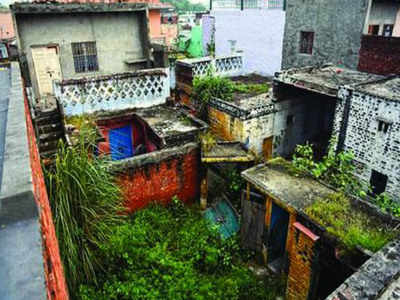
A house located in the centre of this predominantly Rajput village bears the scars from three years ago. Till September 27, 2015, Mohammad Akhlaq, who owned this house, was like any other resident of Bisada. The next day, a mob stormed his house and beat him to death, driven by rumour that Akhlaq had slaughtered a cow and kept beef in the house.

The country has since seen a series of mob attacks tied to vigilantism over cow protection. Bisada had scripted a notorious first which, three years on, the whole village wants to shake off. But the past is not easy to escape.

That’s why Chhotu Khan’s question resonates. “One should find out if those who orchestrated the entire incident have, if at all, stood to gain in any manner from it,” says the 26-year-old, who works with a private firm.

Today, Akhlaq’s house is in ruins. His family — mother, wife, younger son and daughter — moved to Delhi. Dense undergrowth covers the inner courtyard of the house. Broken glass, ceramic and plastic litters the first-floor terrace.

Inquiries in Bisada about the September 28, 2015 attack elicit few responses, talk of the lynching is not encouraged, and news reporters are not welcome. When you do get someone to talk, the message is common: life is “normal” in Bisada and there’s no communal tension.

“We still invite each other for marriages and functions. We socialise with everyone, irrespective of the community,” says Iqbal Khan (50), who works in the local water supply department of a government agency.

The point is reiterated by other households, who describe the lynching of Akhlaq as an “aberration”, and a “one-off” incident. “I have been living with my family in this village for several years. A couple of Muslim families indeed left the village after the incident. But no one ever forced us to leave. There has been no incident of violence or fight after the death of Akhlaq. We have never been threatened,” says Nissar (46).

No one wants to talk about the 18 accused named in the police charge sheet. They skirt the issue, saying it’s for the courts to decide. One of the accused, Arun Rana (32), claimed he had no idea why he was named in the charge sheet. “There was a crowd of nearly 1,000 people that mobbed Akhlaq’s house. We don’t know why police zeroed in on us. My family had to incur Rs 7 lakh in legal expenses to get me released from jail. It has strained our finances,” he says.

Rana used to work as an assistant to a veterinarian in a government hospital before September 2015. Now, he farms on family land, after spending 17 months in prison. A majority of the accused were in their early 20s when Akhlaq was murdered. Two of them were minors.

Vishal Rana (23) was in the first year of a degree course in pharmacy in RV Northland institute in Dadri. Released on bail after spending 22 months in prison, Vishal has dropped out. He spends most of his time in his family’s farm located along the borders of Bisada, Pyaoli and Tamolipur villages.

“I don’t wish to pursue studies any longer. Jail was a terrible experience. I don’t know what to do with my life either. I spend my time away from the village to avoid questions on the incident and unwanted conversations,” says Vishal.

After his release from jail, Vishal’s family took him on a religious tour to Haridwar and Vrindavan. His parents also “want to fulfill all his desires”, says his father Sanjay Rana. After Vishal’s release, they bought him a motorbike and plan to now buy him a Swift Dzire. “We’re living in fear of the future. They have spent months in jail. We don’t know what criminal company they fell into there. We don’t know what has been going through their minds after being released on bail,” explains Rana senior, who used to be a BJP worker.

He adds that while the men are with their families, they are safe. “But once away from home, we don’t know what they will do. This is a constant fear all the families of the accused have. So we take good care of them,” adds Rana, who owns several acres of land in Bisada and neighbouring villages.

o o o

2.

The Indian Express

Dadri lynching: No question of returning home, just hope case moves quickly, says Akhlaq’s kin

With 45 court hearings since the case was registered, the trial is yet to begin as the city court is still hearing arguments on charges against the accused.
Written by Sukrita Baruah , Abhishek Angad | Dadri | Updated: September 28, 2018 6:57:27 am
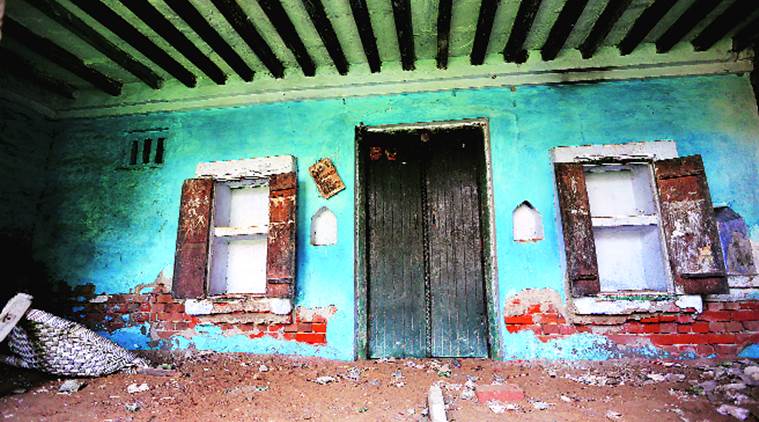
Dadri lynching: No question of returning home, just hope case moves quickly, says Akhlaq's kin The house where Akhlaq lived with his family in Dadri’s Bisara village. (Express photo by Gajendra Yadav) THREE RUSTED locks hang on three doors in the house where Mohammad Akhlaq and his family lived in Dadri’s Bisara village, the only Muslim home in a locality of Rajputs. Three years after 50-year-old Akhlaq was dragged out of his house and lynched on suspicion of possessing beef, his family says they can never return.
The family has not been able to rebuild their lives as the case against the 18 accused of killing Akhlaq drags on in a fast-track court.
With 45 court hearings since the case was registered, the trial is yet to begin as the city court is still hearing arguments on charges against the accused. According to the counsel for Akhlaq’s family, Yusuf Saifi, police had booked all accused under murder, rioting and unlawful assembly, among other charges. All accused have got bail. One of them, Ravin Sisodia, was hospitalised while in jail and later died.
“The case hasn’t even started, where is the question of it ending?” said Mohammad Jaan (50), Akhlaq’s younger brother. “…charges against the accused have not yet been framed, even though it is in what is supposed to be a fast-track court…,” he added.
“Even in the chargesheet which was filed by police almost three years ago, the only names are those which were put forward by Akhlaq’s daughter Shaista. Nothing has been done to identify and arrest additional suspects,” said Mohammad Jaan.
Saifi said that one of the main reasons for the delay is the defence lawyers putting up several ‘discharge applications’. “Some of the applications have been dismissed. Other applications, such as those asking for a CBI investigation, directing to register a case against Akhlaq’s family for possessing beef among others, have also been filed…In the last hearing in September there was a strike called by lawyers and the hearing did not happen,” he said.
Judges hearing the case, he said, have been changed twice, which added to the delay. “After cognizance was taken by a magisterial court, the case was committed to a sessions court. Since then, two judges have been transferred. Files have recently been placed before the third judge… It may take two-three hearings after which, hopefully, charges will be framed,” he said.
Express Opinion | Three years after the murder of Mohammad Akhlaq, there is no remorse in his village. There is a sense of menace
Ram Saran Nagar, lawyer for five accused, said, “Various lawyers of other accused filed many applications. There are a lot of cases pending in this court in general. The case is marked for disposal of previous applications.”
Akhlaq’s elder son Mohammad Sartaj, a corporal in the Air Force, told The Indian Express that he, his siblings and mother were not ready to talk to the media. “The trauma of that incident and the aftermath is not something we want to relive by talking about it and discussing our lives,” he said.
Sartaj (29), Shaista (23), their brother Danish (25) who was also assaulted and injured by the mob which killed his father, their mother Ikraman (43) and grandmother Asgari (78) live in the Air Force quarters in Delhi’s Subroto Park, where they moved after the incident as they felt that being eyewitnesses made Shaista, Danish and Ikraman vulnerable.
Danish is currently studying to appear in competitive exams for state services. “He has an operation due for the injury which he received on his head. We are also looking for a match for Shaista, but we want to finalise Danish’s job first. Trauma, weaknesses and age have taken a toll on my sister-in-law’s health,” said Jaan.
Jaan still works with the multi-national corporation he has been a part of for almost 30 years and lives in Dadri town, with his elder brother who works in the Indian railways.
“Every year, during Bakrid, we feel the loss more deeply. The family has not celebrated Eid since the incident,” said Jaan.
The family is also dealing with the cow-slaughter case which was registered against them in 2016. In August that year, the Allahabad High Court stayed the arrest of all the family members except Mohammad Jaan. However, Jaan said that neither has the chargesheet been filed nor has there been any attempt to arrest him. “It is just hanging over me and no action has been taken. Four months ago, some of the accused and their guardians came to my house appealing to me to withdraw the case and offering to withdraw the counter-case in return… Let the case be pursued, I am not afraid,” he said.
According to CO Dadri Satish Kumar Sharma, the filing of the chargesheet has been delayed because the final report on the meat sample has not been submitted to the police yet. “After the test in Mathura which showed that the sample belonged to a cow or its progeny, the sample was transferred and is currently in the Forensic Science Laboratory in Lucknow,” he said.
Meanwhile, the 17 accused who were released on bail in 2017 live in Bisara where the common refrain is “Yahaan maahaul ab badhiya hai (The atmosphere here is splendid)”. While most villagers refer to the September 28, 2015 incident as an “accident,” they also acknowledge the manner in which it shook the nation.
“We have this word now, which is always being used — mob-lynching. Whenever any incident of a group beating up a person occurs, the public refers to Bisara. Bisara’s name will rise to prominence and be dragged through the mud again before the 2019 election,” said Om Mahesh, whose son Vinay is one of the accused.
Hari Om Sisodia (28), another accused, is now being fielded by the Uttar Pradesh Navnirman Sena as their candidate from Gautam Budh Nagar constituency for the Lok Sabha elections. “I and the other 17 spent two years in jail when we are innocent. We have not been proven guilty, but we are treated like social outcasts. We were promised jobs in NTPC Ltd last year but didn’t get them. No one is willing to employ us and nobody, not even the BJP, is supporting us. I am contesting the election because there is no one else to help us,” he said.
Saifi, meanwhile, has his hopes pinned on the recent Supreme Court verdict on the lynching and mob violence.
“The Supreme Court had said that cases which fall in this category shall preferably be concluded within six months…However things are moving at snail’s pace.” He claims to have submitted an application in the Additional Sessions Court after the SC judgement for speedy disposal of the case. “We all are banking on the SC verdict…however, there is no response to my application yet.”

o o

NDTV

"Will You Remain Silent?" - Akhlaq's Daughter On His 3rd Death Anniversary

Published: September 28, 2018 11:28 IST

On this day, September 28, three years ago, Mohammad Akhlaq, a resident of the Bisada village in the Dadri area of western Uttar Pradesh, was brutally killed in his own home by a mob of men on the accusation of cow slaughter. His younger son Danish was grievously injured. His mother was also badly hurt. Three years after this horrific killing and violence, charges have not yet been framed by the court, all the 18 main accused in his killing are out on bail, his home is locked up, his family have had to leave the village. Instead of getting justice, his family, including his teen daughter Shaista have to contend with a false case of cow slaughter foisted on them by a an individual linked to the murderers. The complaint which should have been outright rejected by the lower court, was admitted, and a police investigation ordered. This hangs like a sword over them, ever threatening. Even while their grief and trauma was raw and hurting, they had to go through the tense process of getting anticipatory bail.
Akhlaq's murder was the first in the type of lynchings which have become the hallmark of the Modi regime. A report by IndiaSpend has collated data which shows that between 2014 when Modi took office and March 2018, there have been 80 incidents of violent mob attacks in which 45 persons have been killed. There is no official record of cases of hate crime because there is no separate law for it. But the contours of Akhlaq's case are important to know as different dimensions of his murder are being repeated in case after case.
md akhlaq
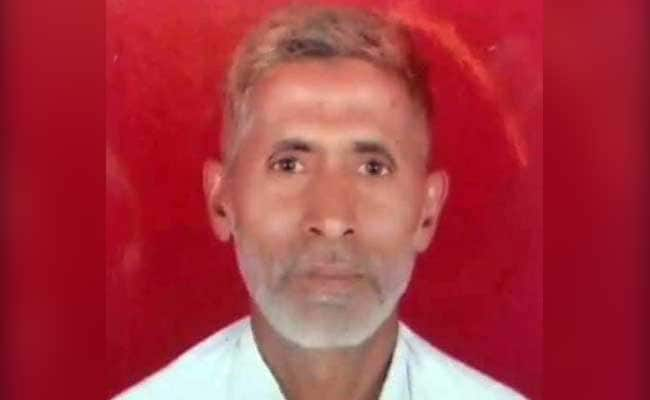
A mob had killed Mohammad Akhlaq and brutally beat up his son Danish in September 2015

Akhlaq, like most of those who have been similarly lynched after him, lived a life far removed from violence. There is no record of any dispute, leave alone a clash between him and his neighbours, all of whom testify to him being a peace-loving man who lived a quiet life with his family. There was not even a remote connection between the way he lived his life and his terrible violent death. This is true of almost all the victims of crimes committed in the name of the cow. There was nothing in their lives which represented enmity or violence. Even if one went by the grossly erroneous justification that the killing was a reflection of spontaneous anger against cow slaughter, in not a single case has there been actual evidence of such slaughter. The killings are political killings as they have been committed to further a specific political agenda of communal polarization and hate.
The lynchers in Akhlaq's case used the local temple to announce their manufactured lie. According to the statement the priest gave to the police, four young men, whom he identified and named, forced him to make an announcement that a cow had been slaughtered and its remains were lying in a drain near a transformer at the side of the village where Akhlaq's house stood. The call was that every Hindu should come out of their homes to defend the gau mata and their religion. These highly provocative statements were given from a supposed place of worship. Those who claim to be representing the interests of Hindus have no compunction in using centres of worship as centres of crime. There are numerous examples as to how communal violence gets fanned through provocative hate language from places of worship. Yet the law has no provision against such misuse of places of worship.
There was nothing spontaneous about the lynching. Bisada village had escaped any kind of communal violence, even during the violence which rocked the state of Uttar Pradesh after the demolition of the Babri Masjid in 1992. Akhlaq's family members spoke of the close ties that had developed over the years across religious communities among their neighbours. During festive occasions, including Eid, food was sent from one house to another. Shaista used to go to the local school facing no problems. But things started changing in the period before the 2014 elections, with the aggressive communal campaign of the Sangh Parivar.
irmbrkf8
Family members of Mohammad Akhlaq, who was lynched by a mob in Dadri over allegations of consuming and storing beef

At the state level, the government was then run by the Samajwadi Party. In this area of the state, the BJP gave Lok Sabha tickets to known communal elements, including those who were accused in the terrible Muzaffarnagar communal violence. After their victory, they were further emboldened. The first half of 2015 saw highly provocative campaigns. In March, the Akhil Bharatiya Pratinidhi Sabha of the RSS had given a call for national campaigns against so-called love jihad and against cow slaughter, and this was implemented with a vengeance in UP. The magazine Frontline reported that "According to senior officials in the Uttar Pradesh administration, there have been close to a hundred minor and major assault cases over alleged cow slaughter."
The planned campaign of the Sangh Parivar to target minorities on the issue of cow slaughter was reflected in the village too. Local BJP leaders led the campaign with provocative slogans and actions. On that terrible day, the ring leaders who committed the crime were known to be linked with the ruling party. The son of a local BJP leader was one of the first to be identified and arrested.
Top BJP leaders made the most offensive statements justifying the crime. The MP of the area and Minister of State in the BJP government termed it "an accident"; another described it as "a mistake committed by children"; the Vice President of the state unit declared that a mahapanchayat was being called to protest against the harassment of Hindus; a then Rajya Sabha member tweeted "Why should the responsibility to keep peace be on the Hindu community"? And through all this the Prime Minister did not say a word. It took ten days and only after a strong statement by the then President Pranab Mukherjee for him to criticize the violence - and that too, only obliquely.
The involvement of the Sangh Parivar through gau rakshak committees, and the defence of their criminal activities of harassing, bullying, intimidating and also the killing of Muslims with senior leaders of the BJP directly helping the accused in cases like Akhlaq, have now become commonplace. If Jayant Sinha can garland the killers of Alimuddin Ansari who was lynched in a similar case in Jharkhand, it is because he knows that this is acceptable to the leadership of his party. His ministerial colleague Mahesh Sharma had wrapped the body of one of the accused in the Akhlaq murder case in the national flag after he died of an illness in jail. Political patronage to the alleged killers has been a critical factor in the subversion of justice in the Akhlaq case and all the others that followed.
jayant sinha
Union Minister Jayant Sinha with the men who killed a meat trader on suspicion of carrying beef

Just four days ago, the Supreme Court directed the government to implement the slew of orders it passed in July on a Public Interest Litigation or PIL against cow vigilantism. The court had said that people should know that they would invite the "wrath of the law" on themselves after such incidents.
The wrath of the law should first be faced by the Modi Government. It is responsible for non-compliance with the orders of the court. Although the government set up a committee under the Home Ministry to implement the orders, nothing substantial has been done. Most importantly, the court orders to consider a separate law for cases of mob lynching has not been implemented by the committee. Nor has the government made any move to implement the order to set up fast-track courts for all such cases.
Meanwhile, it is the benevolence of the flawed judicial process that is being extended to the killers in mob-lynching incidents.
u71bvef
Sartaj (L), the elder son of Mohammad Akhlaq who is a corporal with the Indian Air Force

In not a single case have any of the accused been punished. In the one case of Alimuddin Ansari where the lower court had found the accused guilty and sentenced them, the High Court came to their rescue, acquitting some and allowing bail to the others. In almost every other case, the accused are out on bail. In Akhlaq's case, every trick in the book has been used to ensure that even the charges have not been filed. The lawyer in the Akhlaq case, Yusuf Saifi, has received threats to give up the case. The security protection given to him has been withdrawn by the present Uttar Pradesh government. A key witness, the local priest, has been declared as untraceable by the police. It is a shameful travesty of justice.
Three years after the murder, the family of Akhlaq are without their home; Akhlaq's eldest son, employed in the defence services, is now looking after them along with his own wife and children. Their mother is unwell and is being medically treated, They need help to rebuild their lives, Danish needs a job, Shaista needs assistance to finish her higher secondary exams so that she can follow her wish to study fashion designing. Their spirit remains unbroken. Yesterday the two siblings joined a solidarity dharna organized by the All India Democratic Women's Association at Jantar Mantar. Speaking to the assembled crowd, Shaista said, "They took my Abu from me, but am I expected to remain silent? Should you remain silent? It was my Abu they killed three years ago, tomorrow it could be anyone's. Once humanity is lost, nothing can remain.I believe in justice and that is why I am here to fight for it."
Brave words from a brave daughter. But are we listening?

Brinda Karat is a Politburo member of the CPI(M) and a former Member of the Rajya Sabha.

July 10, 2018

Rumour Republic: Weaponising mobs for political gain haunts today's India | Bharat Bhushan


Business Standard


by Bharat Bhushan

The adage that “a lie can travel halfway around the world while the truth is still putting its shoes on” has been proven in India once again as social media rumours about child-lifting have led to 27 incidents of mob-lynching across nine states of India. They can hardly be pinned down to local issues as the attacks have occurred in states as far apart geographically as Tripura, Maharashtra and Tamil Nadu.

About a year ago, rumours of braid-chopping had spread from Nagaur in Rajasthan, travelling across the North through Uttar Pradesh and Delhi to Jammu and Kashmir. Then they suddenly died out just as the rumours about child-lifters may do.

The rapidity with which the rumours were disseminated and the readiness with which people were willing to act on them point to high public anxiety levels.

Such a volatile public mood in the run-up to the impending general election suggests nightmarish scenarios. An anxious polity is a fair game for demagogues who can play on its uncertainties, biases and prejudices to capture political power.

Rumours have always come in handy for canny political forces. They are efficient instruments to channel an anarchic public mood to further their political agendas. They also have the added advantage of being nearly untraceable.

Social networking platforms are available on every other mobile, offering anonymity to agent provocateurs like never before. Research in the United States shows that a false story or a “fake news” report took roughly 10 hours to reach 1,500 Twitter users compared to the 60 hours for a factual story. The influence of a rumour is directly linked to how far and quickly it spreads.

Yet, one must not confuse the medium for the message. Under criticism, the government has asked social media platforms to monitor their content and states have been directed to check mob lynching. But social media platforms are only instruments for spreading messages. The problem is the message itself.

When the political party in power at the Centre encourages the use of social media to spread fractious ideas, what can state governments do? Days after his Cabinet colleague Sushma Swaraj was viciously trolled on social media, Prime Minister Narendra Modi praised it fulsomely, crediting it with “democratising” public discourse and described it as “endearing”. There was not one word of caution about its misuse. Everyone is aware of the paid trolls that target people critical of the Prime Minister or his party. They exist because they have their political uses. Under these circumstances, one has to be very very afraid of the possible political consequences of rumours in an election year.

No one knows for sure who begins the rumours which start communal riots -- rumours about conspiracies of an impending attack by one religious community on the other, or the desecration of holy books and icons, mosques, churches and temples and so on. However, everybody has a fair idea of who benefits in a surcharged communal atmosphere and the aftermath of violence.

No one knows who started the ‘love jihad’ rumours or the rumour of sexual harassment that triggered the deadly Muzaffarnagar riots of 2013. However, everyone knows that the Bharatiya Janata Party (BJP) benefited electorally from the riots and that some of the riot-accused became members of Parliament and even ministers.

No one knows for sure who was behind the rumour that the unfortunate Akhlaq’s family had slaughtered a cow in Dadri, but everyone knows that the local BJP MP and Union minister, Mahesh Sharma, turned up to pay homage to one of the murder accused who died in jail. Press photos showed the murder accused’s body wrapped in the national flag as the minister stood before it in reverence.

Similarly, no one knows who started the rumour that Alimuddin Ansari, a coal trader in Jharkhand, was transporting beef, resulting in his lynching by a mob of cow vigilantes. However, everyone has seen the video footage of Union Minister Jayant Sinha garlanding the eight accused convicted of the murder when they secured bail. Politicians will not pay homage to murderers or honour them unless they benefited from their action or supported it.

This has been witnessed in riots across the country whether they are in Gujarat, Uttar Pradesh, Madhya Pradesh or Maharashtra. Asghar Ali Engineer’s studies provide ample evidence of this as do reports of various commissions of inquiries. No one knows who triggers the rumours leading to communal violence but the Hindu right-wing moves in to reap the benefits electorally.

Since the Narendra Modi government came into power in 2014, India has witnessed much more starkly than ever before how rumours can be used to channelise public anxiety and anger against imaginary threats and enemies -- beef eaters, leather workers, cattle traders, Christian missionaries, kurta-pyjama and skull-cap wearing students of madrasahs and ‘anti-nationals’ or ‘Urban Naxalites’ those who question state policy.

What the child-lifter and braid-cutting rumours indicate is that there is a social eagerness to believe rumours because of high levels of anxiety prevailing in contemporary Indian society. The sources of such anxiety are many -- youngsters are anxious about jobs which are non-existent; farmers are caught in a cycle of debt; unorganised workers who lost their jobs during demonetisation are still in a state of shock and unemployment; the minorities feel that they are being relegated as second-class citizens and even the majority which should have been confident in its sheer number, the Hindus, feels that it is threatened by a demographic transition which could reduce them to a minority.

The ‘Pathalgadi’ (literally, inscribed in stone) movement shows that tribals whose land and forests are being taken over by industry feel so helpless that they think that stone inscriptions claiming sovereignty will keep them safe. Others who are equally naïve support the Maoists who take up guns on their behalf. These are all signs of an anxious and helpless population. The uncertainty in their lives is not becoming less with time. In fact, their social, economic, political and even religious insecurities have tended to increase.

Politicians in democratic societies pry on these insecurities. They can be been used intentionally during election campaigns to influence voters. When much is at stake politically, rumours to exacerbate the voters’ insecurities can become a means to tangible electoral gains.

Rumours have become a weapon in the armoury of powerful political parties in India because while they can exacerbate social anxieties, they also offer easy electoral ‘solutions’. The intentional use of rumours helps political parties to extend their influence beyond the converted, by creating a large penumbra of the susceptible around their core support base. These are the ambivalent voters, anxious and uncertain, and waiting to be herded.

The deliberate use of rumours allows those seeking public office to follow a dual strategy. An overt strategy that allows them to occupy the high moral ground promising development, employment, higher incomes, honesty and accountability in governance, and selfless public service above individual gain – ‘achche din’ in short. However, the use of rumours also allows for a covert political strategy -- one of attacking rivals by sullying their reputation or consolidating and expanding their voter base by generating fear and hatred among communities.

While one allows them to pose as change agents – knights on white chargers, as it were, the other permits them to make allegations that would not stand legal scrutiny but damage the reputation of their challengers and rivals by creating doubts in the public mind about their suitability for public office. The covert political strategy using rumours can also be used to vitiate the political atmosphere without taking responsibility but enjoying the fallout. This is most evident in those rumours that divide a wedge between communities – e. g. between Hindus and Muslims and between natives and outsiders. A criminal act or a perceived misdemeanour by an individual is projected as aggression by an entire community or a group to justify retaliation.

The unquestioned master of the dark art of perception management has been the Hindu right-wing in India. Their prime target has been secularism and liberalism. They see the Congress and the Nehru-Gandhi family as the prime culprits for promoting such values and therefore their private and public lives are routinely painted black and horrendous allegations levied against them. They also use rumours to target the minorities, especially Muslims. Social media networks have allowed them as never before to weaponise ordinary folk into deadly mobs willing to do what may be individually unthinkable.

These mobs have become weapons of social destruction --identifying a ‘public enemy’ and prompting people to cast aside logic, reason, and compassion in favour of violence; to deliver retribution and justice. Vigilante delivery of summary justice suits the masters of the rumours. They can manage and harvest public anger for political purposes while continuing to play innocent. What’s more, they can even deliver pious sermons about why the public should not take the law into their own hands while reaping the political benefits of mob action.

The writer is a journalist based in Delhi.

June 20, 2018

India: Untruth Prevails - Tales From The 4G Rumour Mill | Dola Mitra

Outlook
The Magazine
18 June 2018
National

Untruth Prevails
Tales From The 4G Rumour Mill
Fear is trending and violence is a ping away, why does fake news make India erupt?
Dola Mitra

Shillong is pushed into curfew as fake news about the death of a tribal causes a riot- like situation in the hill town
Photograph by PTI


Memories of Haze

Bangalore 2012 This was one of the early episodes of chaos induced through social media. Messages claiming that people, largely students, from the Northeast were being targeted in Bangalore by locals were circulated via social media, still at a somewhat nascent stage. What followed was a mass exodus ­attempt by people from Northeastern states with thousands rushing to the railway station to flee the virtually created hostile vibe.

Muzaffarnagar 2013 The main spark of the 2013 communal riots in Muzzafarnagar was a stray WhatsApp video. The video, most likely from a remote area of Pakistan, showed a mob brutally beating two men. It was shared widely to spread anger against a community. The state government had to intervene and clear the air around the falsely attributed video, but the venom had been spread by then.

Jharkhand 2017 Last year, another WhatsApp scare around ‘child-kidnapping’ in Jharkhand resulted in the lynching of seven people.

***

It came out of nowhere—no sour­ces cited, no eyewitness accounts, yet it spread all over the internet and suddenly, it was social media breaking news: a tribal man had been killed following an argument with a bus conductor, who belonged to another community. In no time, a usually laidback Shillong was in the grip of both fear and rage, courtesy, innumerable WhatsApp forwards, Facebook shares and retweets.

No one bothered to check the veracity of the ‘news’ as angry local residents descended on the streets, baying for the blood of their ‘enemies’. When police intervened, they were showered with stones and bricks. Such was the anger that mobs even defied curfew and continued their rampage—pelting stones, attacking religious places, damaging vehicles, anything that came their way.

By now it’s known, Shillong only adds to the list of rumour madness, a growing trend across India. Behind the violent bouts of anarchy are the usual suspects: WhatApp, Facebook, Twitter—social media platforms that can proliferate information like never before. Platforms that offer super-convenience, for all our endeavours, mischief included.

Calcutta goes into panic mode over the alleged sale of ­carcass meat in the city’s meat shops and eateries
Photograph by Sandipan Chatterjee

Across the country, several people have died in the recent past due to such fake news, mischievously planted into social media platforms by unidentified people or groups. “Internet hoaxes are driven by a large number of different reasons. Individuals, groups or organisations are often driven by religious ­intolerance to generate rumours about other communities,” says P.K. Das, former officer-in-charge of Calcutta Police’s cybercrime cell.

READ ALSO: Squint Eye On The Postcard Boys

“Helpless rage on issues beyond their control compels a section of people to group themselves into mobs to take the law into their own hands, when they feel they cannot adequately rely on the ­administration. Other compulsions ­include revenge and even the need to relevant in some way,” he tells Outlook.

Weeks before the Shillong violence, at least six people, all ‘outsiders’, were lynched in Telangana and Andhra Pradesh by local residents, whose ­mobile phones were flooded with messages about gangs of kidnappers. Some of these messages were even circulated as ‘warnings’ by the local police about ‘gangs’, giving a strong ring of legitimacy to the rumours.

Das offers an explanation for the ­online rumour mill: “Individuals are disconnected from society and their interface with the world happens through their computers and smartphones. It creates deep mental chasms. The gratification is immense when they inject into cyberspace something sensational and it becomes a talking point, with hundreds of people clicking and liking their post.”

Calcutta has been another epicentre of fake news recently. Since it has to do with the city’s meat, it has impacted everyone—businesses, the administration and the common man. But before the “dog meat” scare came the “plastic egg” scare, almost as if to test the wat­ers for the city’s rumour potential.

On a cool evening towards the end of 2017, news channels were streaming a video of a Calcutta homemaker holding up a lit matchstick to an egg, which was melting like wax onto a plate on her dining table. She alleged that it was made of plastic. In the subsequent weeks, the city’s poultry traders ­reported drastic drops in the sale of eggs. The scare lasted a few weeks and ended only after the state administration declared that it was a rumour.

Hyderabad Police chief after the recent ­lynchings, asks people not to believe in social media rumours

A few days later, another, purposefully gross, video surfaced showing the production process of fake eggs—a drop of yellow food colour congealing into a yolk before being stuck into a thin, transparent, plastic egg-shell shaped sheet. “How are we supposed to distinguish between real and fake while buying food anymore?” says a homemaker, a mother of a ten-year-old child in Calcutta. She hasn’t just stopped giving her son eggs but is also on the verge of banning meat from the house following another massive scare which has taken over Calcutta: about the “bhagarer mangsho”, or mea­t­ culled from the carcasses of dead, wasteland animals.

Throughout April and May news channels carried reports of how meat from dead chickens, even cows, dogs and pigs was being “processed” by ­dubious operators and sent to the city’s eateries. Amid an outrage, police identified and arrested one of the kingpins, a man named Bishu, who is now being called “mangsho (meat) Bishu”.

READ ALSO: Fake News Busters

Though some of the allegations were true, the distribution of such meat was limited. But that did not stop huge numbers of consumers from boycotting chicken and meat. Abdur Rezzak Mollah, West Bengal minister in charge of the department of food processing industries, said that while the rumours could indeed be based on some real occurrences, the magnitude of public panic or outrage was far overplayed.

“No one can claim that illegal businesses, including those which are ­involved in fake food production, are not burgeoning not just in West Bengal or the rest of the country but across the world,” says Rezzak. “However, to allow these stray incidents to have such an impact as to cripple normal life is a matter of concern.” Rezzak does not just hold fake news sites on social media ­responsible for spreading paranoia but even mainstream media , which shows news without checking the sources.

Beverages including colas of multinational brands have been at the receiving end of numerous smear campaigns, allegedly by rival companies. Though the health hazards of aerated drinks are widely accepted, a recent video which went viral on WhatsApp showed two popular drinks using “bathroom-cleaning chemicals” as an ingredient. The video sparked panic among a section of consumers. The rumour was eventually contained, but not before it could do some damage.

Over the last few years, rumours and fake news with political and religious colour have been circulating almost on a daily basis, pitting communities or caste groups against each other. Such has been the menace that the government is now contemplating stricter laws to clamp down on fake news. In India, which is reportedly one of the world’s biggest WhatsApp’s markets, the spread of rumour viruses is far reaching and it seems to be mutating, appearing ceaselessly in various avatars.

In the latest instance, it has sprung up around the Nipah virus which has claimed several lives in Kerala. When the disease struck the state late in May, a fresh round of scare-mongering ­infected the Internet. The initial ­onslaught of advisory messages forbid the public from partaking of ripe fruits which could have been bitten by bats, which were initially thought to be the carriers of the virus, along with pigs. But at a national level, the messages soon became more offensive, advocating as they did, the ostracisation of Kerala and its residents. The state administration had to issue reassurances that the ­outbreak had been contained and ­managed to dispel fears.

Within Kerala itself, another cause for concern for the administration were the hate rumours that were flooding the ­inboxes of the state’s users—that ­migrant workers from Bangladesh and other states had brought the Nipah virus to the state. Worried that its 40-lakh migrant ­labour workforce would be targeted, the administration had to step in to dispel the xenophobic myths. This it is not the first time that Kerala’s ­migrant labour force had been the subject of rumours. In October 2017, hundreds of migrant labourers fled Kerala when rumours floated that their lives were in danger. Fake messages circulated on WhatsApp said that a ­migrant labourer from West Bengal was beaten to death in the state while others said that Hindi-speaking people were being attacked by locals. That was enough for this floating, vulnerable population to panic and an exodus began. Newspapers reports say that many of the labourers didn’t even ­collect their wages, they just fled the state without informing their employers. Chief minister Pinarayi Vijayan had to step in to condemn the rumours. Vijayan called the rumour mongers “mad” for spreading the cruel messages. His choice of word was not without a reason.

When Kerala was in the vortex of a ­crisis after Cyclone Ockhi grazed the coast last year, another rumour hit. Hundreds of fishermen out at sea had gone missing. As the state struggled with the rescue efforts, a WhatsApp message claimed that nearly 60 fishermen were rescued by a Japanese merchant ship that was heading towards Vizhinjam port. As the state rejoiced following the news, relatives of the missing fishermen took taxis and rushed to the port to receive them while ambulances were at the ready to rush the rescued to the hospital. But there was no Japanese ship nor any rescued fishermen at the port, causing anger among the relatives and huge embarrassment to the state government. Even the district collector of Thiruvananthapuram and the fisheries minister were taken in by the fake messages.

By Dola Mitra in Calcutta